
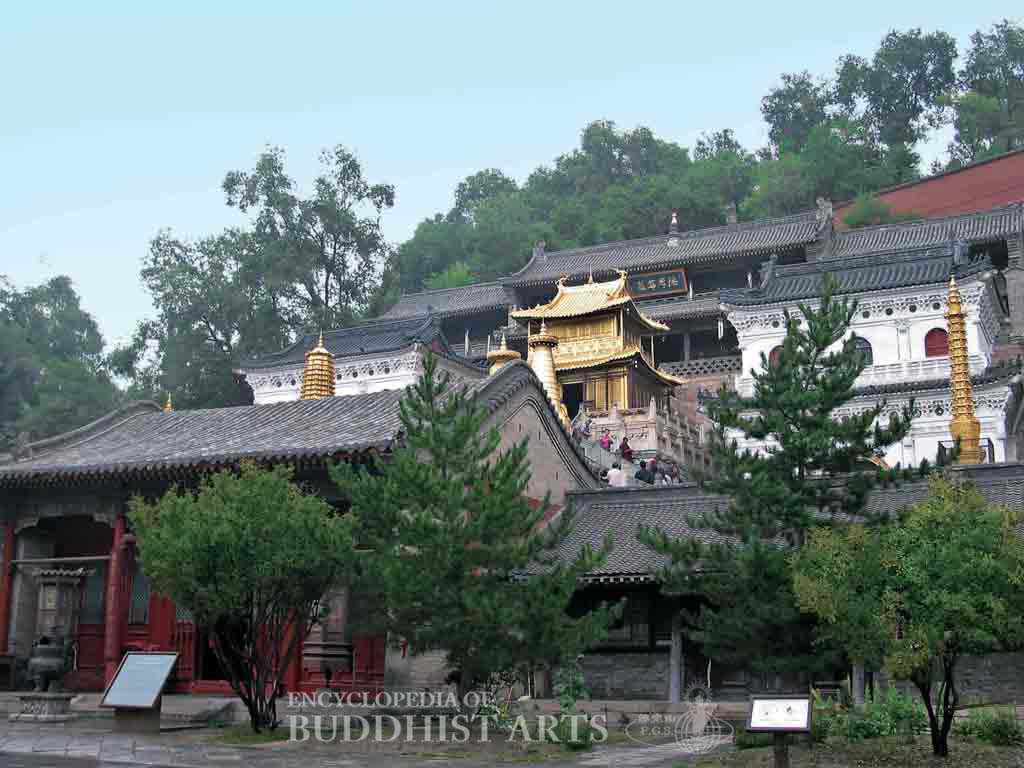
Wutaishan Xiantong Temple

Wutaishan Xiantong Temple: Infinity Hall
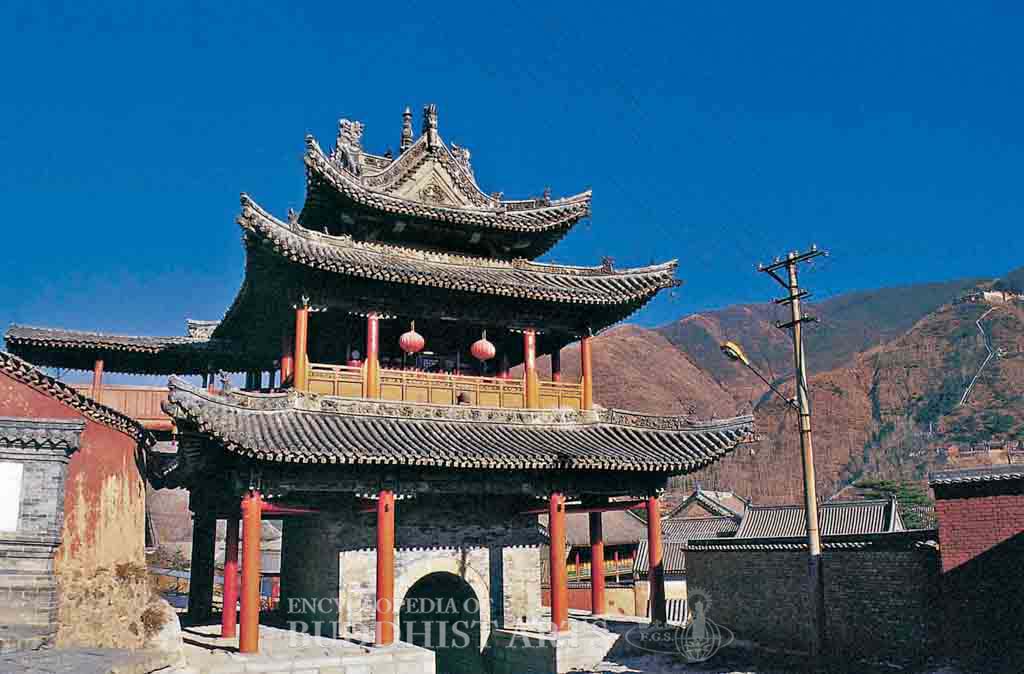
Wutaishan Xiantong Temple: Great Bell Tower
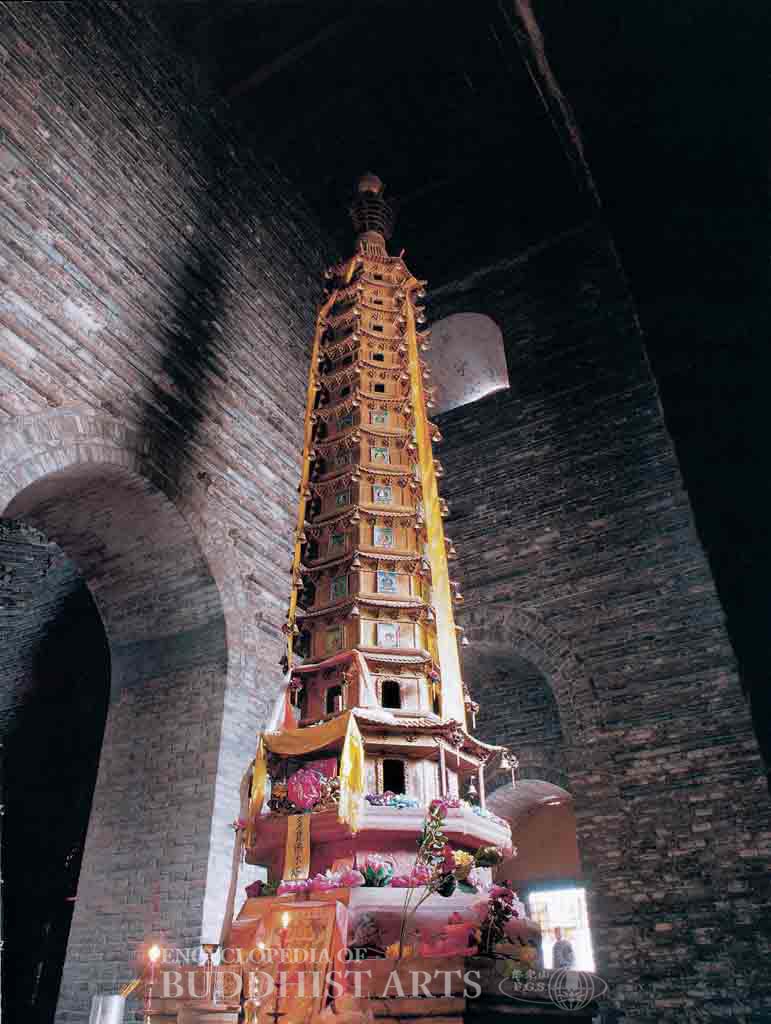
Wutaishan Xiantong Temple: Infinity Hall - Prabhutaratna Pagoda
Wutaishan Xiantong Temple
CHINA, Shanxi, Xinzhou
Xiantong is the ancestral temple of Wutaishan and its importance is reflected in its large scale. It is one of the Five Major Temples of Chan Buddhisam on Wutaishan. According to the records, it was built in 68 during the Eastern Han dynasty. The temple was expanded by Emperor Xiaowen (reigned 471–499) of the Northern Wei dynasty and was reconstructed during the rule of Emperor Taizong (reigned 626–649) of the Tang dynasty. It has undergone regular repairs and expansion over the years. It was listed as a National Cultural Heritage Site in 1982.
This temple faces south and covers an area of 8 ha. Along the central axis there are the Avalokitesvara Hall, Great Manjusri Hall, Great Hero Hall, Infinity Hall, Thousand Bowl Manjusri Hall, Bronze Hall, and sutra repository. Along the sides there are the Copper Pagoda, side halls, subsidiary buildings, Great Bell Tower, meditation hall, abbot’s quarters, and the granary. The existing buildings were reconstructed during the Ming (1368–1644) and Qing (1644–1911) dynasties.
The Infinity Hall was constructed between 1606 and 1612 during the Ming dynasty. Due to the absence of beams inside, the structure is also called the Beamless Hall. The two-story, brick hall is seven bays wide outside and three bays wide inside, with a depth of four bays. It is 20.3 m high and has a double-eave hip-and-gable roof. Beneath the eaves there are bracket sets and floral patterns made of brick. A bronze Vairocana Buddha is enshrined within the hall, as well as an octagonal, 13-tier Prabhutaratna Pagoda built during the Ming dynasty that measures 10 m high.
The Bronze Hall was built in 1606 during the Ming dynasty and is made of gilt bronze. The two-story, three-by-three bay building has a double-eave hip-and-gable roof and is 8 m high. A bronze statue of Manjusri Bodhisattva is enshrined within the hall, while the surrounding walls are adorned with ten thousand bronze Buddha statues, hence its alternative name of Ten Thousand Buddha Hall. There are doors on all four sides of both stories that are decorated with delicately cast patterns, such as birds, flowers, or people. The Great Bell Tower was built in 1624 during the Ming dynasty. The two-story, three-by-three bay building has a hip-and-gable roof in the shape of a cross. On each story the structure is surrounded by a veranda. The lower story is made of brick with an arched opening, while the upper story houses a large bronze bell cast sometime between 1621 and 1627 during the Ming dynasty. The temple also houses a bronze statue of the Eleven-Headed Manjusri with a Thousand Bowls, a Avatamsaka Sutra Character Pagoda, a sandalwood Buddha statue from the Northern Wei dynasty (386–534), and stone Bodhisattva statues.
For more details, go to the Encyclopedia of Buddhist Arts: Architecture T-Z, page 1295.
Cite this article:
author = Hsingyun and Youheng and Johnson, Peter and Mankuang and Lancaster, Lewis,
booktitle = {Encyclopedia of Buddhist Arts: Architecture T-Z},
pages = 1295,
title = {{Wutaishan Xiantong Temple}},
volume = 4,
year = {2016}}