
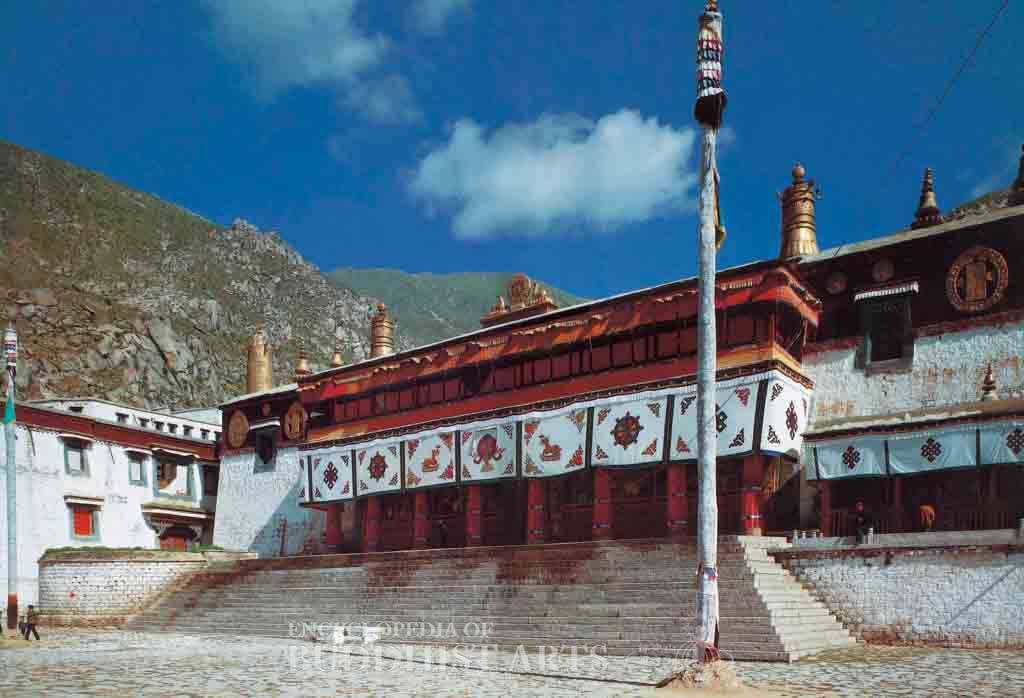
Drepung Monastery: Central Hall
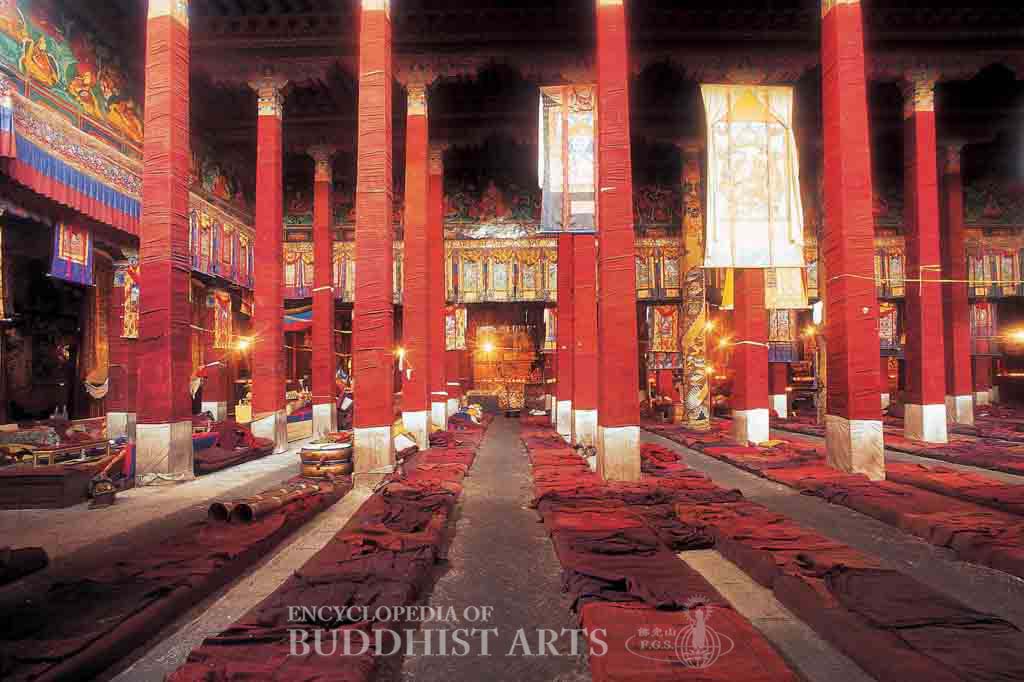
Drepung Monastery: Central Hall - Assembly Hall
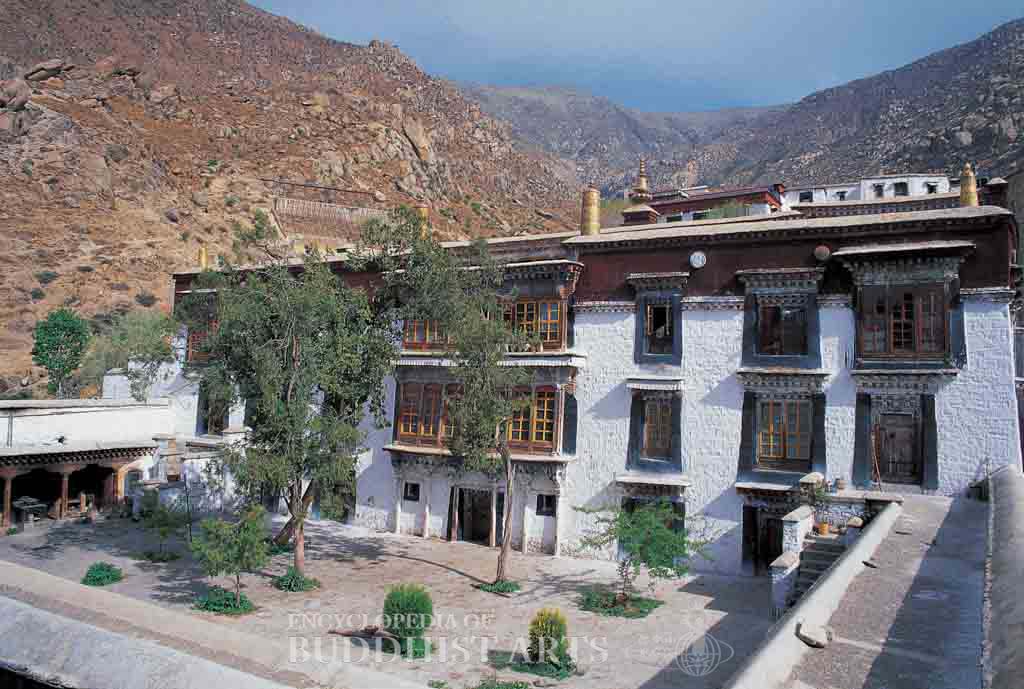
Drepung Monastery
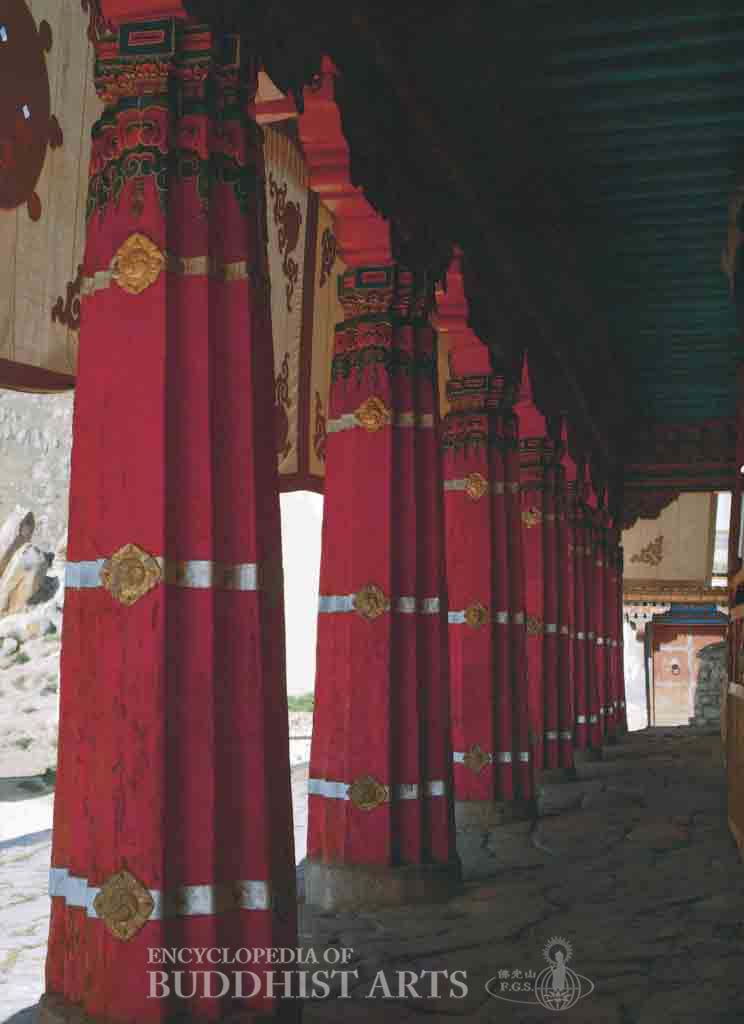
Drepung Monastery: Central Hall - Veranda
Drepung Monastery
CHINA, Tibet, Lhasa
Drepung means Rice Heap. The monastery is located at the foot of Gambo Utse Mountain in Lhasa. Drepung, Ganden, and Sera monasteries are the Three Major Monasteries of the Gelug school of Tibetan Buddhism in or near Lhasa. It was built in 1416 by Jamyang Choge Tashi Palden, who was one of the disciples of Tsongkhapa, founder of the Gelug school. The Second, Third and Fourth Dalai Lamas resided at this monastery, while the Fifth Dalai Lama lived here prior to the renovations of the Potala Palace. In 1982 the monastery was listed as a National Cultural Heritage Site.
The temple faces south and occupies approximately 25 ha. It consists of the central hall, four colleges, the Ganden Phodrang Residence, and more than 50 monastic quarters. Most buildings are in the Tibetan style with flat roofs.
The central hall consists of a portico, circumambulation passage, assembly hall, and shrines. It occupies 4,500 sq m. In front of the central hall there is a 2,000 sq m debate courtyard covered in stone slabs. Inside the central hall there is an assembly hall that is 17 bays by 13 bays and occupies approximately 1,850 sq m. It is supported by 183 large square wooden columns. It is the largest assembly hall in Tibet and can accommodate more than 7,700 monks. Behind the assembly hall there is an inner shrine, while to the west there is the Stupa Shrine, where the funerary stupas of the Second, Third and Fourth Dalai Lamas stand. On the east side of the second story there is the sutra repository with cabinets along the walls housing a huge collection of sutras.
Ganden Phodrang, the residence of the Second to the Fifth Dalai Lamas, is a standalone building surrounded by high walls. The rooftop is richly decorated with Dharma instruments and ornaments, such as golden finials, stacked rings, and the eight treasures, including victory banners.
The temple has a large collection of cultural artifacts and sutras, including Jamyang Choge Tashi Palden’s right-coiled white conch given by Tsongkhapa, different editions of the Tripitaka, as well as manuscripts and works of Tsongkhapa and his disciples.
For more details, go to the Encyclopedia of Buddhist Arts: Architecture A-F, page 253.
Cite this article:
author = Hsingyun and Youheng and Johnson, Peter and Mankuang and Lancaster, Lewis,
booktitle = {Encyclopedia of Buddhist Arts: Architecture A-F},
pages = 253,
title = {{Drepung Monastery}},
volume = 1,
year = {2016}}