
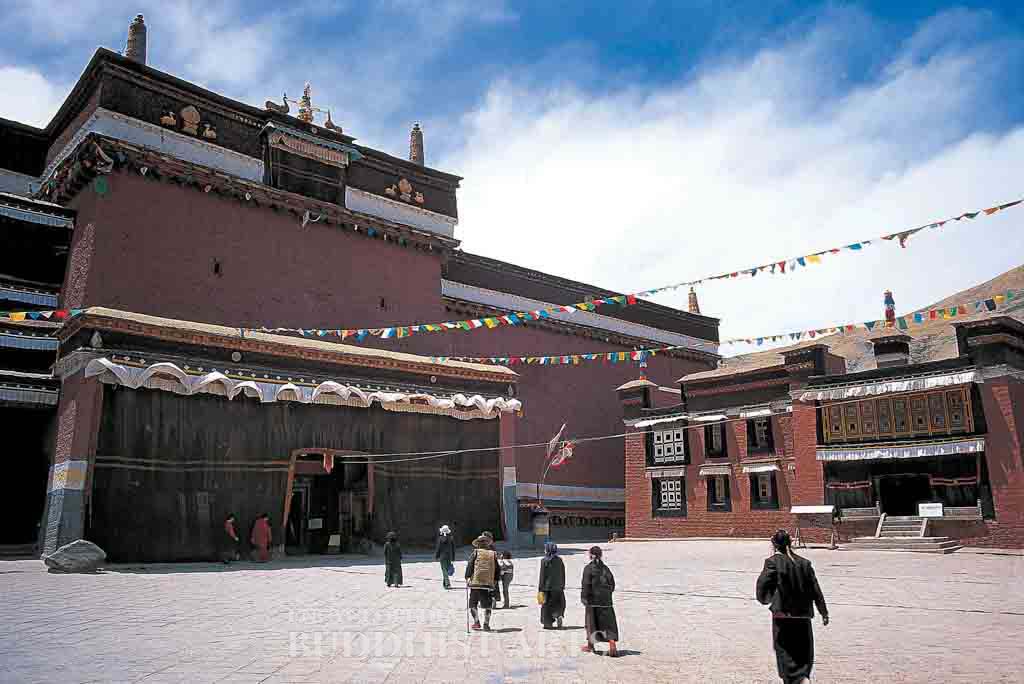
Sakya Monastery: South Monastery - Central Hall
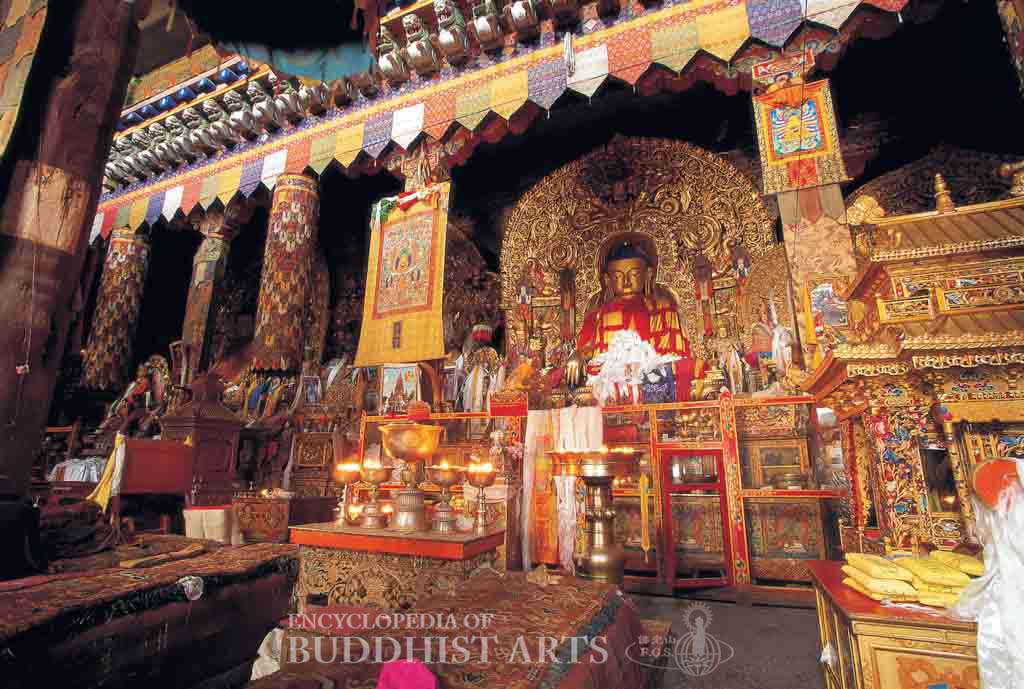
Sakya Monastery: South Monastery - Central Hall (interior)
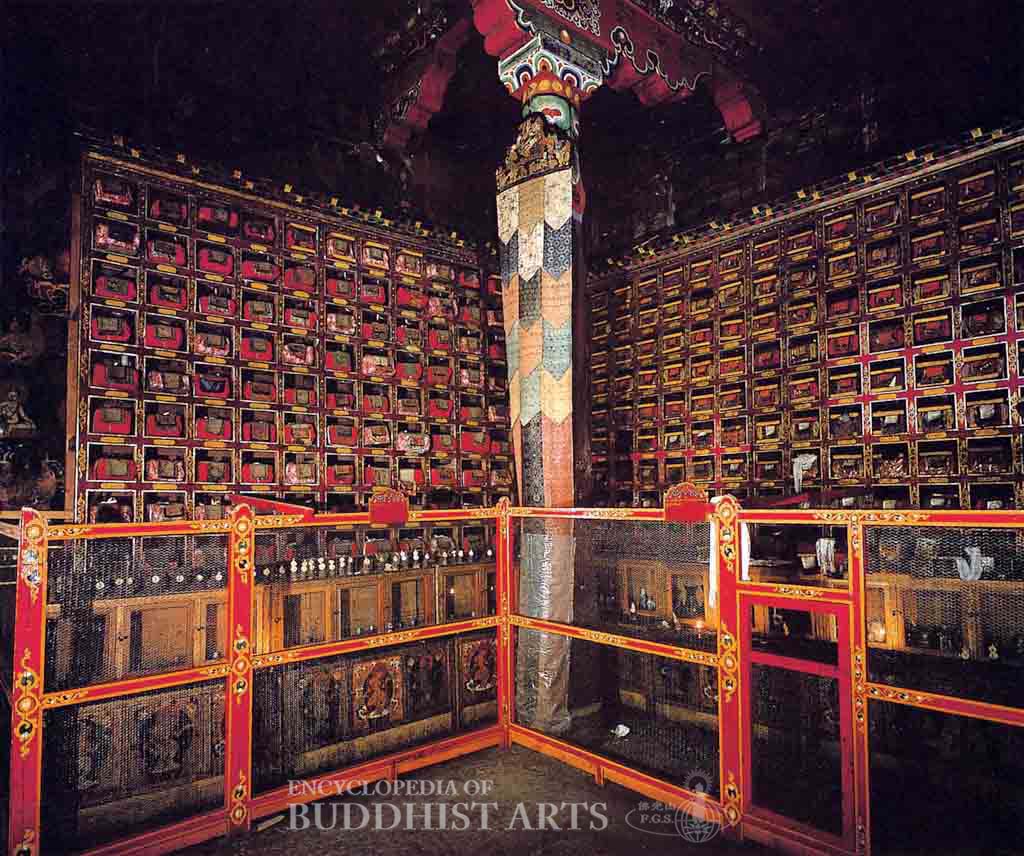
Sakya Monastery: South Monastery - Assembly Hall (interior)
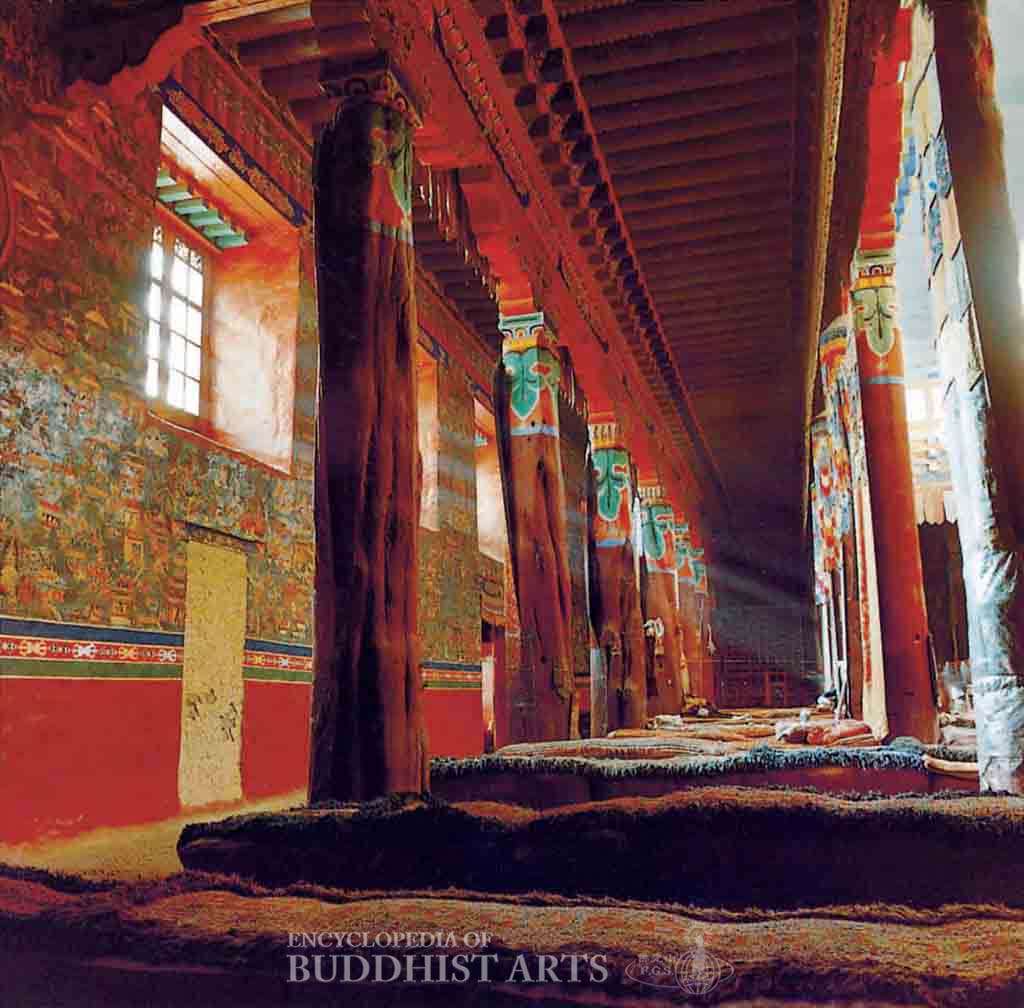
Sakya Monastery: South Monastery - Central Hall (interior)
Sakya Monastery
CHINA, Tibet, Shigatse
There are two monastic complexes that make up this monastery, the South Monastery and North Monastery, which are on opposite banks of the Trum Chu River. Sakya Monastery is the head monastery of the Sakya school. The North Monastery was built by Konchok Gyalpo, the founder of the Sakya school, in 1073. The only existing building is the two-story central hall built during the Yuan dynasty (1271–1368). The South Monastery was built by Sakya Sangpo, the first military and administrative leader from the Sakya school, under the request of Phagpa, the fifth leader of the Sakya school, in 1268. During its history the South Monastery has undergone a number of expansions and renovations. The current buildings are the result of large-scale renovation in 1945. It was listed as a National Cultural Heritage Site in 1961.
The South Monastery faces east and measures 214 m long and 210 m wide. It is surrounded by moats and two boundary walls. There is a tower at each corner, as well as in the middle of the north, south, and west walls, while on the east wall there is the entrance gate. The outer boundary walls and moats are in ruins. The central hall stands in the middle of the monastery. It is surrounded by monastic living quarters and the ruling house of Phagpa.
The central hall is 79.8 m long, 84.4 m wide, and 21 m high. It has a courtyard in the center. The eleven-by-five bay assembly hall stands in the west and is supported by 40 unfinished cypress columns. The four thickest columns are approximately 1.3 m in diameter. The west, south, and north walls of the assembly hall are lined with wooden sutra cabinets that extend as high as the ceiling. These cabinets contain a huge library of sutra manuscripts from the Yuan and Ming (1368–1644) dynasties. Along the south and west sides of the second story there are spacious corridors and walls painted with valuable murals.
The monastery houses an abundance of artifacts, such as thangkas, statues, embroideries, porcelain objects, jade ware, offering utensils, Dharma instruments, and an enormous sutra collection. This collection includes more than 20 rare sutras recorded on 3,636 pages of palm leaf manuscript written in Tibetan, Mongolian, and Sanskrit, which are valuable sources for academic research.
For more details, go to the Encyclopedia of Buddhist Arts: Architecture M-S, page 914.
Cite this article:
author = Hsingyun and Youheng and Johnson, Peter and Mankuang and Lancaster, Lewis,
booktitle = {Encyclopedia of Buddhist Arts: Architecture M-S},
pages = 914,
title = {{Sakya Monastery}},
volume = 3,
year = {2016}}