
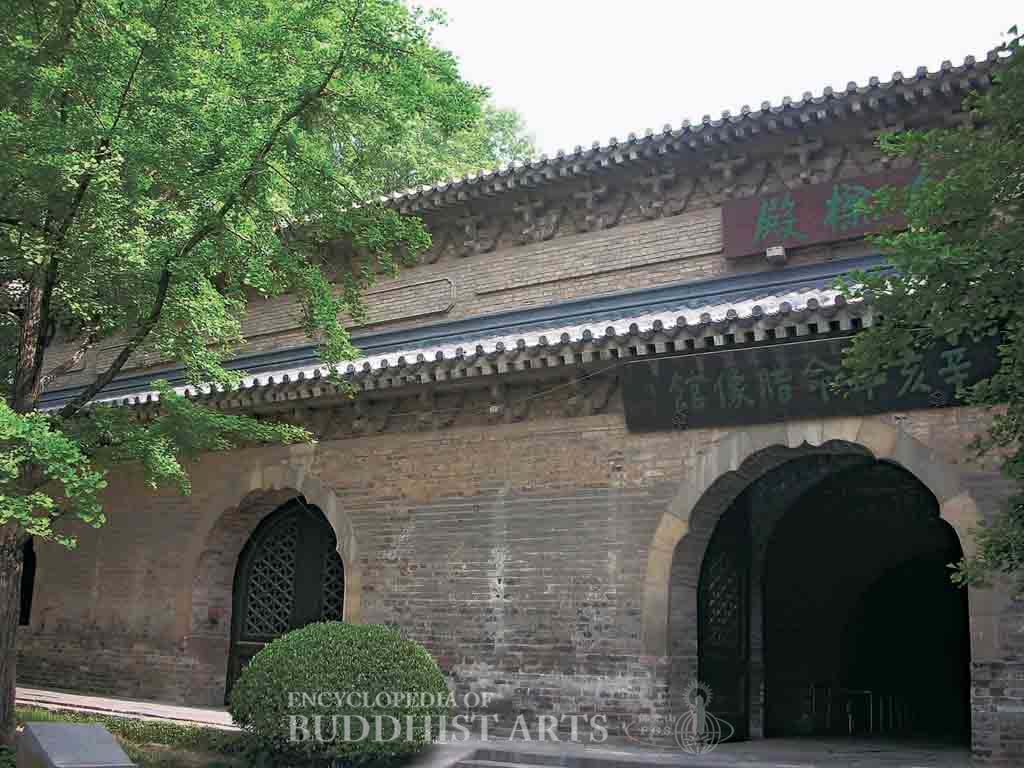
Linggu Temple Beamless Hall
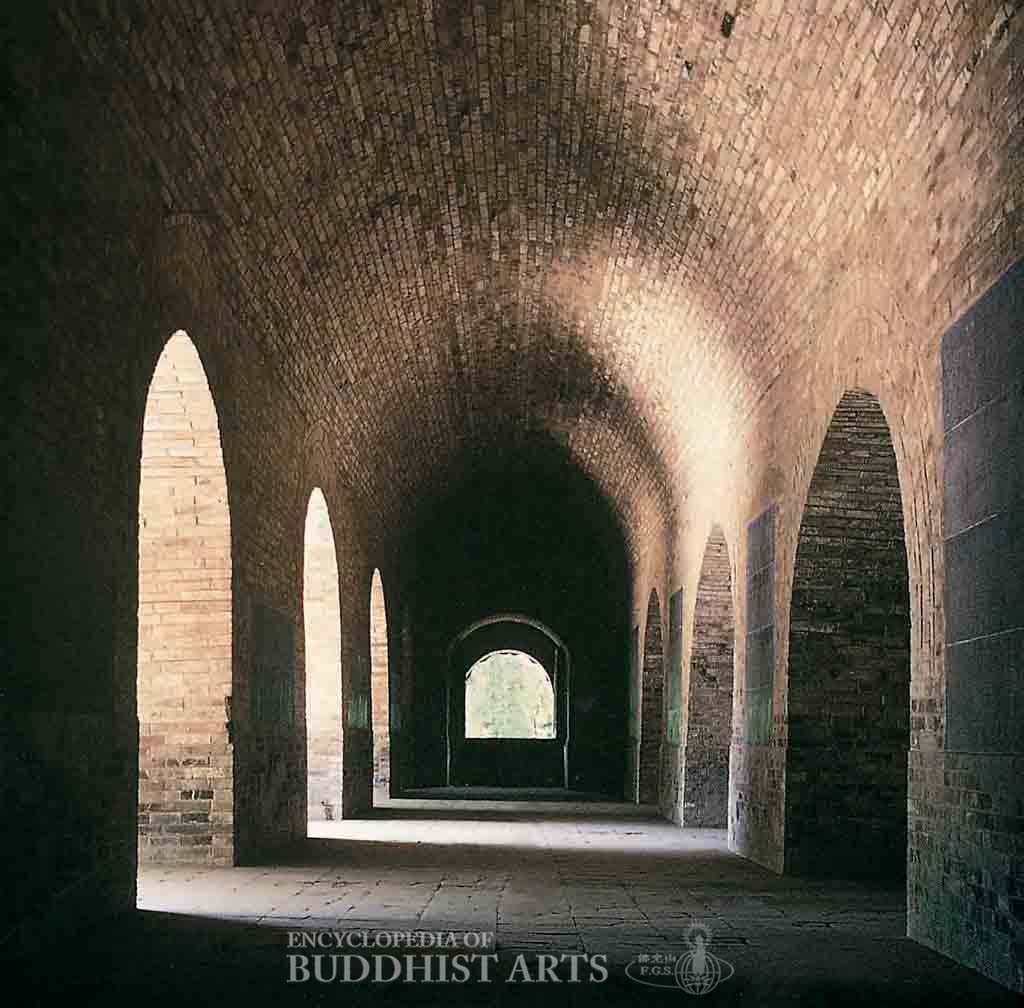
Linggu Temple Beamless Hall (interior)
Linggu Temple Beamless Hall
CHINA, Jiangsu, Nanjing
The Beamless Hall is also called the Infinity Hall, and was built in 1381 during the Ming dynasty. It is the largest beamless hall still in existence in China. It was listed as a Provincial Cultural Heritage Site in 1982.
The five-by-three bay brick hall is 53.9 m wide, 38.8 m deep and 22 m high. It has three archways at the front and one at the rear. There are three parallel vaulted halls, one of which is used to commemorate the soldiers who died during the Northern Expedition (1926–1928). On the opposite wall there are paintings of Buddhas and Bodhisattvas with an altar where services are held. The hall is built without beams. The span of the middle section is the widest, measuring 11.2 m and with a height of 14 m. Arched windows are located on the east and west sides. It has a double-eave hip-and-gable roof covered in glazed tiles. Along the roof ridge there are three small glazed white stupas that are connected to the vaulted ceiling inside. This practical design allows natural light into the hall.
For more details, go to the Encyclopedia of Buddhist Arts: Architecture G-L, page 661.
Cite this article:
author = Hsingyun and Youheng and Johnson, Peter and Mankuang and Lancaster, Lewis,
booktitle = {Encyclopedia of Buddhist Arts: Architecture G-L},
pages = 661,
title = {{Linggu Temple Beamless Hall}},
volume = 2,
year = {2016}}