
.jpg)
Daci’en Temple
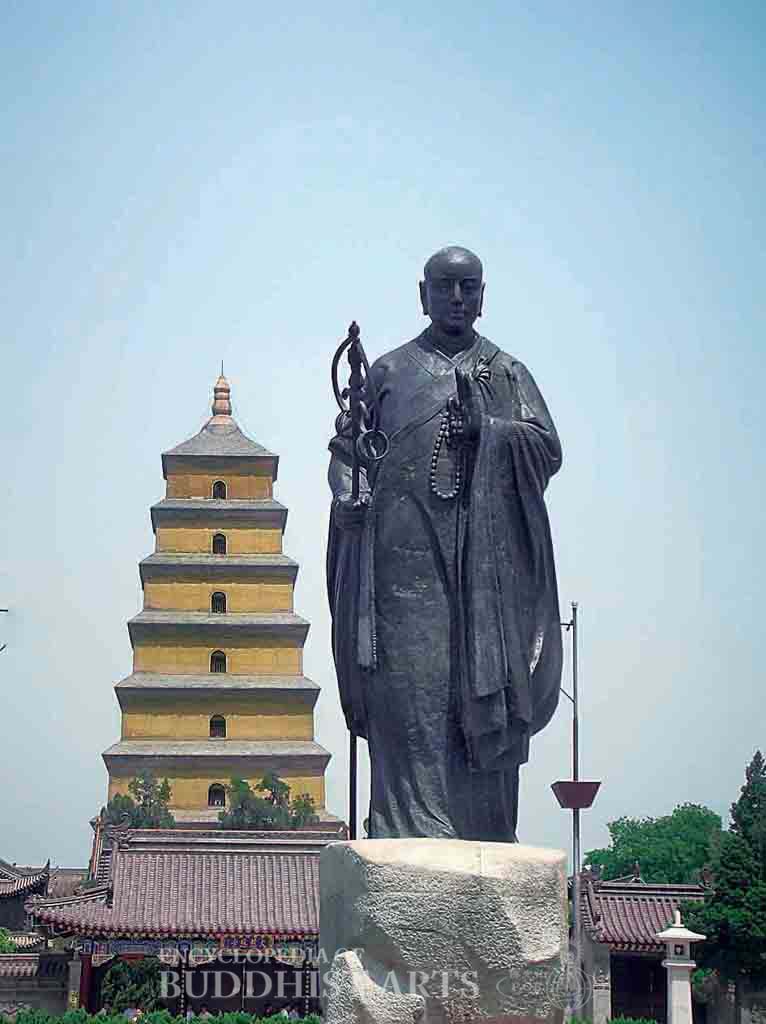
Daci’en Temple: Dayan Pagoda Compound - Master Xuanzang
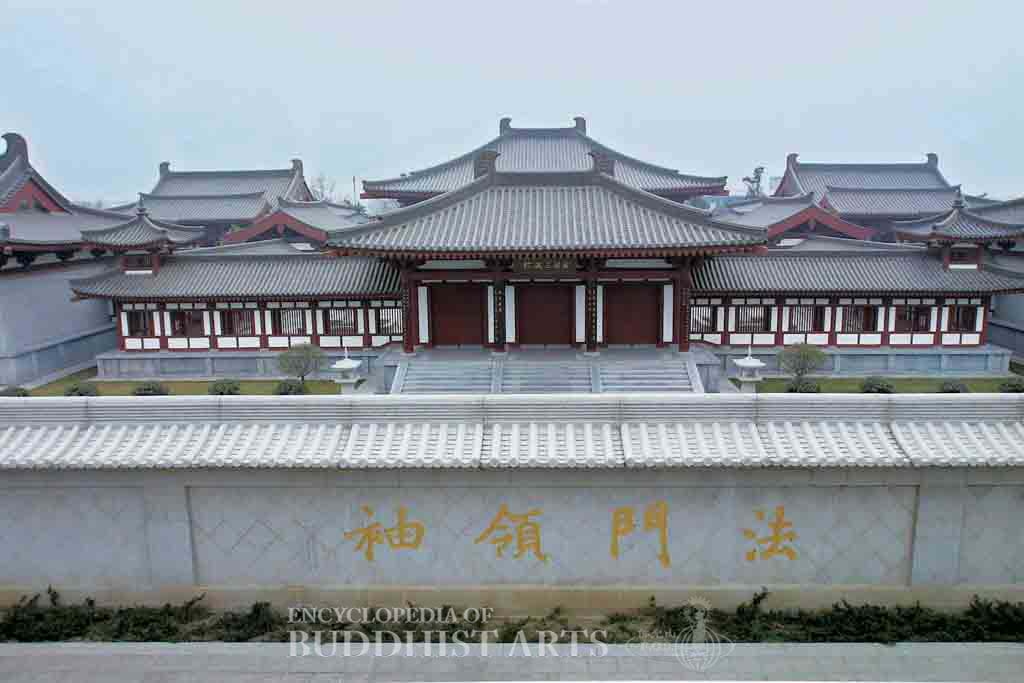
Daci’en Temple: Xuanzang Tripitaka Compound
Daci’en Temple
CHINA, Shaanxi, Xi’an
The temple was one of the main sutra translating centers in Chang’an (present day Xi’an) during the Tang dynasty (618–907), as well as the ancestral temple of the Faxiang school. It was built in 589 during the Sui dynasty and expanded in 648 during the Tang dynasty. Master Xuanzang moved here under imperial order to undertake the translation of sutras. The brick pagoda in the west compound was repaired in 652, in order to preserve the sutras brought back from India by Xuanzang. At its peak, the temple consisted of more than ten compounds and numerous halls and pavilions. During the persecution of Buddhism in 845, the temple was spared by imperial order; however, it was destroyed in wartime at the end of the Tang dynasty. From the Song dynasty (960–1279) onwards, the temple underwent numerous reconstructions and renovations but it never reached its previous scale. It was listed as a Key Buddhist Temple in the Han Region of China in 1983.
The temple faces south and occupies 6.2 ha. Along the central axis there are the main temple gate, Great Hero Hall, Dharma Hall, Dayan (Giant Wild Goose) Pagoda, and Xuanzang Tripitaka Compound. On either side there are the bell and drum towers, side halls, and subsidiary buildings. Apart from the Dayan Pagoda, the other buildings were built either during the Qing dynasty (1644–1911) or in recent years.
The Xuanzang Tripitaka Compound was inaugurated in 2000. It is the largest memorial hall of Master Xuanzang and houses a skull bone relic of him. In front of the main temple gate there is the Dayan Pagoda courtyard with a large statue of Xuanzang at its center.
For more details, go to the Encyclopedia of Buddhist Arts: Architecture A-F, page 185.
Cite this article:
author = Hsingyun and Youheng and Johnson, Peter and Mankuang and Lancaster, Lewis,
booktitle = {Encyclopedia of Buddhist Arts: Architecture A-F},
pages = 185,
title = {{Daci’en Temple}},
volume = 1,
year = {2016}}