
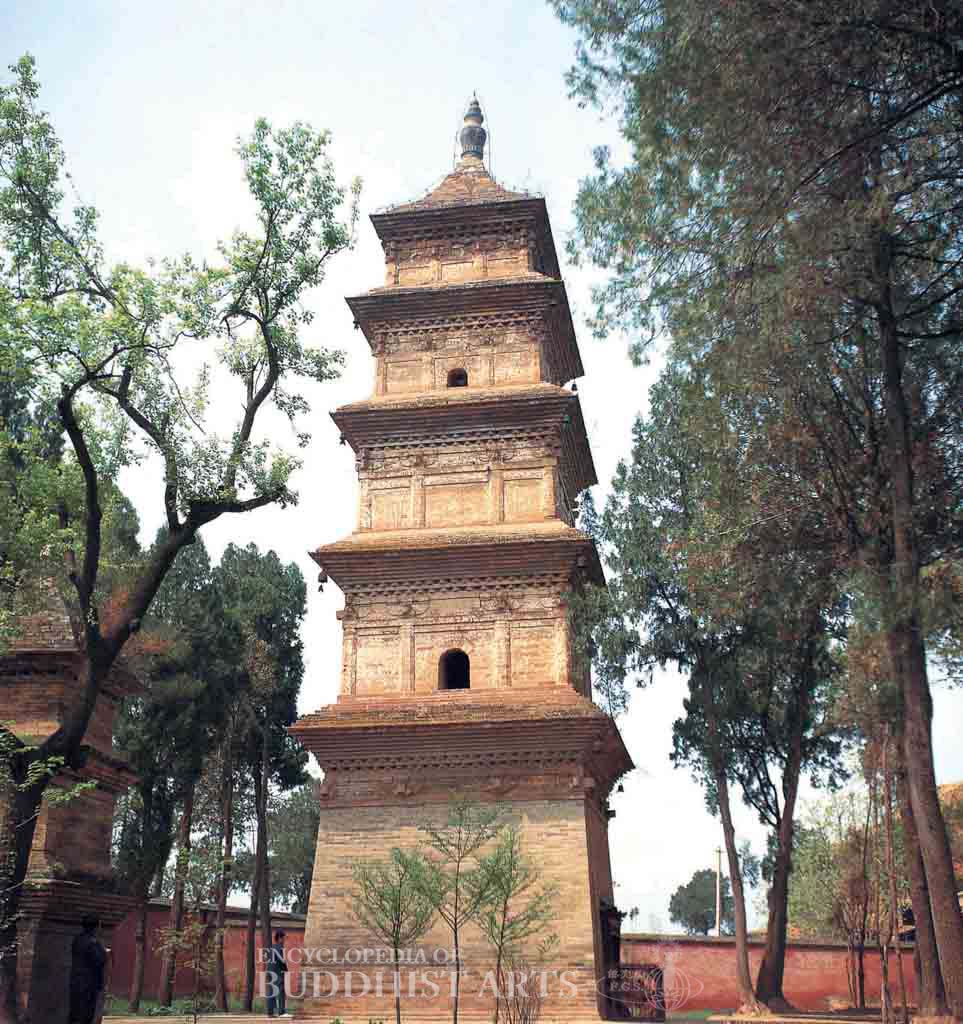
Xingjiao Temple Pagoda
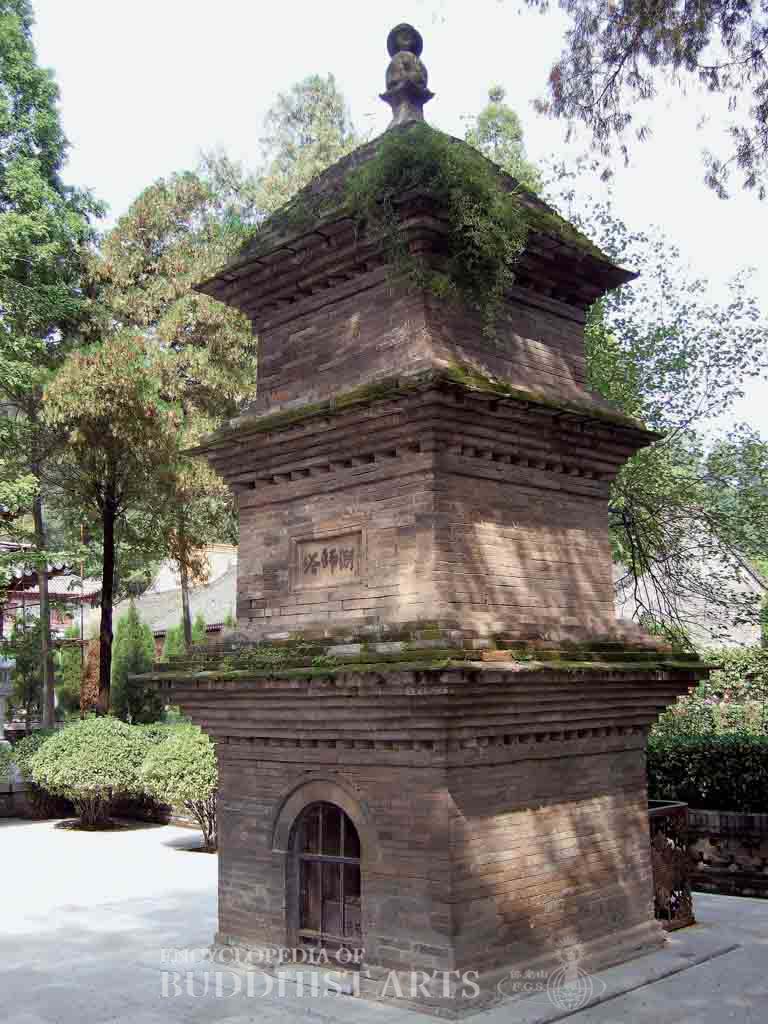
Xingjiao Temple Pagoda: Yuance Pagoda
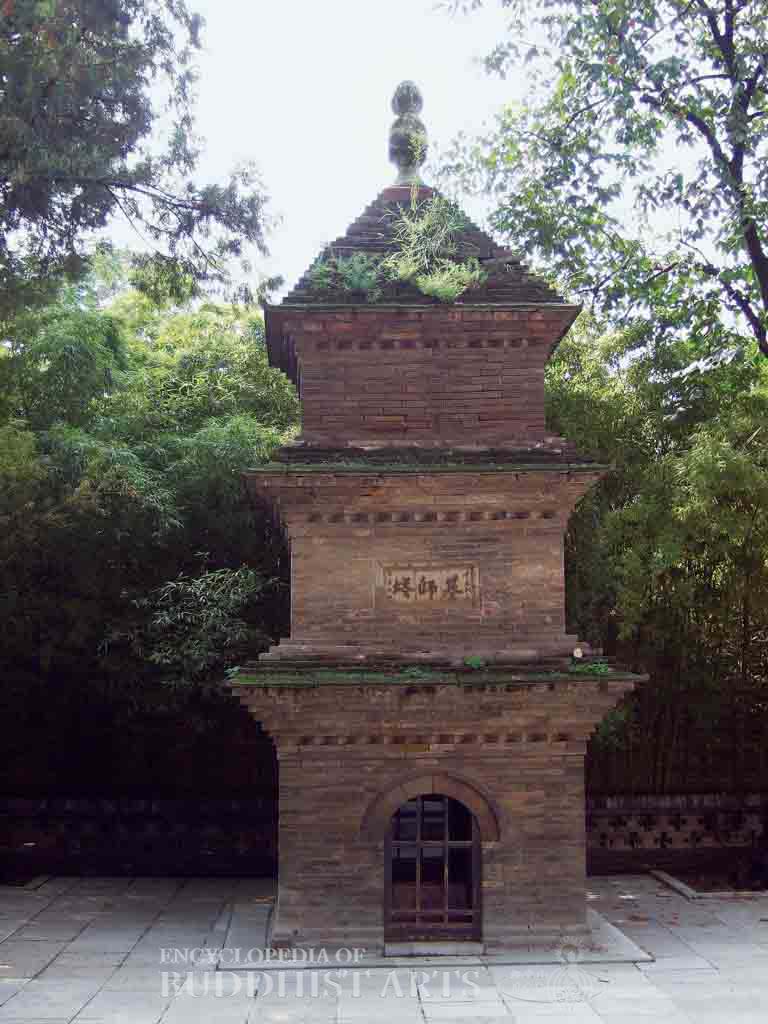
Xingjiao Temple Pagoda: Kuiji Pagoda
Xingjiao Temple Pagoda
CHINA, Shaanxi, Xi’an
This pagoda is dedicated to Master Xuanzang and is therefore also known as Xuanzang Pagoda. It is the earliest known square, brick pagoda constructed to resemble a wooden structure. It was built in 669 during the Tang dynasty but was ravaged by fire and looted during wartime. It was reconstructed in 828, also during the Tang dynasty. The pagoda was listed as a National Cultural Heritage Site in 1961.
The five-story, square, brick pagoda is 21.4 m high with a base length of 5 m. The eaves are formed by corbeling, beneath which are two rows of dogtooth bricks. Wind chimes hang from the corners of the eaves. From the second story upwards, the walls are divided into three bays by pilasters, above which there are architraves and bracket sets. The pagoda has a square pyramidal roof surmounted by a spire in the form of a gourd. The pagoda is solid but there is a small chamber with a clay statue of Master Xuanzang on the south side of the first story. On the north side, there is an inlaid stele relating the biography of Master Xuanzang, describing his birth, how he became a monastic, how he was ordained, his journey to India, and his translation of sutras.
On either side of Xuanzang Pagoda there are those dedicated to his two disciples, Yuance and Kuiji. They are both three stories high, square, and made of brick.
For more details, go to the Encyclopedia of Buddhist Arts: Architecture T-Z, page 1325.
Cite this article:
author = Hsingyun and Youheng and Johnson, Peter and Mankuang and Lancaster, Lewis,
booktitle = {Encyclopedia of Buddhist Arts: Architecture T-Z},
pages = 1325,
title = {{Xingjiao Temple Pagoda}},
volume = 4,
year = {2016}}