
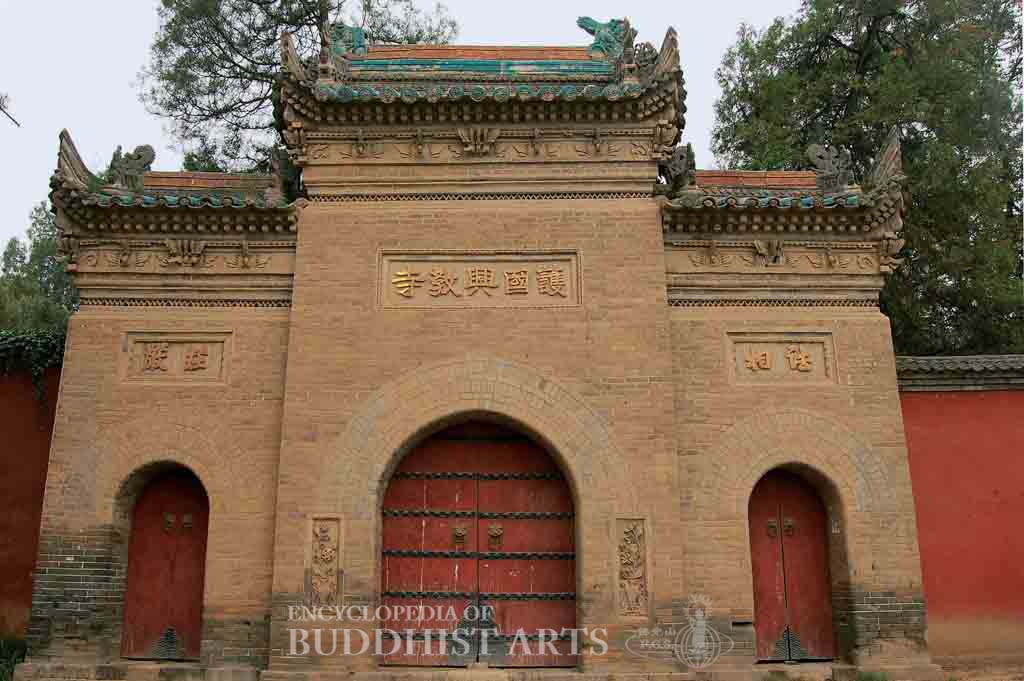
Xingjiao Temple: Main Temple Gate
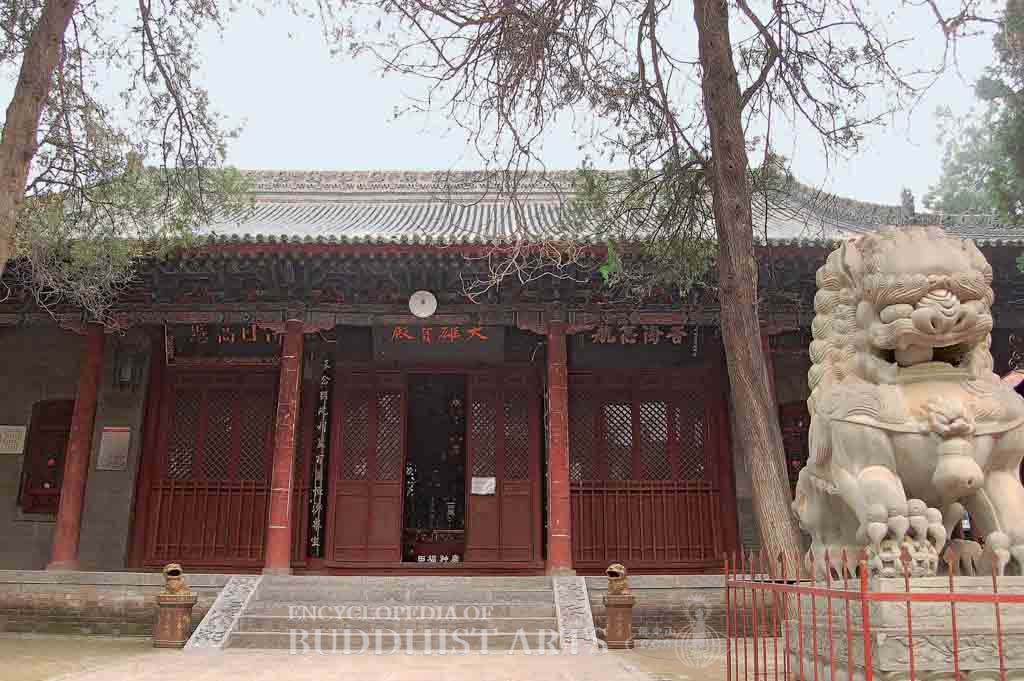
Xingjiao Temple: Great Hero Hall
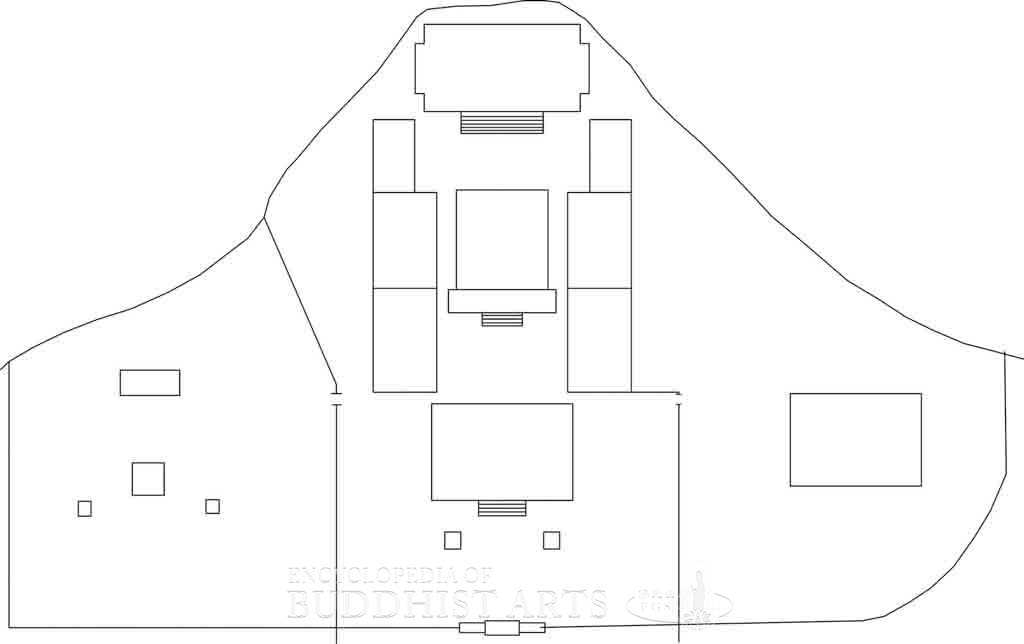
Xingjiao Temple (site layout)
Xingjiao Temple
CHINA, Shaanxi, Xi’an
Xingjiao means Flourishing Teaching. When Master Xuanzang passed away in 664 during the Tang dynasty, he was buried at Bailuyuan, east of Xi’an. Five years later he was reburied at the spot where the temple stands today. At first a pagoda was erected for him and the temple was built in the following year. According to an inscription, around 100 years after it was constructed, the temple had no monastics and the pagoda had no caretaker. The temple was repaired in 828 during the Tang dynasty. It has been repaired and renovated a number of times throughout its history. All but three relic pagodas were destroyed in wartime during the rule of Emperor Tongzhi (reigned 1862–1874) of the Qing dynasty. The temple was reconstructed in 1922 and 1939, followed by further renovation work after 1949. It was listed as a key Buddhist temple in the Han region of China in 1983.
The temple faces south and occupies 2.4 ha. It consists of the central compound and the east and west compounds. Along the central axis of the central compound there are the main temple gate, Great Hero Hall, Dharma Hall, and Reclining Buddha Hall. The side buildings include the bell and drum towers, as well as the monastic quarters. The east compound contains the sutra repository, which is two stories high and houses thousands of Buddhist texts. The west compound houses the pagodas of Xuanzang and his two disciples, Kuiji and Yuance, in a triangular formation. Xuanzang’s pagoda is situated in the center of the compound and is the tallest of the three at 21.4 m. There is a hall located to the north of the pagoda with images of Xuanzang’s traveling bookcase, as well as sculptures of Kuiji and Yuance.
The three-bay wide main temple gate is high with three separate ornate roofs. The five-by-three bay Great Hero Hall has a hip-and-gable roof. A Yuan dynasty (1271–1368) copper statue of Vairocana Buddha encircled by 1,000 Buddhas is enshrined inside the hall. The statue is more than 2 m high and weighs around 1.4 t. There are more than 10 steles located within different parts of the temple.
For more details, go to the Encyclopedia of Buddhist Arts: Architecture T-Z, page 1324.
Cite this article:
author = Hsingyun and Youheng and Johnson, Peter and Mankuang and Lancaster, Lewis,
booktitle = {Encyclopedia of Buddhist Arts: Architecture T-Z},
pages = 1324,
title = {{Xingjiao Temple}},
volume = 4,
year = {2016}}