
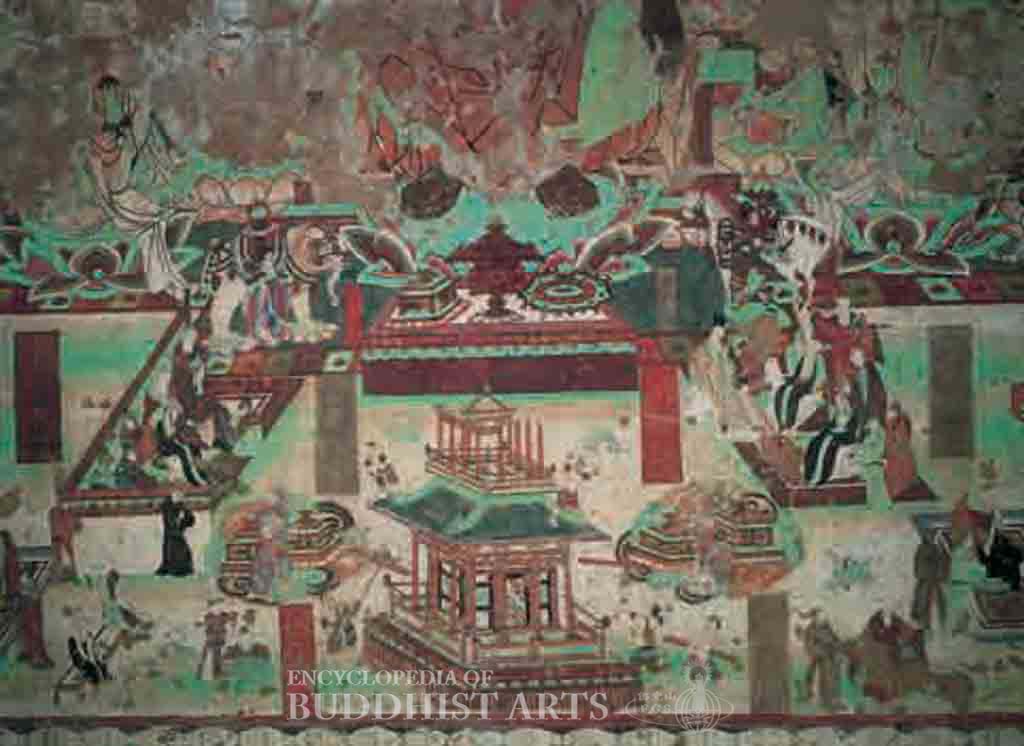
Yulin Cave 25: Illustration of the Sutra on the Descent of Maitreya - Offering of the Seven Treasures of the Cakravartin
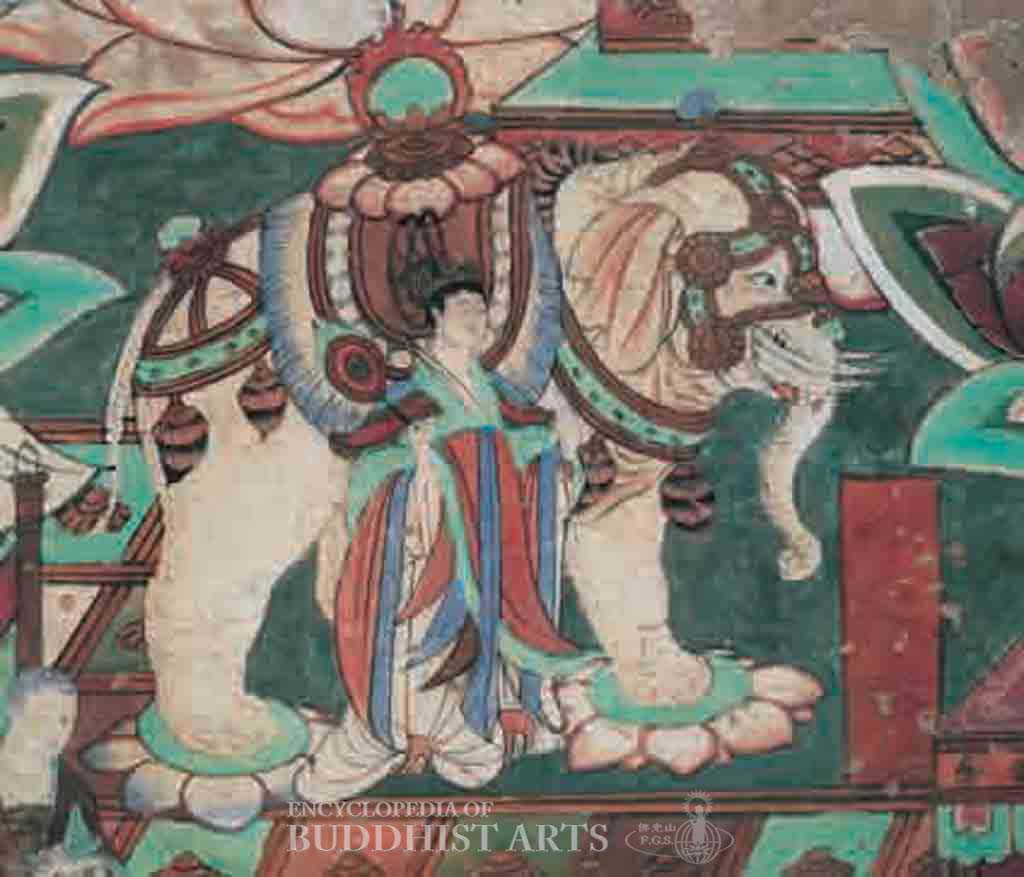
Yulin Cave 25: Illustration of the Sutra on the Descent of Maitreya - Offering of the Seven Treasures of the Cakravartin - Queen and Elephant
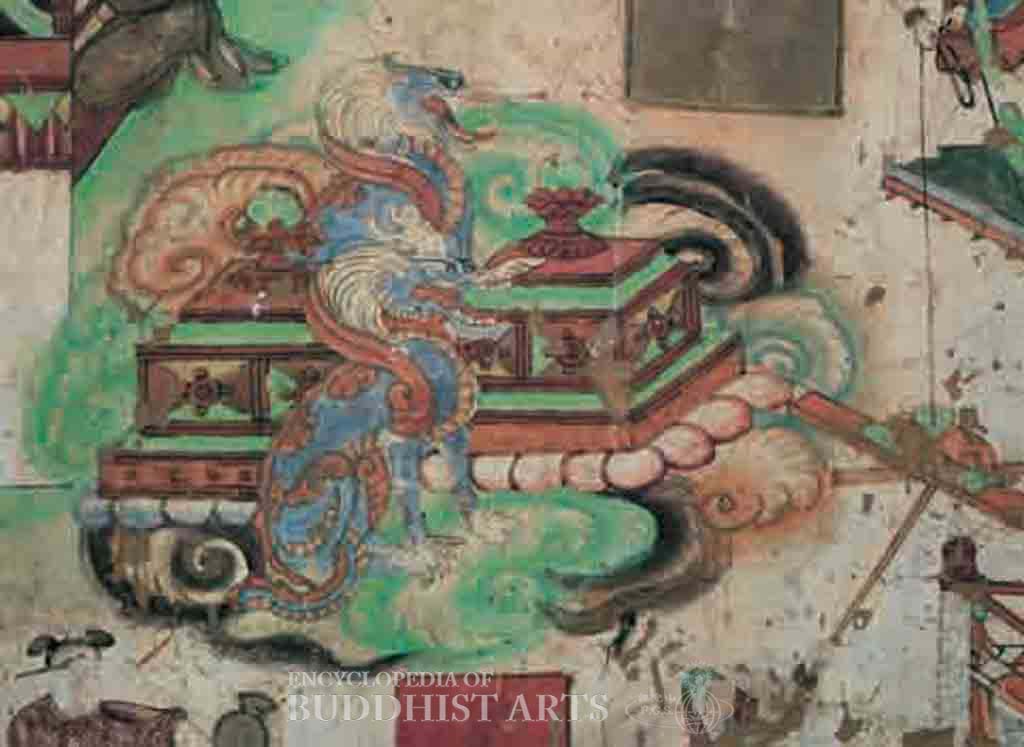
Yulin Cave 25: Illustration of the Sutra on the Descent of Maitreya - Offering of the Seven Treasures of the Cakravartin - Treasure Box
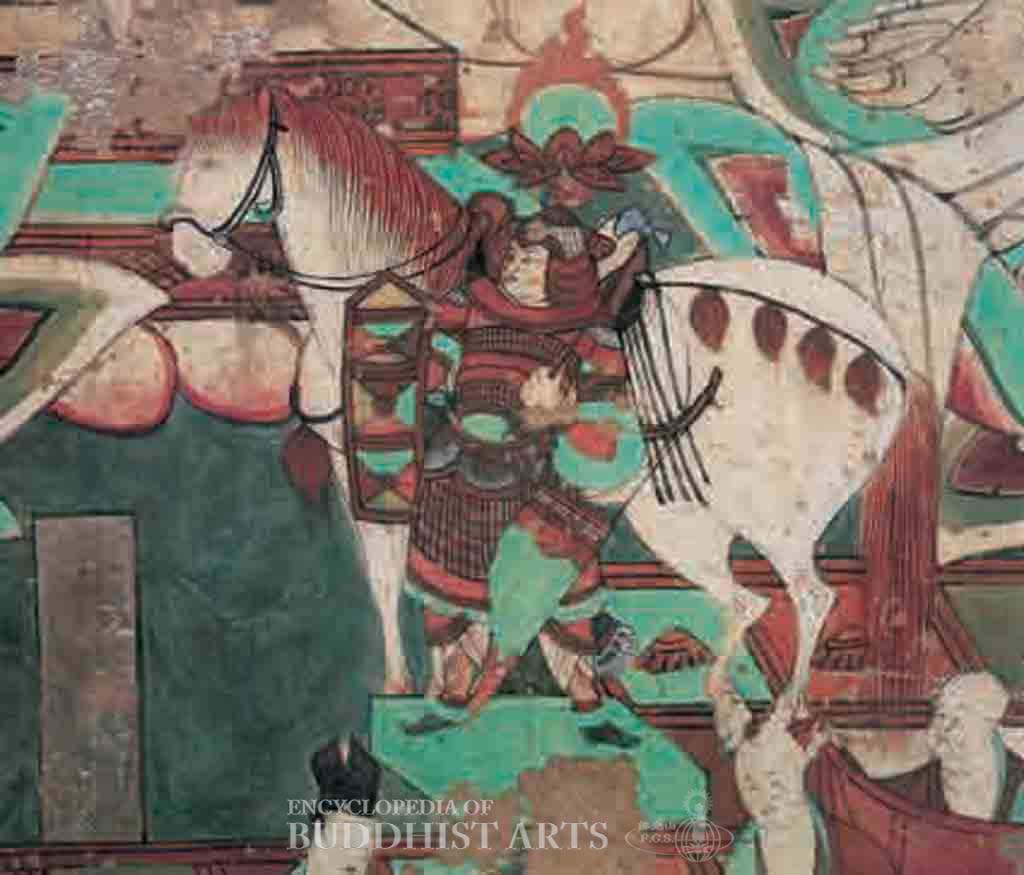
Yulin Cave 25: Illustration of the Sutra on the Descent of Maitreya - Offering of the Seven Treasures of the Cakravartin - General and Horse
Yulin Cave 25: Illustration of the Sutra on the Descent of Maitreya - Offering of the Seven Treasures of the Cakravartin
CHINA, Gansu, Guazhou; Tang dynasty
This detail is located in the bottom middle section of the illustration of the Sutra on the Descent of Maitreya, on the north wall of the main chamber. Within the image, Sankha, a cakravartin or wheel-turning king, offers Maitreya with the seven treasures in addition to a treasure pillar. The seven treasures are the jewel, wheel, elephant, queen, horse, minister, and general. The wish-fulfilling jewel is depicted in the middle of the central altar, with a golden wheel on the right and the sutra case on the left. The six-tusked white elephant and a woman to the left of the altar represent the elephant and the queen. A white horse and a man in full armor stand on the right; these are the treasures of the horse and the general. The treasure pavilion is located in front of the altar. Two treasure boxes on either side of the pavilion are surrounded by clouds and protected by dragons. These represent the four great treasures which, according to the sutra, are scattered among the four kingdoms of Jambudvipa.
The six-tusked white elephant is embellished with ornaments and carries a large jewel upon its back. The queen wears a golden headdress and her hair is styled to resemble a pair of cicada wings. She wears a large, complex red and white garment with long sleeves resembling a bird’s plumage, and has a shawl draped over her shoulders. She holds a round fan in one hand. This clothing reflects the typical aristocratic fashions of the Mid-Tang (756–846) and Late Tang (846–907) periods.
The section of the image depicting the treasure pavilion reflects the story in the sutra which describes Maitreya bestowing the pavilion upon the brahmins, who immediately began dismantling it and dividing the parts among themselves. The brahmins can be seen on the partially dismantled roof of the pavilion. According to the sutra, Maitreya, observing this behavior, reflected on the impermanence of life and the fact that the only way to break free from this cycle is to renounce, practice the Dharma, and enter the Pure Land. The renunciations of the king, minister, queen, and court lady are depicted in galleries on both sides of the pavilion.
For more details, go to the Encyclopedia of Buddhist Arts: Caves T-Z, page 1603.
Cite this article:
author = Hsingyun and Youheng and Johnson, Peter and Mankuang and Huntington, Susan and Edson, Gary and Neather, Robert,
booktitle = {Encyclopedia of Buddhist Arts: Caves T-Z},
pages = 1603,
title = {{Yulin Cave 25: Illustration of the Sutra on the Descent of Maitreya - Offering of the Seven Treasures of the Cakravartin}},
volume = 9,
year = {2016}}