
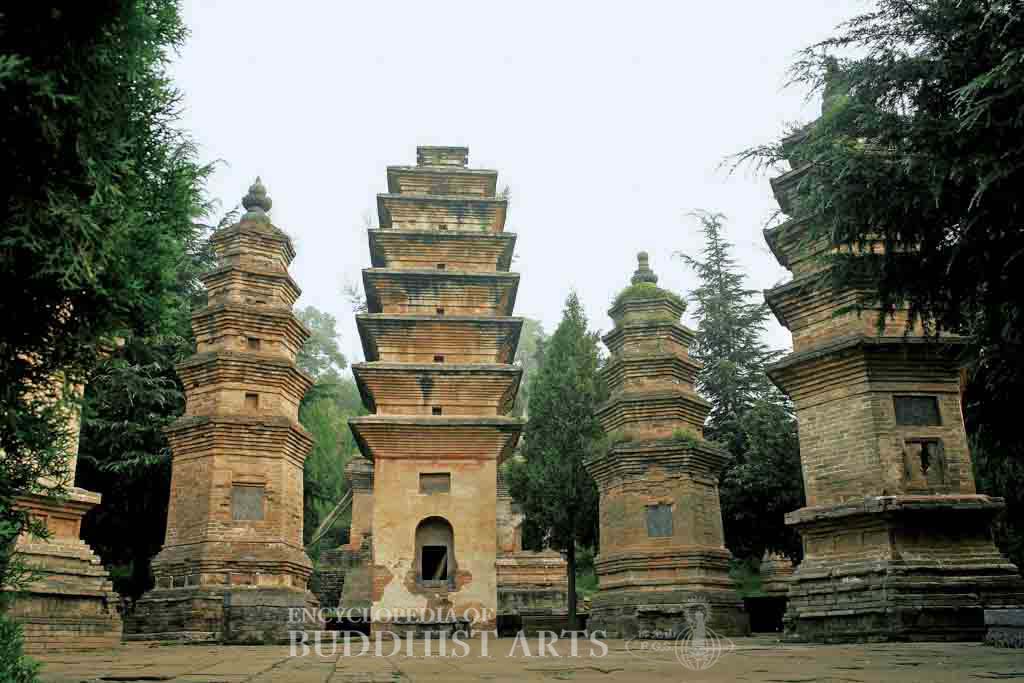
Shaolin Temple Forest of Pagodas
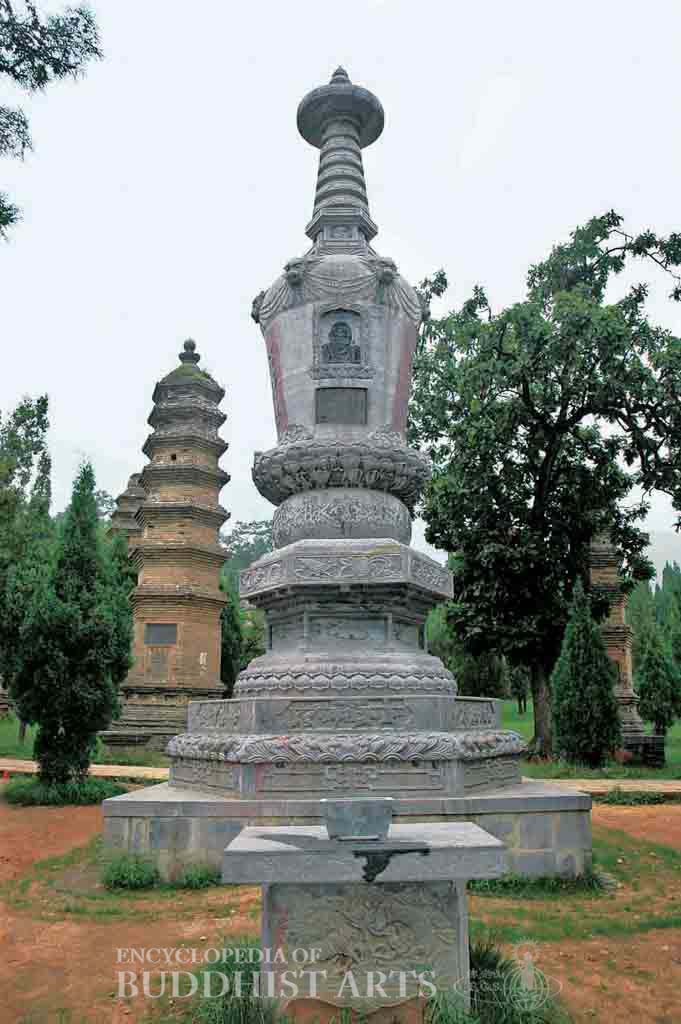
Shaolin Temple Forest of Pagodas
Shaolin Temple Forest of Pagodas
CHINA, Henan, Zhengzhou
The forest of pagodas is located 300 m west of Shaolin Temple and is the largest in China. There are more than 220 pagodas from the Tang (618–907) to the Qing (1644–1911) dynasties, as well as two contemporary ones. Along with the First Patriarch Temple, they were listed as a National Cultural Heritage Site in 1996, and, as part of the Historic Monuments of Dengfeng, as they were listed a UNESCO World Heritage Site in 2010.
The style of pagoda varies from multi-tier to Tibetan designs. Most of them are made from stone bricks but some are carved from a single piece of rock. The front of each pagoda contains a plaque identifying the deceased, and some are decorated with delicate images and relief figures. Some of the pagodas have additional inscriptions at the back while others have steles erected beside the pagoda, stating the details of the monks’ lives and their successors. The oldest dates back to 791 during the Tang dynasty and was built for Chan Master Fawan. Other pagodas of historical importance belong to Putong of the Song dynasty (960–1279), as well as Master Yangong and Master Zhugong of the Jin dynasty (1115–1234). They provide important information for the study of architecture and sculpture in China.
For more details, go to the Encyclopedia of Buddhist Arts: Architecture M-S, page 975.
Cite this article:
author = Hsingyun and Youheng and Johnson, Peter and Mankuang and Lancaster, Lewis,
booktitle = {Encyclopedia of Buddhist Arts: Architecture M-S},
pages = 975,
title = {{Shaolin Temple Forest of Pagodas}},
volume = 3,
year = {2016}}