
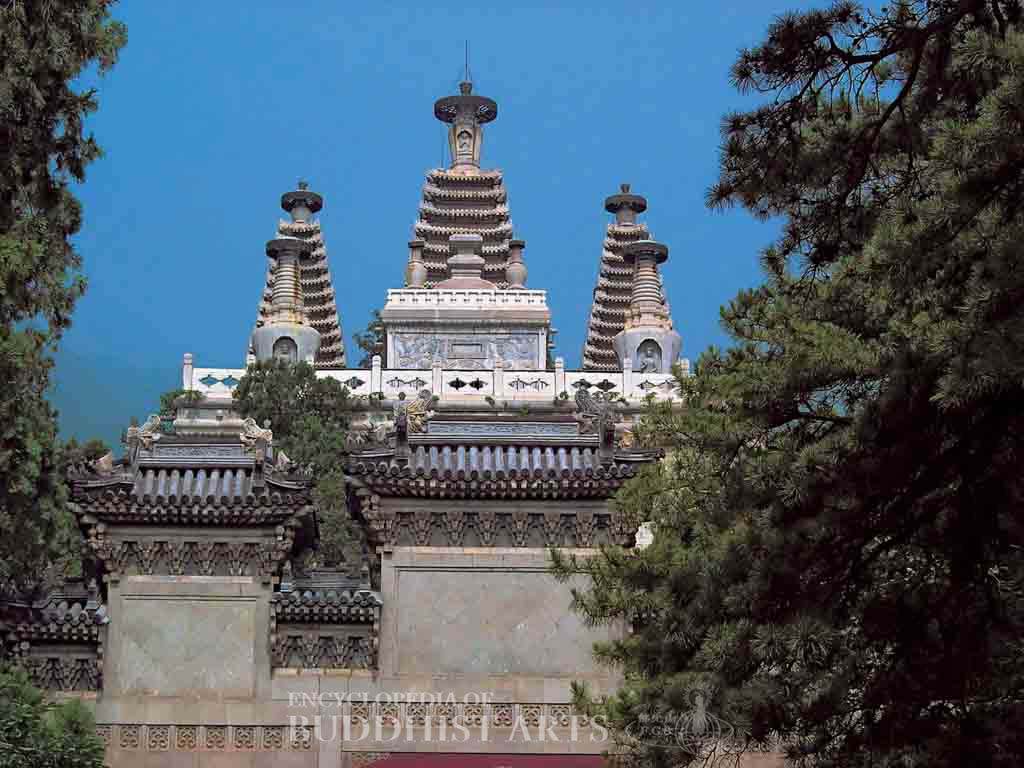
Biyun Temple: Diamond Throne Pagoda
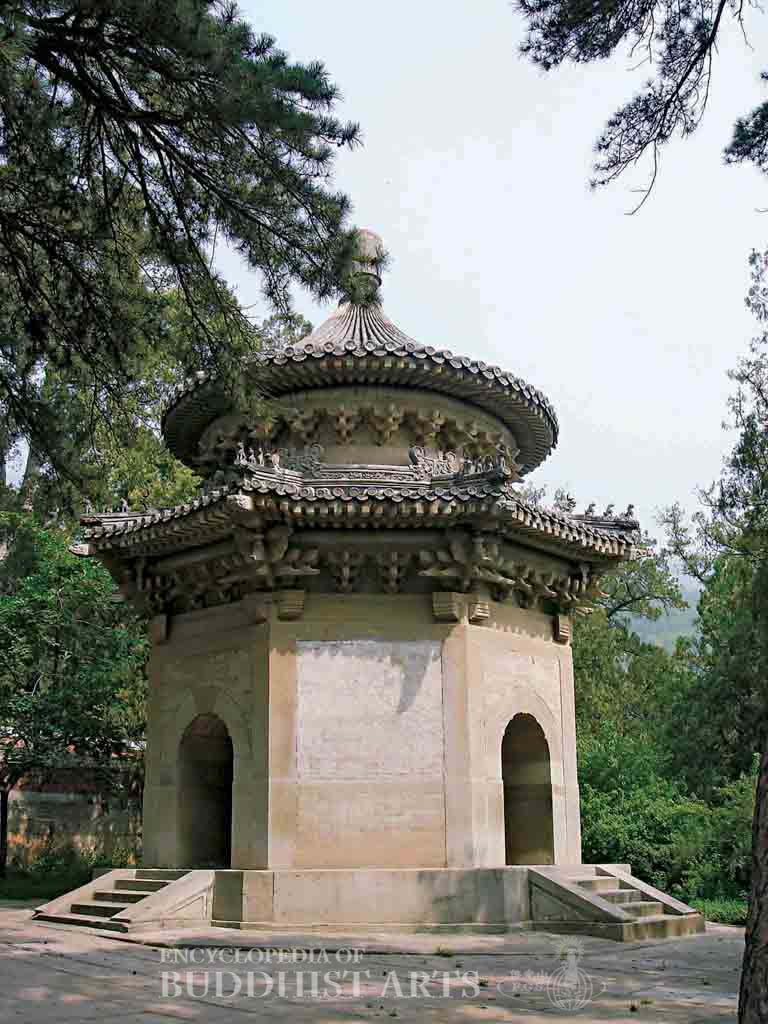
Biyun Temple: Stele Pavilion
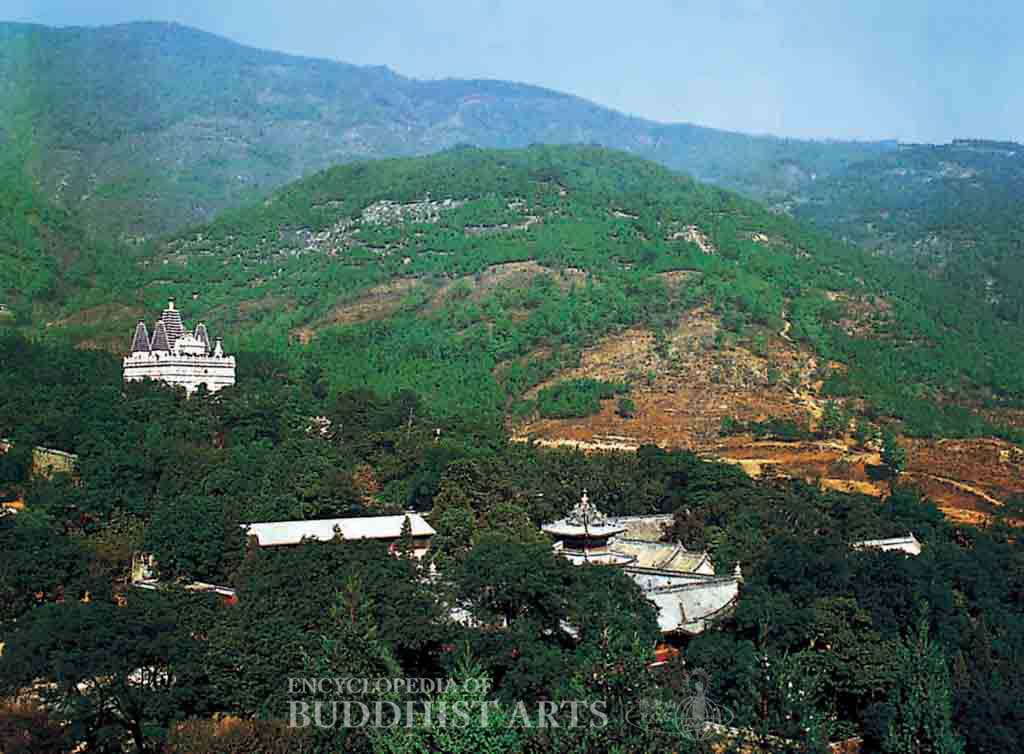
Biyun Temple (aerial view)
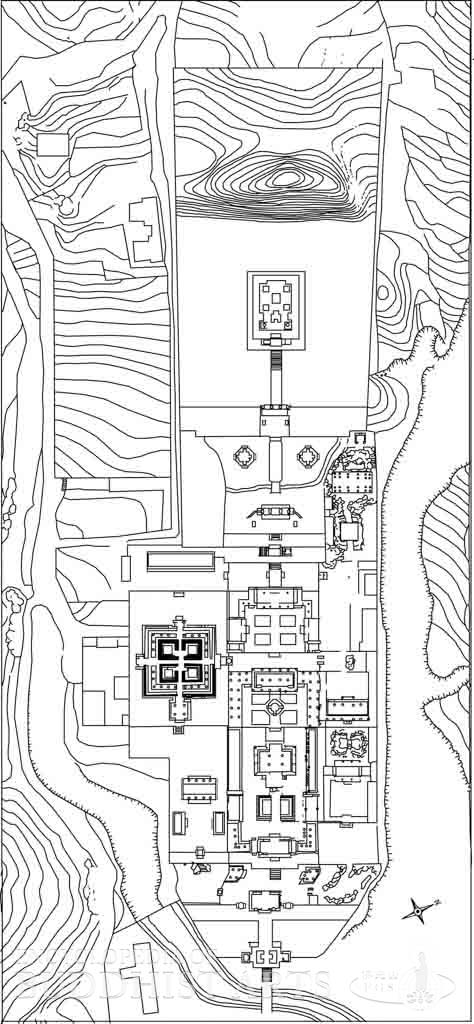
Biyun Temple (site layout)
Biyun Temple
CHINA, Beijing
According to Qing dynasty records, it was constructed during the Yuan dynasty (1271–1368). It was expanded in 1516 and 1623 during the Ming dynasty. The Arhat Hall and five pagodas were added in 1748 during the Qing dynasty. It was listed as a National Cultural Heritage Site in 2001.
The temple faces east and is built on hilly terrain along a central axis. Altogether there are six courtyards in a terrace formation, with each courtyard built higher than the one before. The difference in height between the main temple gate and the highest building is more than 100 m. The buildings are constructed along three paths: north, south, and central. The central path contains the principal buildings of the temple, such as the main temple gate, Heavenly King Hall, Great Hero Hall, Bodhisattva Hall, Sun Yat-Sen Memorial Hall, and the Diamond Throne Pagoda. The Arhat Hall and Spring Courtyard are located on the south and north paths respectively.
The Heavenly King Hall houses a 2.5 m high Maitreya Buddha statue cast during the Ming dynasty (1368–1644). The three-bay wide Great Hero Hall has a single-eave hip roof. A stele pavilion is located behind the Great Hero Hall. The Arhat Hall is laid out in a square divided into four squares. Within the hall there are gilt wooden statues of the Five Hundred Arhats, each 1.5 m high and in a different posture. They are considered to be some of the finest sculptures of the Qing dynasty.
The Diamond Throne Pagoda is constructed from white marble and is 34.7 m high. The platform is two stories high with stairs for access. Apart from the five 13-tier, square pagodas, there are also two small Tibetan stupas. The structure of the Diamond Throne Pagoda was developed from the Diamond Throne Pagoda of Zhenjue Temple. The design of the two story platform only helps to emphasize its grandness.
For more details, go to the Encyclopedia of Buddhist Arts: Architecture A-F, page 82.
Cite this article:
author = Hsingyun and Youheng and Johnson, Peter and Mankuang and Lancaster, Lewis,
booktitle = {Encyclopedia of Buddhist Arts: Architecture A-F},
pages = 82,
title = {{Biyun Temple}},
volume = 1,
year = {2016}}