
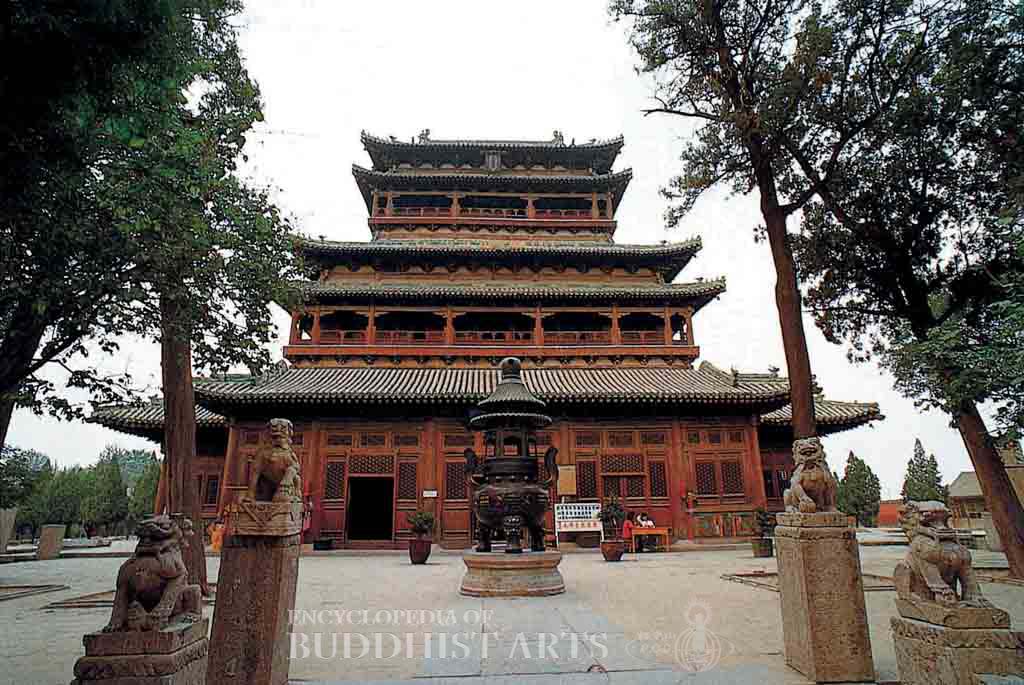
Longxing Temple: Great Compassion Pavilion
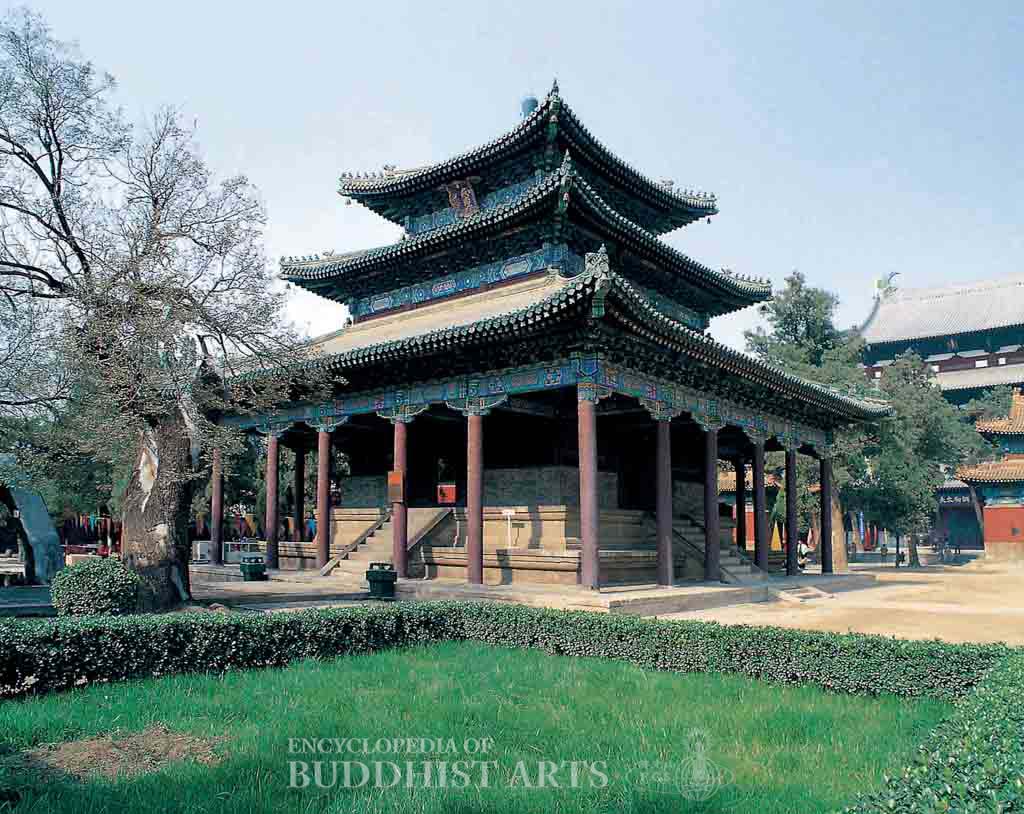
Longxing Temple: Ordination Platform
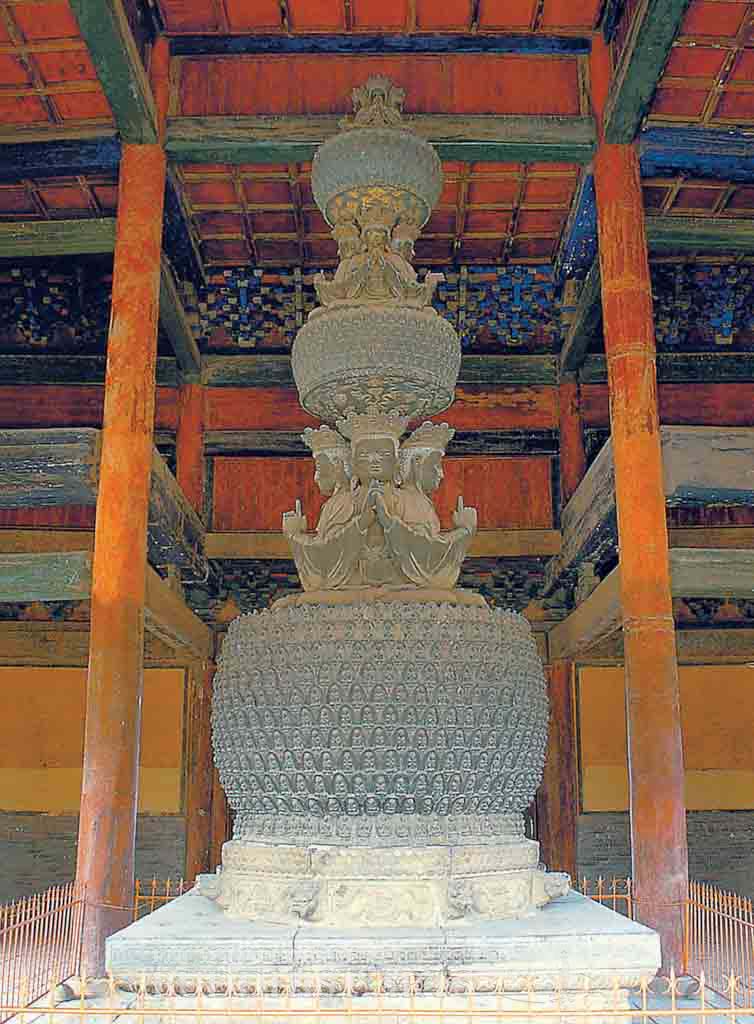
Longxing Temple: Vairocana Hall - Vairocana Buddha
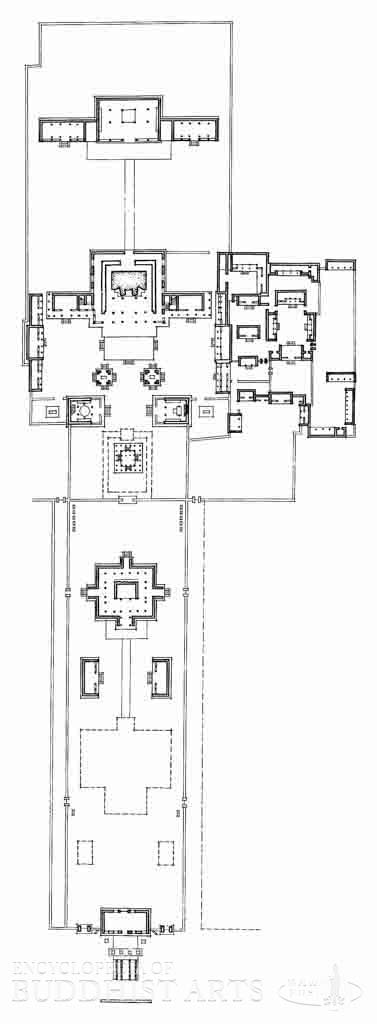
Longxing Temple (site layout)
Longxing Temple
CHINA, Hebei, Shijiazhuang
The temple was founded in 586 during the Sui dynasty with the original name of Longzang Temple. It was expanded by imperial order during the Northern Song dynasty (960–1127), resulting in its present layout. The temple was listed as a National Cultural Heritage Site in 1961.
The temple faces south and occupies 6.2 ha. Along the central axis there are a screen wall, Heavenly King Hall, which is also the main temple gate, Mani Hall, ordination platform, Great Compassion Pavilion, Amitabha Hall, Vairocana Hall, and the ruins of the Hall of the Six Great Enlightened Masters. On the sides there are the Maitreya Pavilion, revolving sutra repository, and two imperial stele pavilions containing steles of the Qing dynasty (1644–1911).
The three-story seven-by-five bay Great Compassion Pavilion is the main building of the temple. It is 33 m high. The first story has single eaves, while the second and third stories have double eaves. The two upper stories are surrounded by a balcony. A 22 m high statue of Thousand-Armed, Thousand-Eyed Avalokitesvara, with 42 prominent arms, is enshrined within the pavilion. It is known to be the oldest and tallest extant copper statue of Avalokitesvara in China. The statue rests upon a Song dynasty stone Sumeru base, which is decorated with carvings of warriors and 2.2 m high. The pavilion underwent major renovations from 1997 through 1999 to restore it to the original Song style. The Vairocana Hall was built during the rule of Emperor Wanli (reigned 1572–1620) of the Ming dynasty. In 1959 it was transferred from Zhengding Chongyin Temple to its current location. A 6 m high copper statue of Vairocana Buddha is enshrined within the building. The temple also houses the stele of Longzang Temple from the Sui dynasty (581–618).
For more details, go to the Encyclopedia of Buddhist Arts: Architecture G-L, page 698.
Cite this article:
author = Hsingyun and Youheng and Johnson, Peter and Mankuang and Lancaster, Lewis,
booktitle = {Encyclopedia of Buddhist Arts: Architecture G-L},
pages = 698,
title = {{Longxing Temple}},
volume = 2,
year = {2016}}