
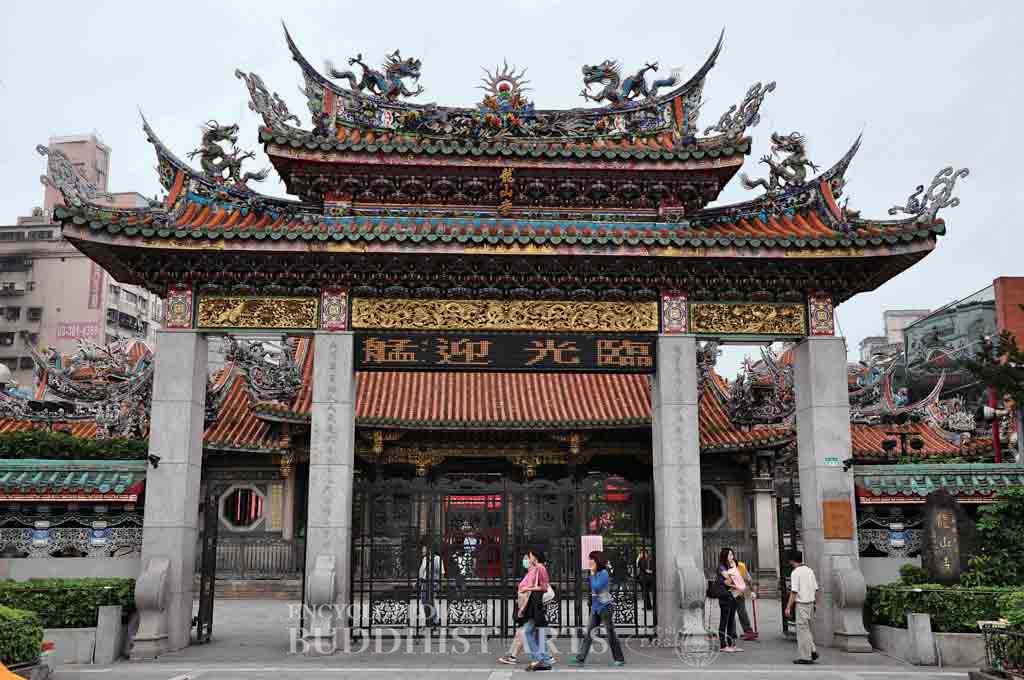
Longshan Temple: Main Temple Gate
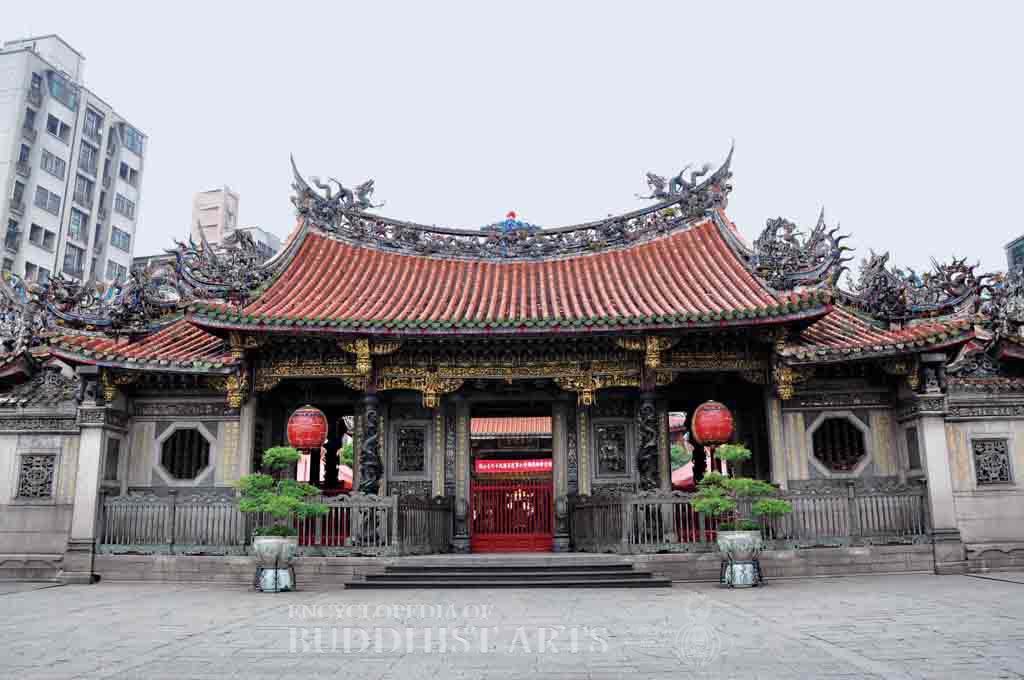
Longshan Temple: Front Hall
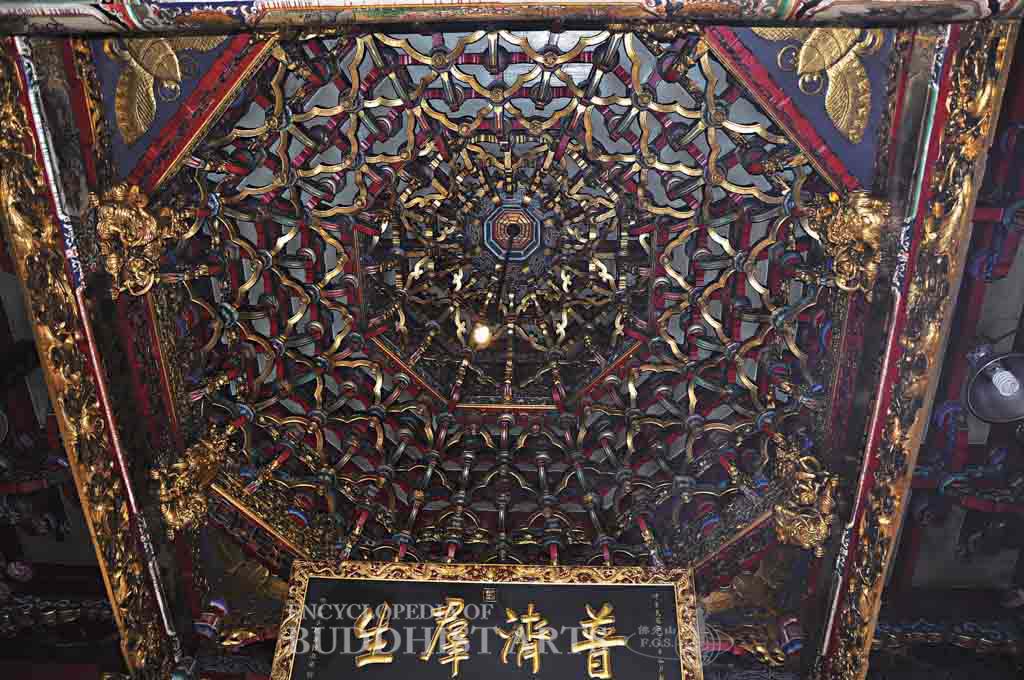
Longshan Temple: Main Hall - Ceiling
Longshan Temple
TAIWAN, Taipei
Longshan means Dragon Mountain and the temple was built in 1738 during the Qing dynasty. It has been damaged by an earthquake, a violent storm, an infestation of termites, and by war. It has been repaired a number of times throughout its history. It is listed as a Municipal Cultural Heritage Site.
The temple site occupies 6,000 sq m and faces south. Along the central axis, beginning from the south, are the main temple gate, front hall, main hall, and rear hall. They are flanked by the left and right side halls. The three-bay main temple gate has a double-eave hip-and-gable roof.
The Hall of Three Rivers, Dragon Chamber and Tiger Chamber collectively form the front hall with an overall frontage of 11 bays. The Hall of Three Rivers is five bays wide with doorways in the three central bays. The walls of the outer bays have octagonal stone windows. A pair of dragon pillars cast in bronze is erected along the veranda in front of the hall. The main roof over the three central bays is supplemented by lower roof extensions on either side. The roof is supported by finely detailed bracket sets. The Dragon and Tiger Chambers flanking the Hall of Three Rivers are each three bays wide with a triple-eave roof. The facade of the front hall is built in various grades of granite and decorated with reliefs and paired couplets.
The five-by-six bay main hall is surrounded by a veranda and has a double-eave hip-and-gable roof. The outer walls are engraved with stone inscriptions. Statues of Avalokitesvara, Manjusri, and Samantabhadra Bodhisattvas are enshrined within the hall, together with Eighteen Arhats along the sides. The hall has an intricate caisson ceiling with a spiral design.
The rear hall is composed of the middle hall and the left and right subsidiary halls with a total of 11 bays. The five-bay middle hall houses statues of the Goddess Mazu, and Wenchang, the God of Literature. Above the side halls are the bell and drum towers with triple-eave roofs in the shape of helmets, which is an unusual type of pyramidal roof with a rounded crest.
For more details, go to the Encyclopedia of Buddhist Arts: Architecture G-L, page 695.
Cite this article:
author = Hsingyun and Youheng and Johnson, Peter and Mankuang and Lancaster, Lewis,
booktitle = {Encyclopedia of Buddhist Arts: Architecture G-L},
pages = 695,
title = {{Longshan Temple}},
volume = 2,
year = {2016}}