
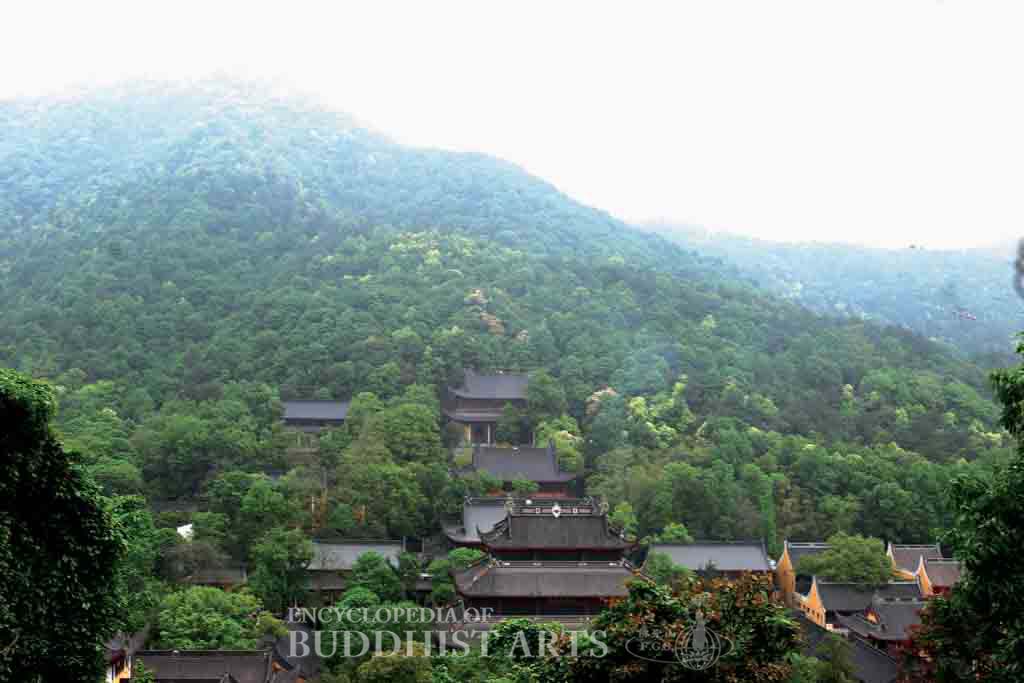
Lingyin Temple (aerial view)
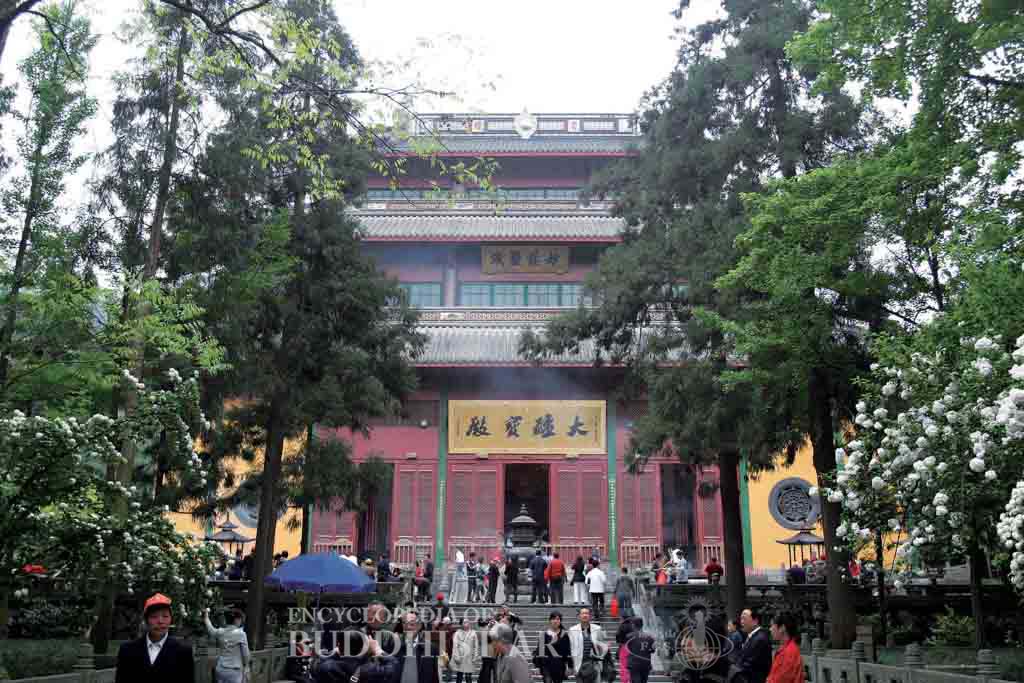
Lingyin Temple: Great Hero Hall
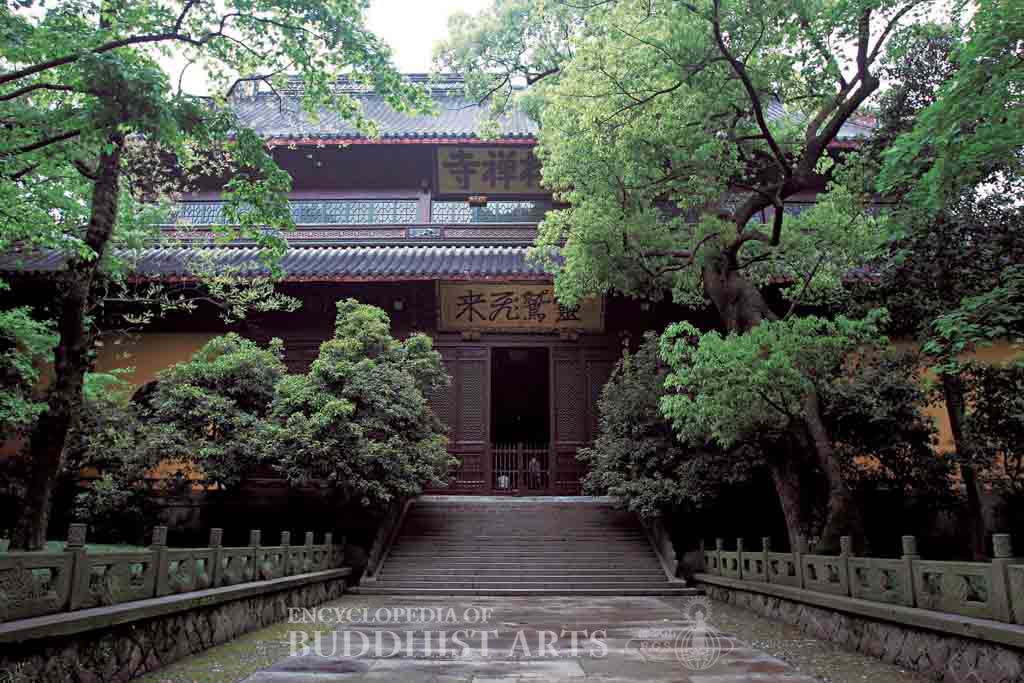
Lingyin Temple: Heavenly King Hall
Lingyin Temple
CHINA, Zhejiang, Hangzhou
Linyin means Spiritual Retreat. The temple is at the foot of Feilai (Flying) Peak, near the West Lake in Hangzhou. The temple was founded in 328 during the Eastern Jin dynasty by Huili, an Indian monk, who compared the hill to Vulture Peak. The temple was expanded by Emperor Wu (reigned 502–549) of the Liang dynasty, but was destroyed during the persecution of Buddhism in 845. The temple was rebuilt in 960 during the Northern Song dynasty by King Qian Hongchu (reigned 948–978) of Wuyue, and Master Yongming Yanshou was appointed to be the abbot. It has been repaired a number of times throughout its history and a major renovation was undertaken in 1949. The temple was listed as a key Buddhist temple in the Han region of China in 1983.
The temple faces south and along the central axis there are the Heavenly King Hall, Great Hero Hall, Medicine Buddha Hall, Dharma Hall, and Avatamsaka Hall. Buildings to the sides include the Hall of the Five Hundred Arhats, Chan Master Daoji Hall, Great Compassion Building, abbot’s quarters, and the Liandeng Pavilion. In front of both the Great Hero Hall and the Heavenly King Hall, there is a stone pagoda and a stone sutra pillar. The Heavenly King Hall houses a statue of Skanda Bodhisattva from the Southern Song dynasty (1127–1279), carved from a single piece of camphor wood. The Great Hero Hall, reconstructed between 1952 and 1954 using reinforced concrete, is 33.6 m high. It has a triple-eave hip-and-gable roof. The hall houses a 24.8 m seated Sakyamuni Buddha constructed from 24 pieces of camphor wood. The two nine-tier, octagonal stone pagodas were built in 960 during the Northern Song dynasty. They are around 10 m high and have wooden features such as the doors, windows, columns, and architraves. They are decorated with carvings of Buddhas, Bodhisattvas and various floral patterns. Below the long extended eaves there are carved bracket sets. The stone sutra pillars were built in 969 during the Northern Song dynasty, and the engraved sutras are still visible. Feilai Peak Cave is located in front of the temple and contains more than 300 carved Buddha statues dating from the Five Dynasties (907–960) to the Yuan dynasty (1271–1368).
For more details, go to the Encyclopedia of Buddhist Arts: Architecture G-L, page 674.
Cite this article:
author = Hsingyun and Youheng and Johnson, Peter and Mankuang and Lancaster, Lewis,
booktitle = {Encyclopedia of Buddhist Arts: Architecture G-L},
pages = 674,
title = {{Lingyin Temple}},
volume = 2,
year = {2016}}