
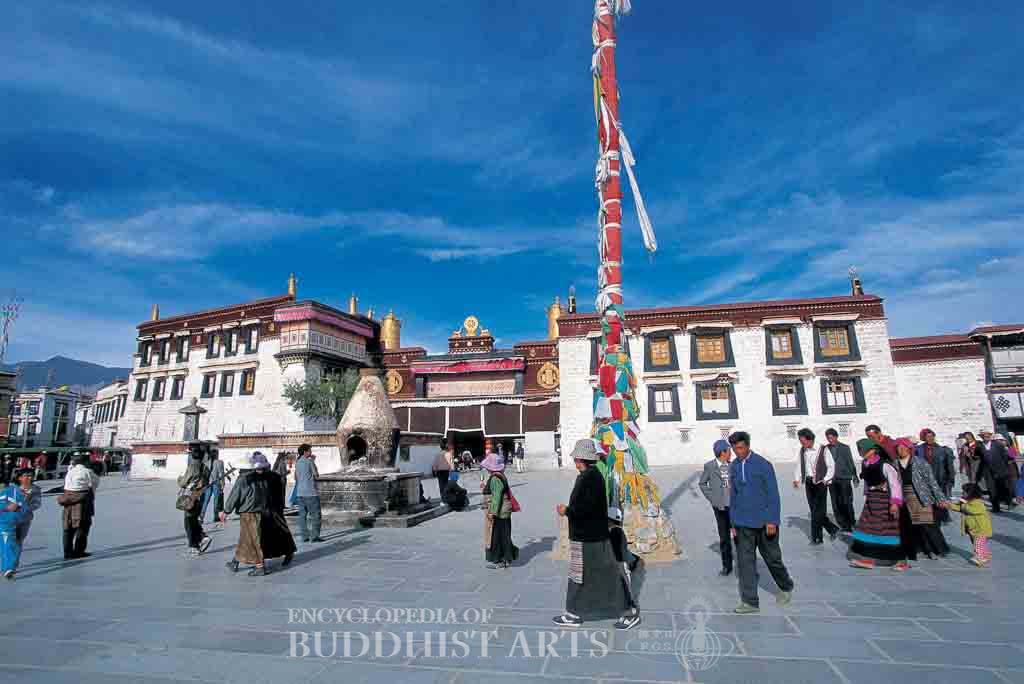
Jokhang Temple
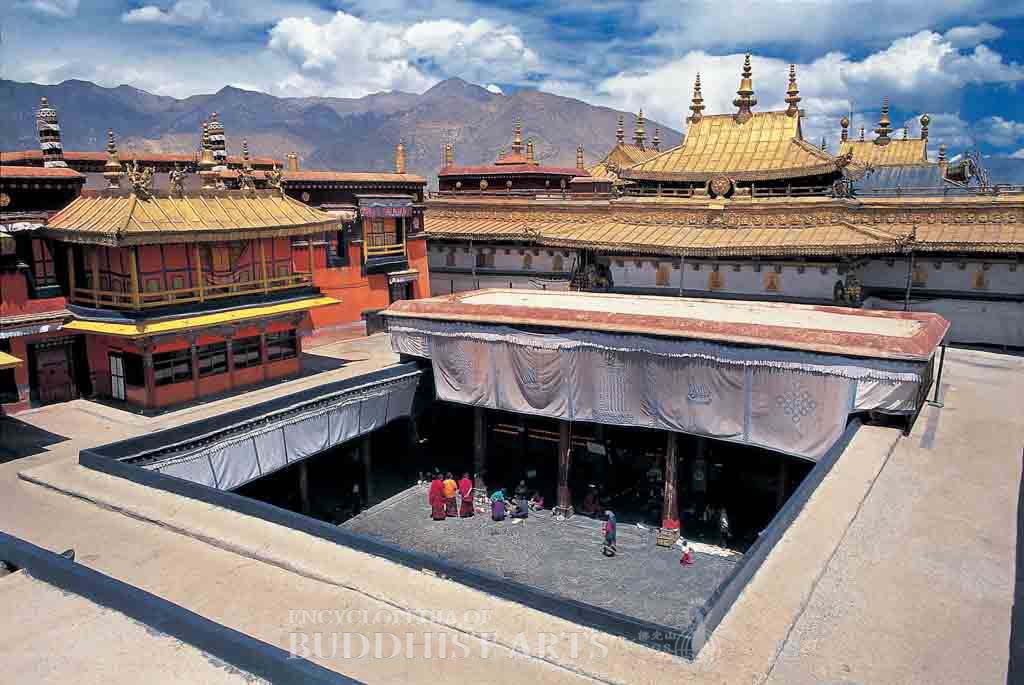
Jokhang Temple: Sakyamuni Hall
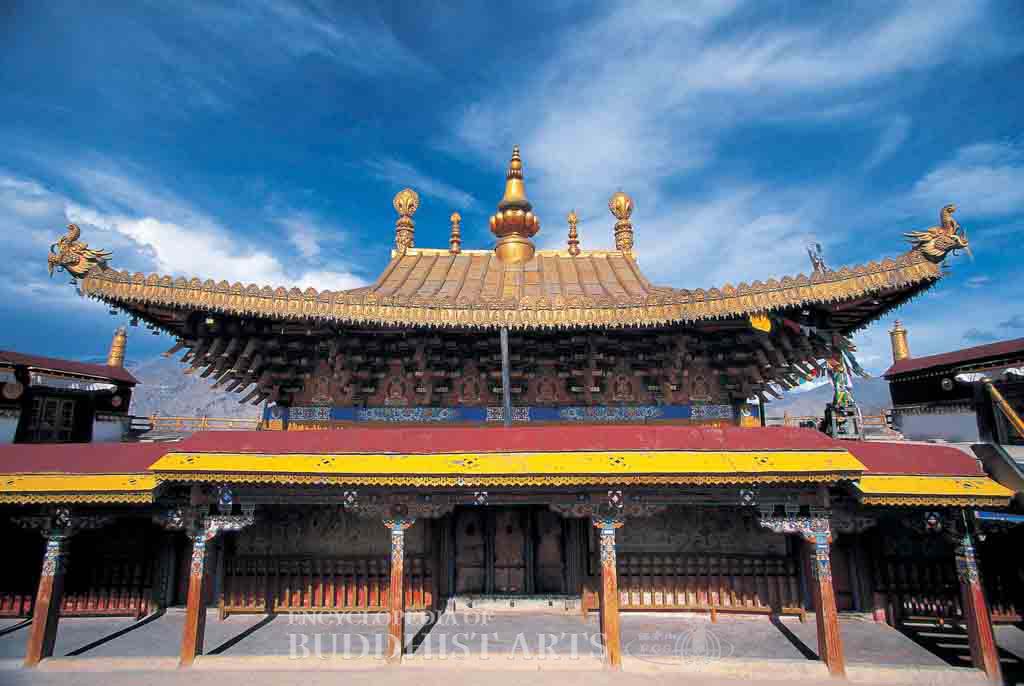
Jokhang Temple: Sakyamuni Hall - Highest Shrine
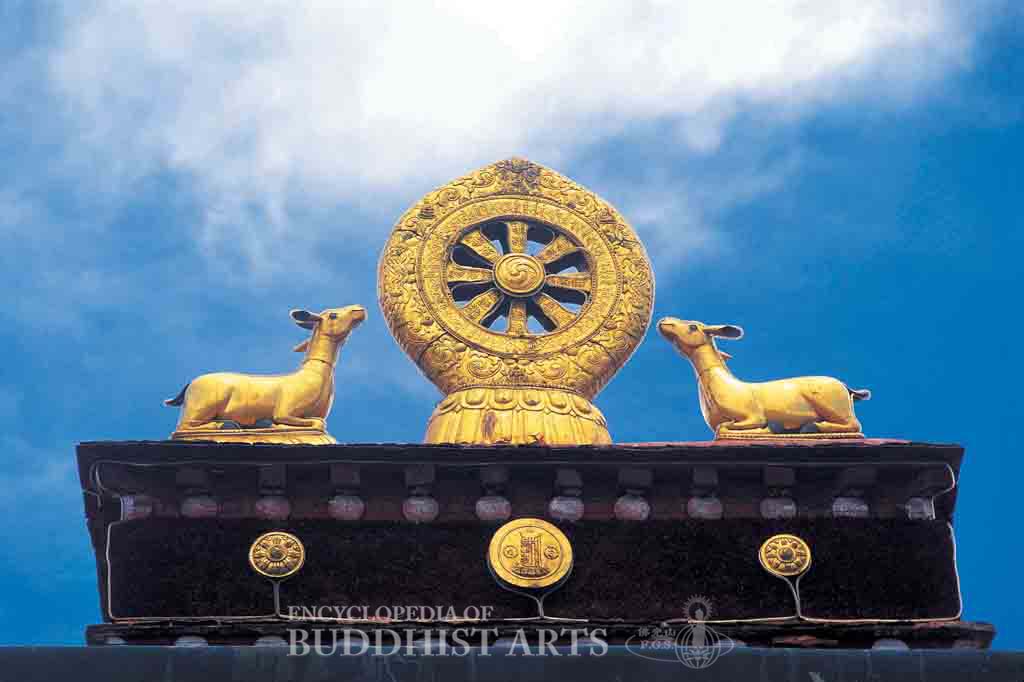
Jokhang Temple: Sakyamuni Hall - Dharma Wheel and Two Deer
Jokhang Temple
CHINA, Tibet, Lhasa
The temple is located in the center of the old city in Lhasa. It is the oldest existing Tibetan building constructed from rammed earth and wood. The Jokhang Temple is built in a combination of Tibetan, Chinese, Nepalese, and Indian architectural styles. It was built in 641 by the founder of the Tibetan Empire, Songtsan Gampo (reigned 629–650). It is one of the oldest Buddhist temples in Tibet. In the middle of the 17th century, the Fifth Dalai Lama carried out large-scale expansion work and renovations that resulted in the temple’s current scale and layout. As part of the Historic Ensemble of the Potala Palace, the Jokhang Temple was listed as a World Heritage Site by UNESCO in 2000.
The three-story central hall is the main building of the west-facing temple. Below the eaves of the second and third stories are 108 wooden beam ends sculpted in the form of crouching lions and human-headed lions. At each of the four sides of the third story is a structure with a hip-and-gable roof covered with gilt bronze tiles and decorated with gilt bronze sculptures, such as victory banners, vases, human-headed mythical creatures, and a Dharma wheel flanked by two deer. Inside the hall the wooden door frame and the columns along the corridors are filled with carvings. The door lintels are divided into two sections of reliefs: one part depicts the Life of the Buddha, while the other features apsaras making offerings. The central hall contains a secluded courtyard which is surrounded by numerous small shrines facing the courtyard. It is encircled by the inner circumambulation path, which is lined with 380 prayer wheels. The walls along the path are filled with many murals of great historical value.
For more details, go to the Encyclopedia of Buddhist Arts: Architecture G-L, page 552.
Cite this article:
author = Hsingyun and Youheng and Johnson, Peter and Mankuang and Lancaster, Lewis,
booktitle = {Encyclopedia of Buddhist Arts: Architecture G-L},
pages = 552,
title = {{Jokhang Temple}},
volume = 2,
year = {2016}}