
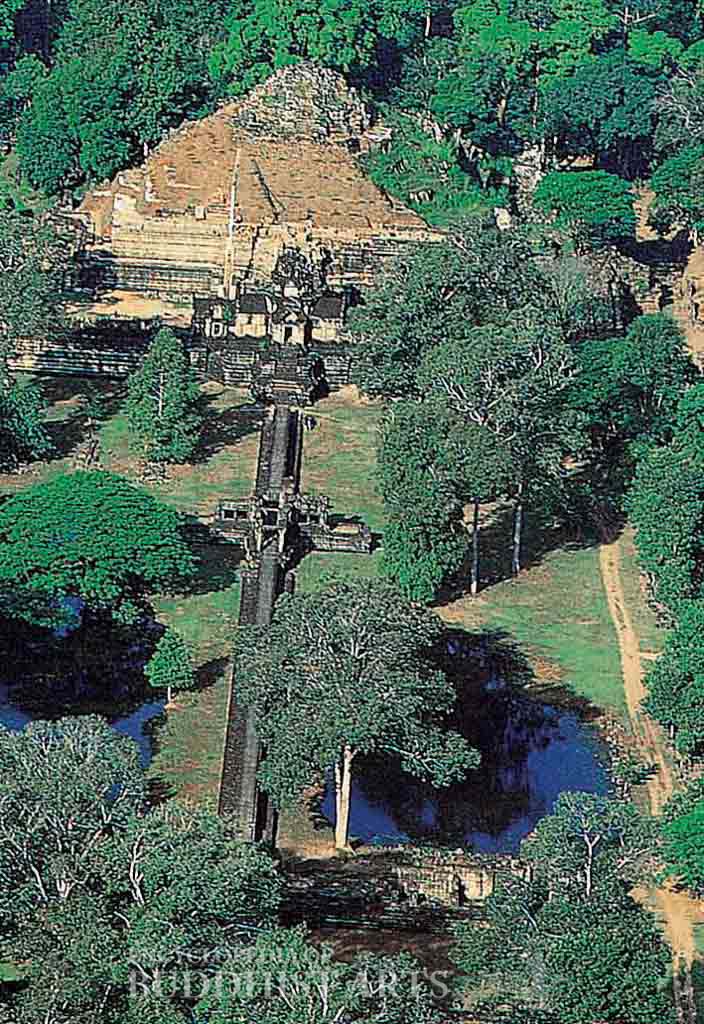
Baphuon Temple (aerial view)
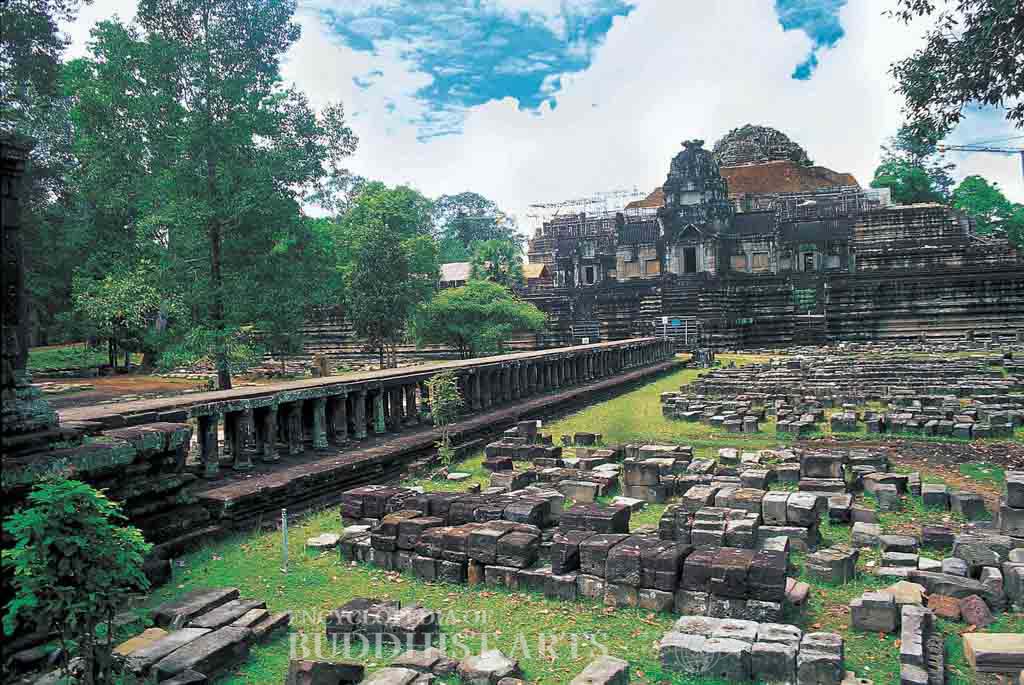
Baphuon Temple
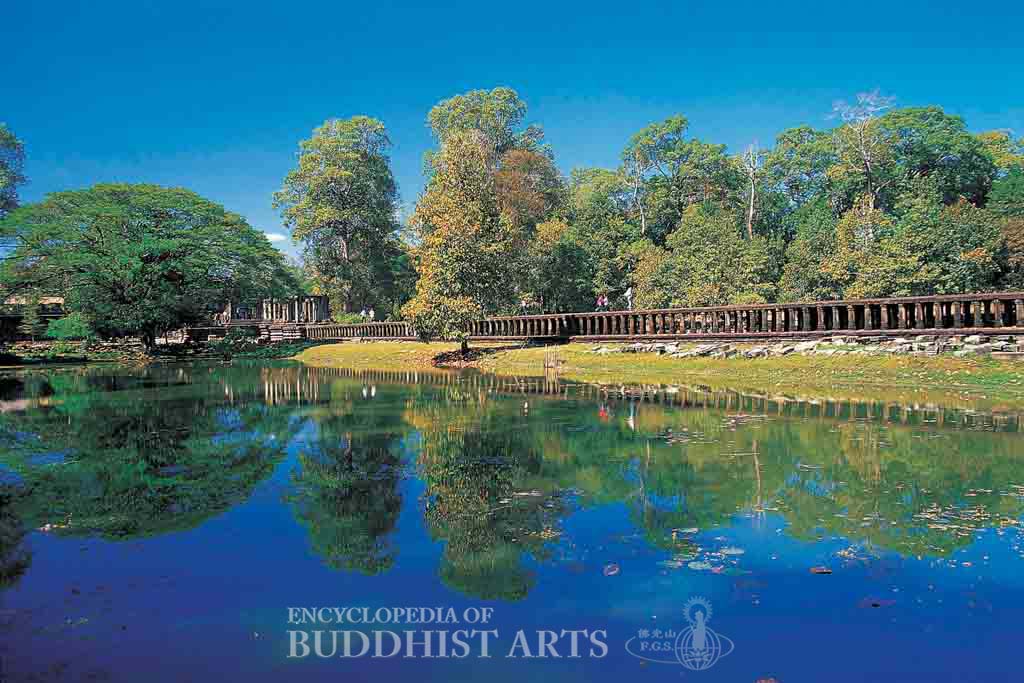
Baphuon Temple: Walkway Leading to the Main Hall
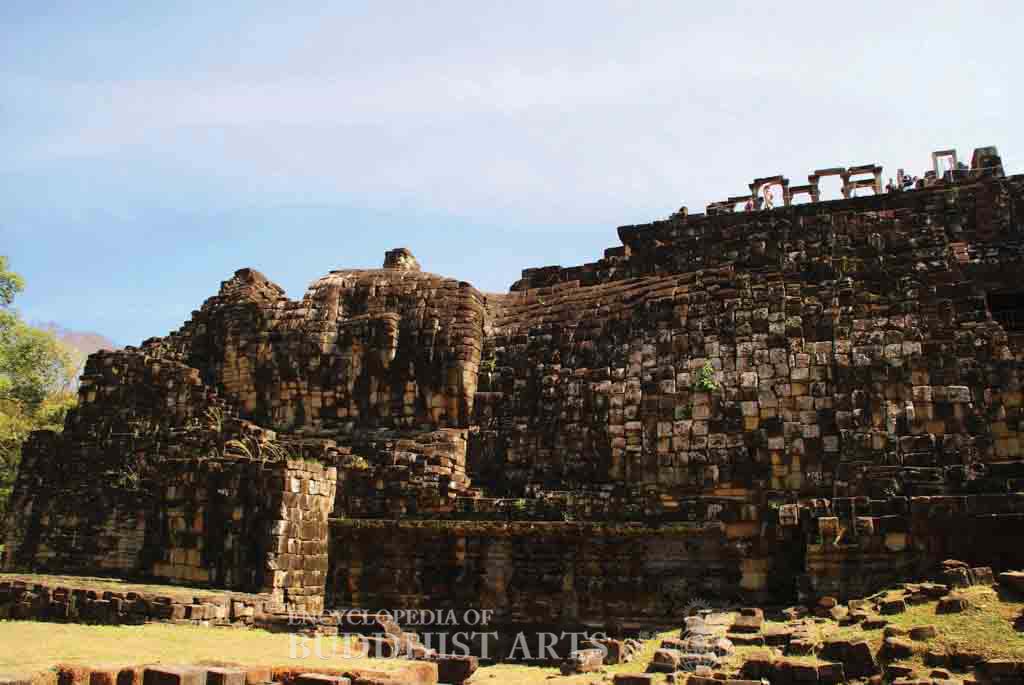
Baphuon Temple: Reclining Buddha
Baphuon Temple
CAMBODIA, Siem Reap, Angkor Thom
The temple was originally built at the center of Angkor Thom by King Udayadityavarman II (reigned 1050–1066), who believed in Hinduism. Angkor Thom was subsequently rescaled, and the outer walls were moved to the southeast, leaving Baphuon in the northwest. The temple was second in scale only to Angkor Wat, which was built in the 12th century. It was later abandoned, but restored in the 15th century and changed into a Buddhist temple. Restoration work was started in the 1960s but was subsequently interrupted for around twenty years as a consequence of the civil war. In the 1990s the restoration project was resumed and is ongoing today. As part of the Angkor site, it was listed as a UNESCO World Heritage Site in 1992.
The temple faces east, with the main hall in the center, surrounded by external walls. It measures 425 m from east to west and 125 m from north to south. The walkway leading from the main gate to the main hall is 172 m long and has over 100 supporting columns. The main hall was originally high and steep like a pyramid, but all that remains now is the temple base and part of the body.
The main hall base is a 24 m high stepped platform with three tiers. The bottom tier is 120 m from east to west and 100 m from north to south. The terraces of each tier consist of corridors sheltered by brick-laid barrel-vaulted roofs. The walls on each side of the corridor have delicate relief sculptures with the main theme being stories from the Indian epic poems Mahabharata and Ramayana. In addition, there are occasional reliefs of real life scenes and events, which are the first examples of such depictions among local sites, providing valuable historical information. The main hall stands at the center of the uppermost tier, with a pagoda located above. In the 15th century a huge reclining Buddha statue, which is 70 m long and 9 m high, was built on the west side. The stone for the Buddha statue was probably taken from parts of the main hall.
For more details, go to the Encyclopedia of Buddhist Arts: Architecture A-F, page 58.
Cite this article:
author = Hsingyun and Youheng and Johnson, Peter and Mankuang and Lancaster, Lewis,
booktitle = {Encyclopedia of Buddhist Arts: Architecture A-F},
pages = 58,
title = {{Baphuon Temple}},
volume = 1,
year = {2016}}