
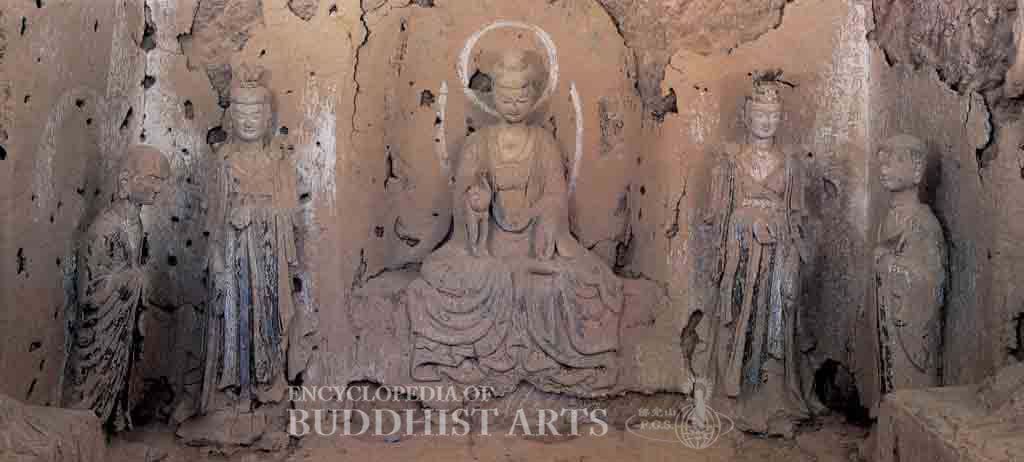
Maijishan Grotto 123: Buddha, Bodhisattvas, and Disciples (back wall)
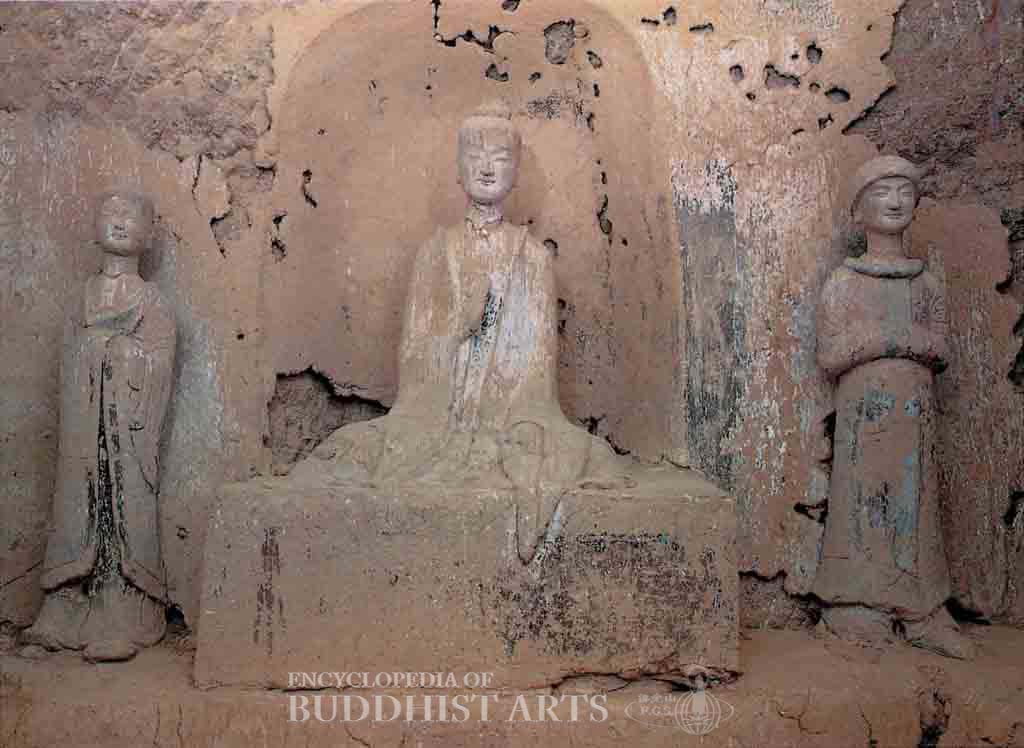
Maijishan Grotto 123: Vimalakirti, Ananda, and Male Attandant (right wall)
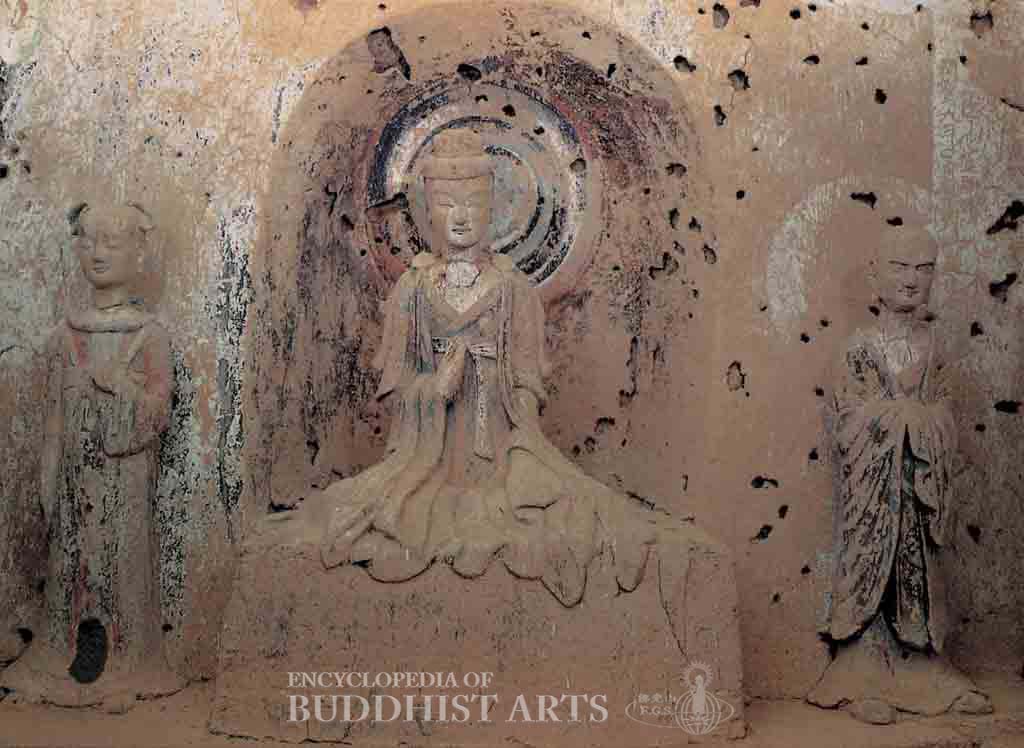
Maijishan Grotto 123: Manjusri Bodhisattva, Mahakasyapa, and Female Attendent (left wall)
Maijishan Grotto 123
CHINA, Gansu, Tianshui
This rectangular grotto is located in the west side of the west cliff and dates to the Western Wei dynasty (535–556). The grotto is 2.4 m in width, 2.47 m in height, and 2.42 m in depth. The back, left, and right walls each have a niche. The main colors used in this grotto include azurite, green, red, and white, and the primary subject of the carvings is the Vimalakirti Sutra.
The shallow niche on the back wall enshrines a Buddha seated in full lotus position. The Buddha wears an inner robe and a long, loose outer robe, which trails down onto the throne. The right hand displays the abhaya (fearlessness) mudra and the varada (wish-granting) mudra is formed with the left hand. Outside the niche there are two attendant Bodhisattvas with highly decorated robes flanking the Buddha.
The niche on the left wall has a seated Manjusri Bodhisattva with Mahakasyapa on the right and a female attendant on the left. The right niche has a seated Vimalakirti with Ananda on the left and a male attendant on the right. The two disciples also serve as attendants to the Buddha on the back wall.
The arrangement of the statues is according to rank, with monastic disciples closer to the Buddha, and the male and female attendants who are lay devotees further from the Buddha. These two devotees wear clothes that are in a different style than the other figures and may be depictions of donors.
For more details, go to the Encyclopedia of Buddhist Arts: Caves M-Mo, page 765.
Cite this article:
author = Hsingyun and Youheng and Johnson, Peter and Mankuang and Huntington, Susan and Edson, Gary and Neather, Robert,
booktitle = {Encyclopedia of Buddhist Arts: Caves M-Mo},
pages = 765,
title = {{Maijishan Grotto 123}},
volume = 7,
year = {2016}}