
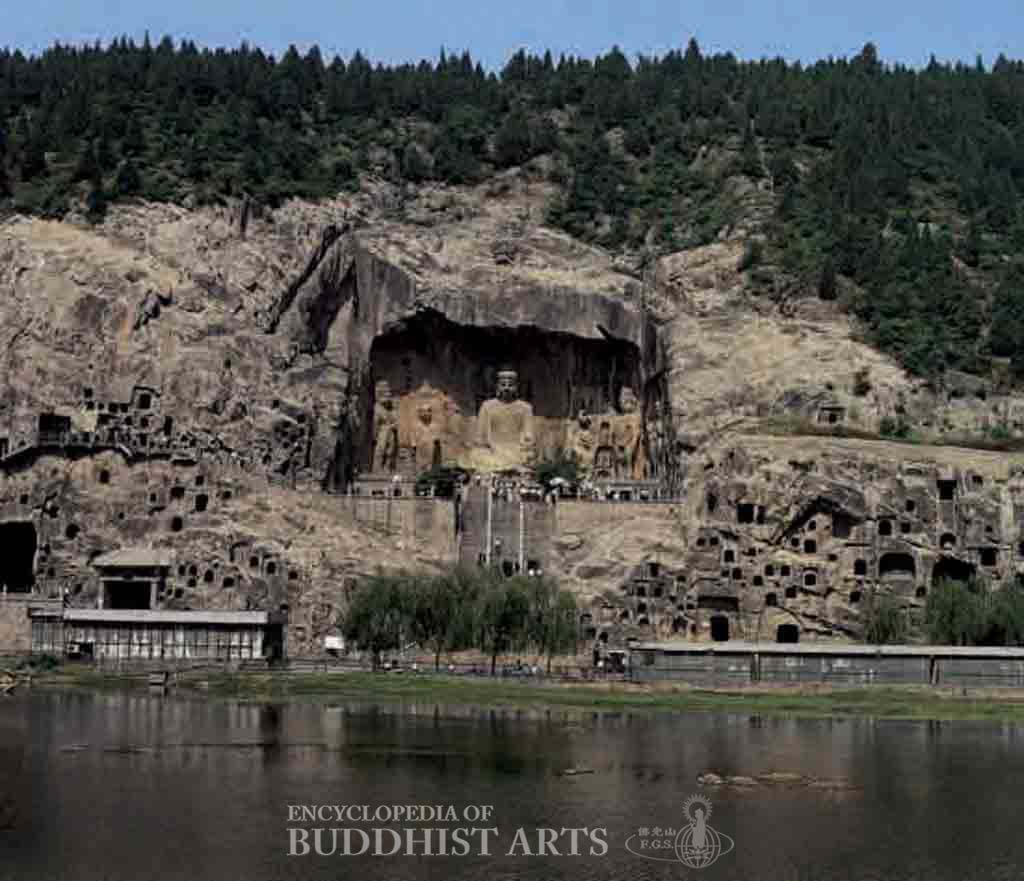
Longmen Grotto 1280
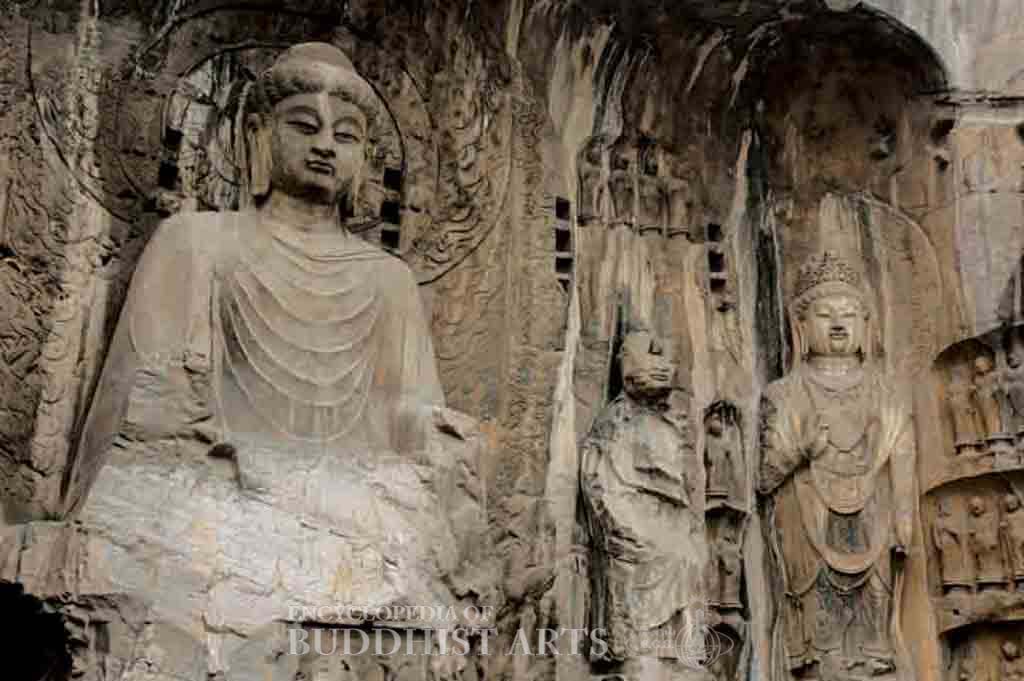
Longmen Grotto 1280: Vairocana Buddha, Mahakasyapa, and Bodhisattva
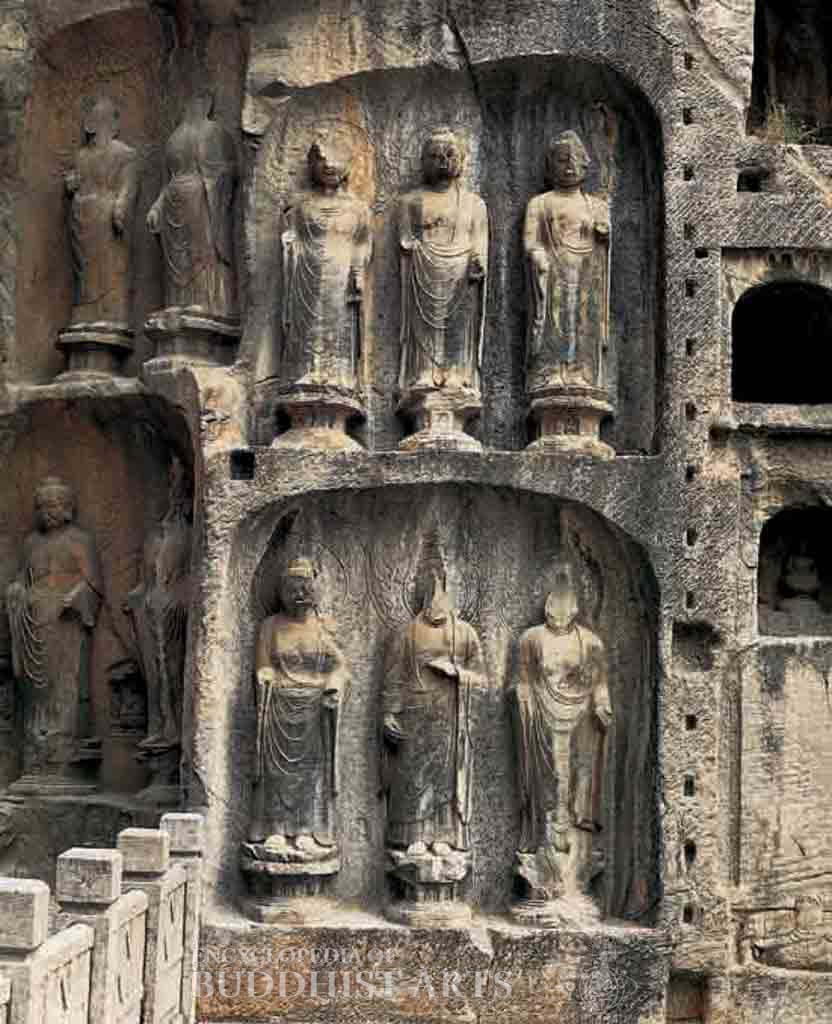
Longmen Grotto 1280: Standing Buddhas (north wall)
Longmen Grotto 1280
CHINA, Henan, Luoyang
This grotto, commonly referred to as Fengxian Temple, is located in the southern area of the Yi River’s west bank and faces east. Construction began in 672 and was completed in 675 during the Tang dynasty. With a width of approximately 30 m to 33 m and a depth of 38 m to 40 m, the grotto is the largest at Longmen. An engraving found on the right side of the Buddha’s throne dates the grotto to 722 during the Tang dynasty. Those commissioned to build the niche by imperial edict included Master Shandao from the Shiji Temple, Master Huijian of the Fahai Temple, the officials Weiji and Fan Xuanze, and the artisans Li Junzan, Cheng Renwei, and Yao Shiji.
The statues of Vairocana Buddha, the disciples Mahakasyapa and Ananda, two Bodhisattvas, two Heavenly Kings, and two warriors are housed within the niche. The Vairocana Buddha, 17.14 m in height, has a flame-patterned mandorla, a large usnisa, and wears a monastic robe over both shoulders. The lower sections of the statue have suffered damage. The two disciples wear loose robes and stand barefoot on lotus pedestals. The statue of Mahakasyapa is badly damaged, while the statue of Ananda is in relatively good condition. The Bodhisattvas stand in tribhanga postures and wear headdresses, necklaces, and armlets. Flowing stoles drape around their bodies. The Heavenly Kings wear elaborate armor and stand on demons. Muscular warriors with exposed upper bodies are adorned with jewelry and stoles. Their expressions are fierce. The Heavenly King and warrior on the right have suffered extensive deterioration.
Large niches found in the north, south, and back (west) walls contain more than 10 smaller niches each housing a total of 48 high-relief standing Buddhas, approximately 2.3 m in height. Of the large niches, 27 are on the north wall, 7 on the south wall, and 14 on the west wall. All of these face the Great Buddha on the back wall. According to an inscription on the north wall, the standing Buddhas, which resemble Amitayus, were designed by over 100 eunuchs led by Gao Lishi and Yang Sixu, in honor of Emperor Xuanzong (reigned 712–756).
For more details, go to the Encyclopedia of Buddhist Arts: Caves R-L, page 691.
Cite this article:
author = Hsingyun and Youheng and Johnson, Peter and Mankuang and Huntington, Susan and Edson, Gary and Neather, Robert,
booktitle = {Encyclopedia of Buddhist Arts: Caves R-L},
pages = 691,
title = {{Longmen Grotto 1280}},
volume = 6,
year = {2016}}