
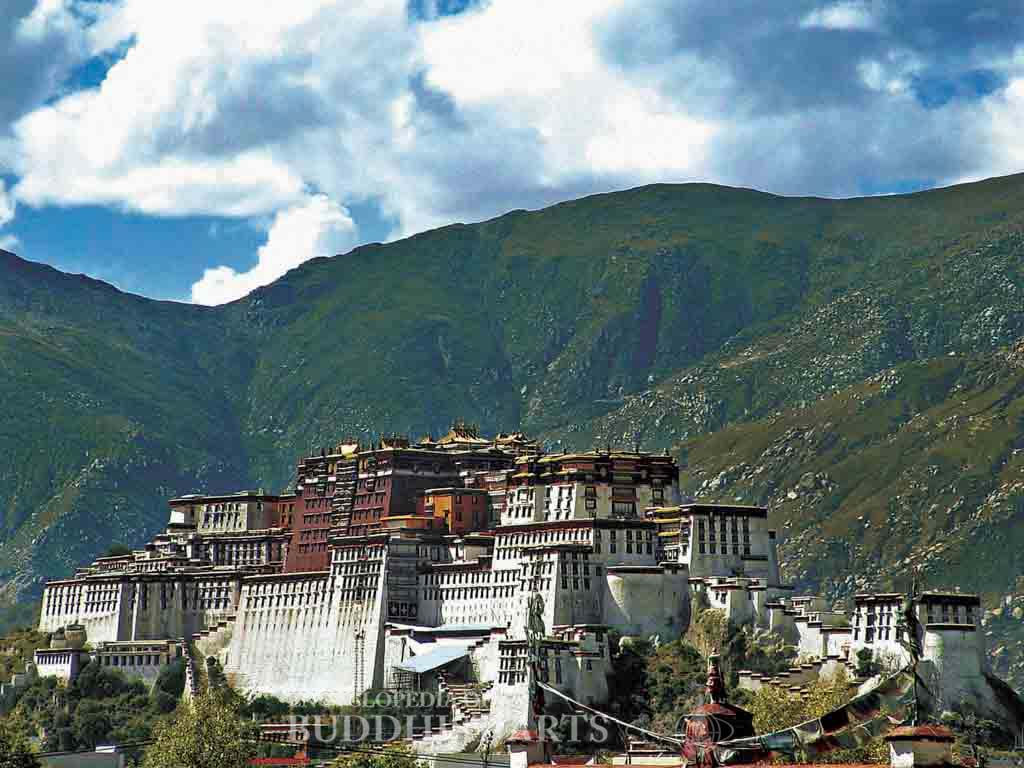
Potala Palace
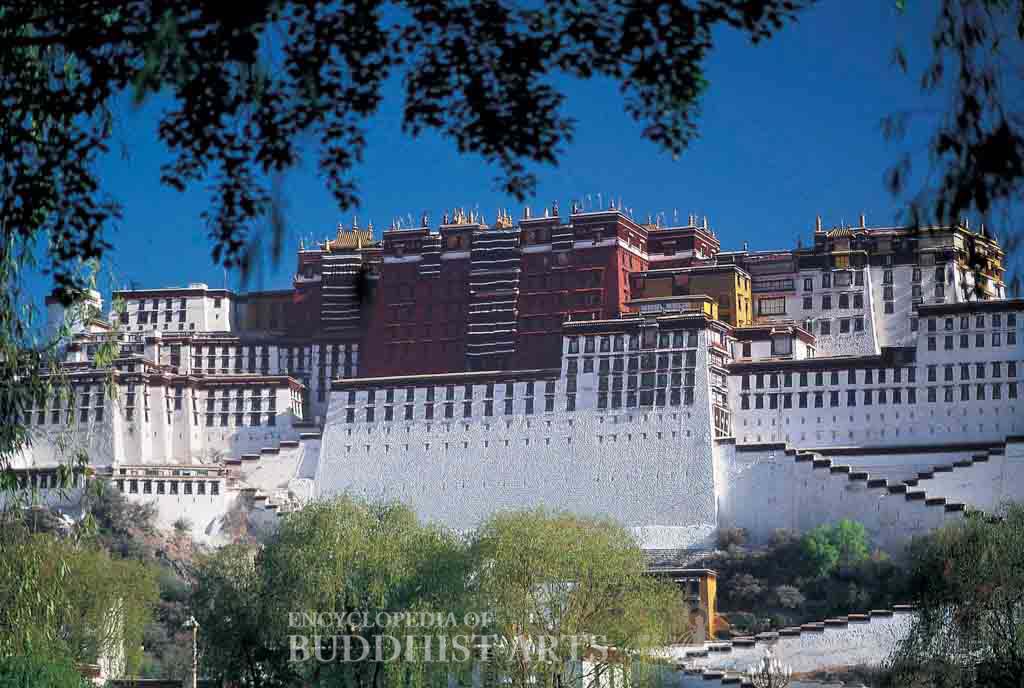
Potala Palace: Red Palace
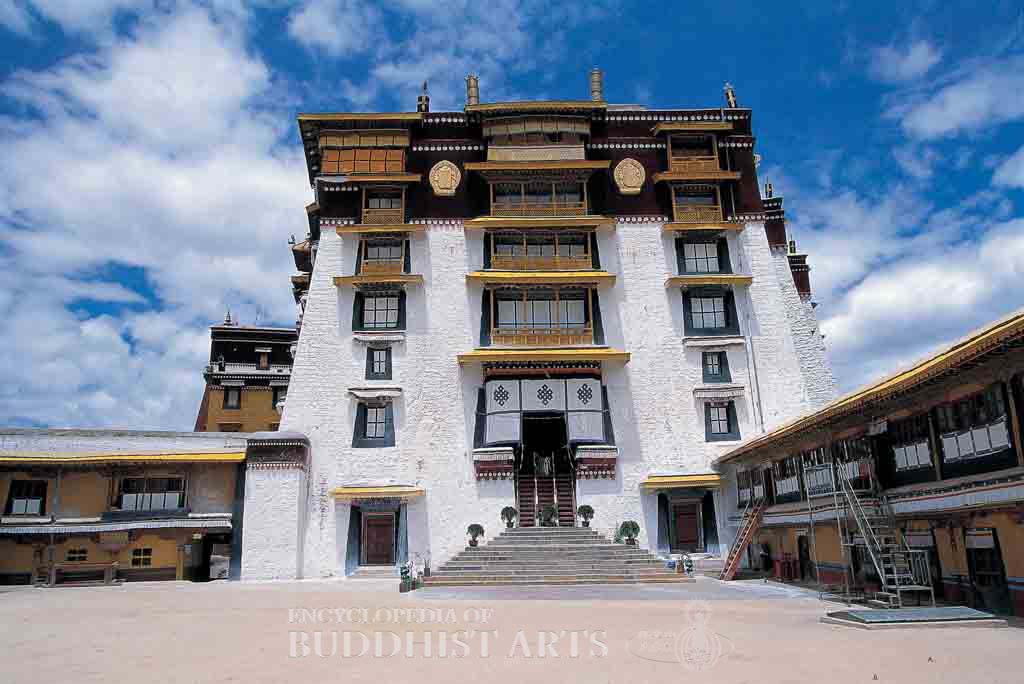
Potala Palace: White Palace
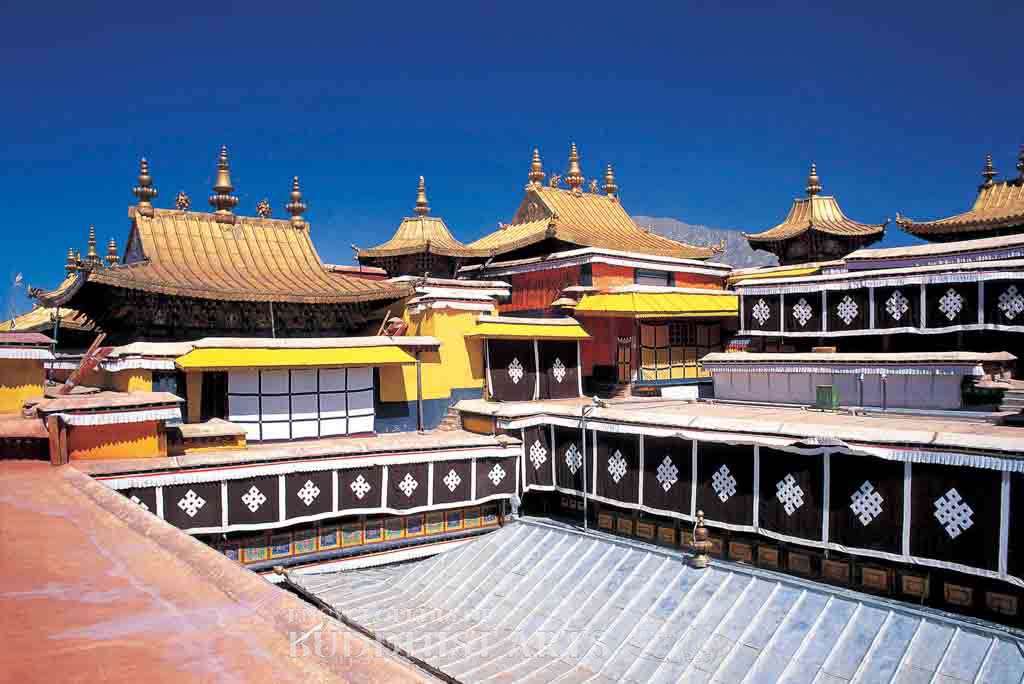
Potala Palace: Highest Shrines
Potala Palace
CHINA, Tibet, Lhasa
The palace is named after Mount Potalaka, the abode of Avalokitesvara Bodhisattva. It was originally built by the founder of the Tibetan Empire (circa 7th–9th century), Songtsan Gampo (reigned 629–650), who was believed to be the manifestation of Avalokitesvara. It is located on a hill named Marpori and is the biggest dzong-style architectural complex in Tibet. It is the living quarters of the Dalai Lamas and the place where their political and religious activities are conducted. It was built in the 7th century but was destroyed in warfare with only the Drak Lhalupuk Cave and the Saint’s Shrine remaining. In 1645 the Fifth Dalai Lama undertook its reconstruction and spent three years building the White Palace. In 1653 he moved his residence from Drepung Monastery to the Potala Palace. In 1690 Sangye Gyatso initiated the construction of the Red Palace. It underwent a number of renovations led by subsequent Dalai Lamas. Major expansion work by the Thirteenth Dalai Lama led to its present scale and layout. It was listed as a World Heritage Site by UNESCO in 1994.
The Potala Palace is built on the slope of Marpori. The main buildings consist of the Red Palace and the White Palace, while at the foot of the hill there are printing presses and workshops for casting Buddha statues. The palace complex measures 366 m from east to west and 335 m from south to north. Its highest point is 117 m high and 3,850 m above sea level. The seven-story White Palace contains the living quarters of the Dalai Lama and is also an administrative office for political and religious ceremonies. The four-story Red Palace houses shrines and funerary stupas, which contain the remains of the past Dalai Lamas. The lower section of the Red Palace has a projecting white terrace, known as the Platform for the Sunning of the Buddha, where giant thangkas were hung during major ceremonies.
The Potala Palace is a stone and wood structure and all the walls are formed from granite blocks. The roofs are flat with small structures with hip-and-gable and pyramidal roofs in the Chinese style. The tops of the walls are decorated with ocher red horizontal bands and gilt bronze disks, which are characteristic of Tibetan Buddhist architecture. The columns and beams are colorfully painted and intricately carved.
Despite a lack of a central axis and symmetry in layout, there is a clear differentiation between the primary and secondary structures. This is seen on the elevations where the lower sections of the buildings consist of plain walls, the middle sections contain false windows, and the upper sections have windows. The roofs of the buildings are covered with gilt bronze tiles, while the ridges are decorated with gilt victory banners, vases, makaras, and garudas.
The palace is famous for its large collection of statues, murals, thangkas, and rare Tibetan scriptures. It also contains decrees, seals, gold and jade decorated scrolls, and gold plaques from the Ming (1368–1644) and Qing (1644–1911) dynasties. The Potala Palace is considered a museum of art and a repository of Tibetan culture. The murals form an important part of the palace and reflect the accomplishment of Tibetan painting between the 17th and 20th centuries. They cover a wide range of themes, including historical events, biographies, religious teachings, folklore and myths. Sculptures preserved in the Drak Lhalupuk Cave include clay statues of Songtsan Gampo, Princess Wencheng, Princess Bhrkuti, and the well-known minister of Songtsan Gampo, Thonmi Sambhota, from the 7th to 9th century. On the west wall of the Sakyamuni Shrine in the Red Palace there is a bronze Avalokitesvara Bodhisattva sculpture cast in the Qing dynasty. A clay statue of the Thirteenth Dalai Lama is also located in the Red Palace.
For more details, go to the Encyclopedia of Buddhist Arts: Architecture M-S, page 833.
Cite this article:
author = Hsingyun and Youheng and Johnson, Peter and Mankuang and Lancaster, Lewis,
booktitle = {Encyclopedia of Buddhist Arts: Architecture M-S},
pages = 833,
title = {{Potala Palace}},
volume = 3,
year = {2016}}