
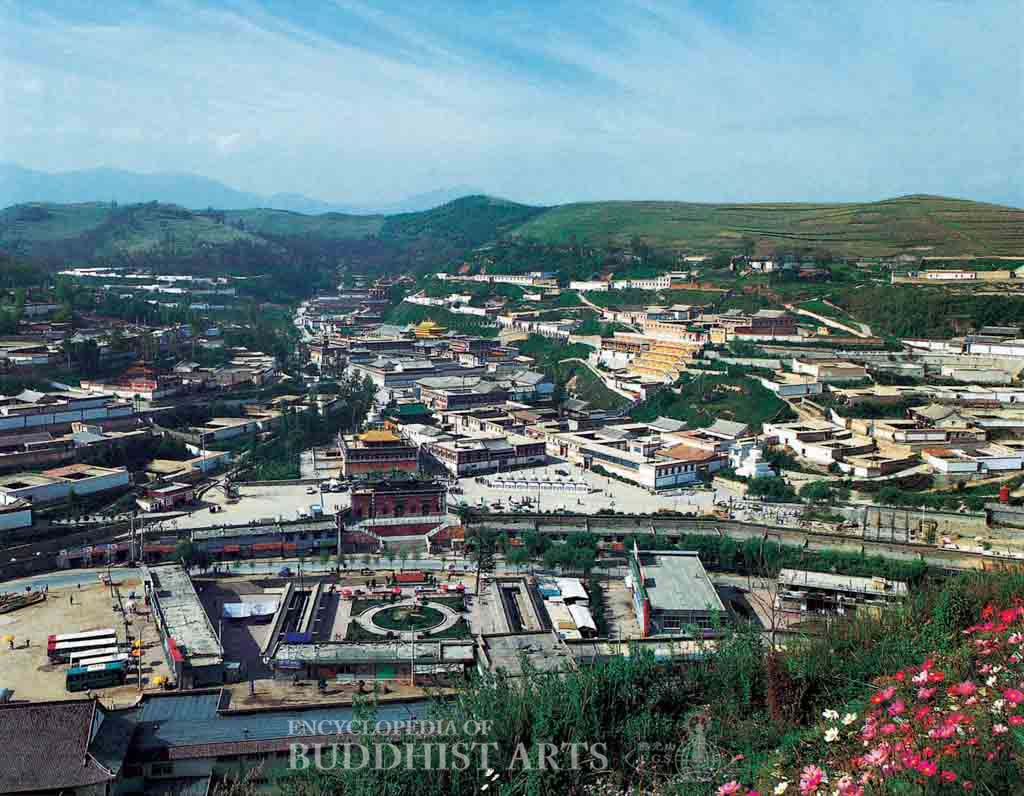
Kumbum Monastery (aerial view)
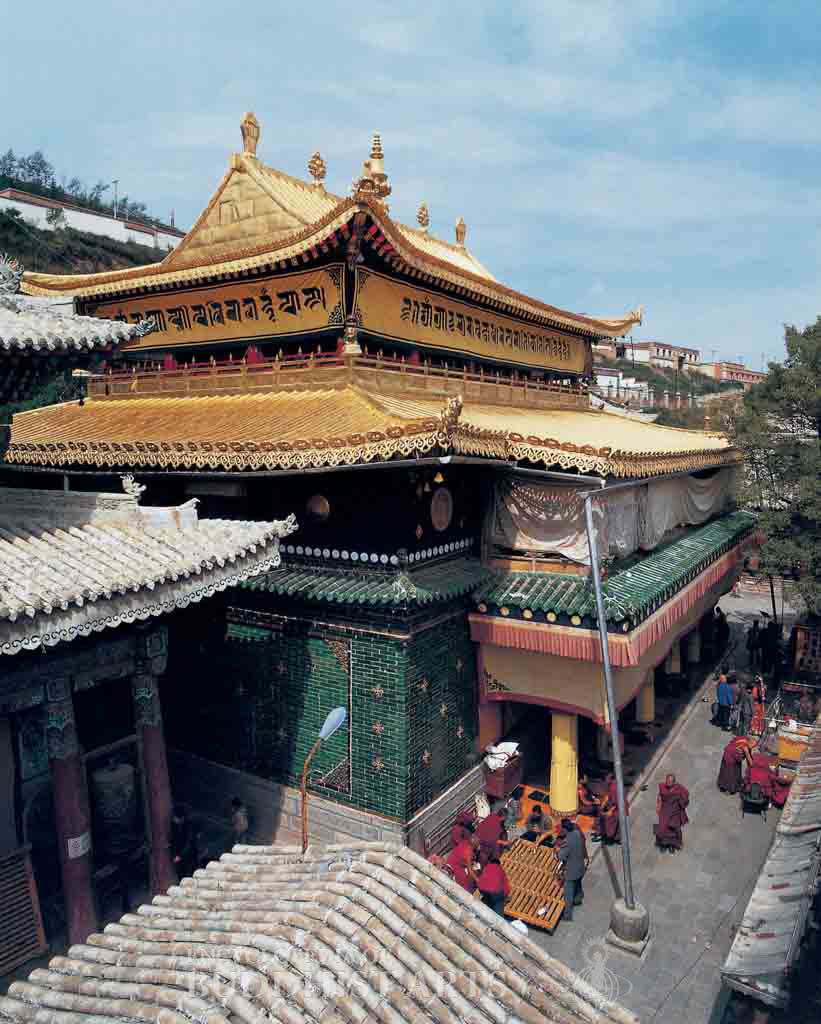
Kumbum Monastery: Tsenkhang Chenmo Shrine
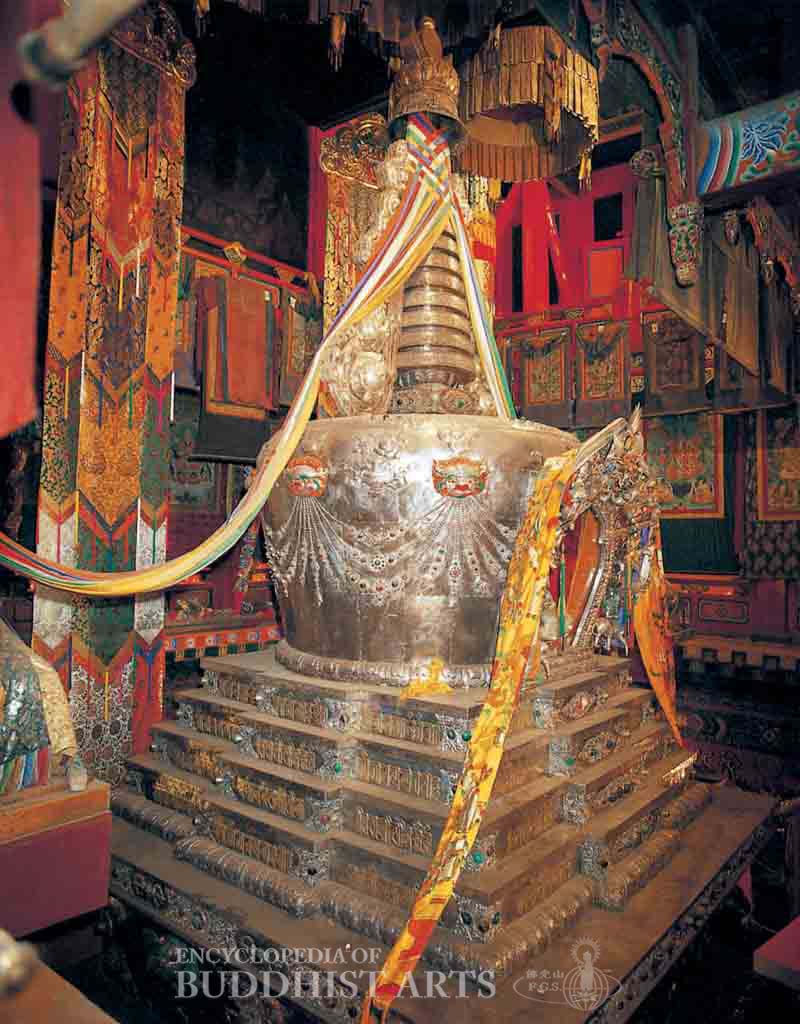
Kumbum Monastery: Great Silver Stupa
Kumbum Monastery
CHINA, Qinghai, Xining
Kumbum Monastery is also known as Kumbum Jampa Ling, which means 100,000 Enlightened Bodies of the Buddha. The monastery is located near Lake Kokonor in Amdo at the site where Tsongkhapa, the founder of the Gelug school of Tibetan Buddhism, was born. It is the largest Tibetan Buddhist monastery in Qinghai, and is one of the Six Major Monasteries of the Gelug school. Tsongkhapa’s mother built a stupa here in 1379. A small monastery known as Gonpalung was constructed at this site in 1560. The Maitreya Shrine was added in 1577 followed by more buildings until the monastery reached its present magnificent scale. The monastery holds a very important religious position and was listed as a National Cultural Heritage Site in 1961.
It is constructed in a narrow valley on the south-north axis and covers over 45 ha. The main buildings consist of the central hall, Tsenkhang Chenmo Shrine, Maitreya Shrine, Manjusri Shrine, Thamche Khyenpei Shrine which houses the reliquary stupa of the Third Dalai Lama, the Serdong Chenmo Shrine, Protector Shrine, and four colleges, namely the Debate College, Vajrayana College, Medical College and Kalacakra College. Furthermore, there is a large over-street stupa, Chorten Gobzhi, and more than ten stupas, including the Eight Stupas, the Chorten Degye, and the Kalachakra Stupa.
The central hall contains the largest assembly hall in the monastery. Its walls are made of brick and mud, and painted with lime. The eight stupas at the entrance of the monastery, which represent the Eight Great Events of Sakyamuni Buddha’s life, were constructed in 1776. Each stupa is 6.4 m high with a square base and a vase-shape body.
The Tsenkhang Chenmo Shrine, where devotees worship, has a triple-eave hip-and-gable roof with gilded copper tiles. The edges of the eaves are decorated with gilded cloud-shape ornaments, while the main ridge is adorned with gilded vases and a flame-pattern jewel. The external walls are laid with green glazed bricks with yellow glazed floral ornaments in between. Serdong Chenmo Shrine has a stupa constructed in 1379 around a tree that marks the actual birthplace of Tsongkhapa by his mother. The stupa is 11 m high and is inlaid with silver and embedded with pearls.
Butter sculptures, murals, and applique embroidery are regarded as the Three Treasures of the monastery. There are workshops, known as the upper and lower sculpture guilds, set up especially for creating butter sculptures. A large number of sculptures, murals, embroideries, and butter sculptures are spread throughout the monastery.
For more details, go to the Encyclopedia of Buddhist Arts: Architecture G-L, page 626.
Cite this article:
author = Hsingyun and Youheng and Johnson, Peter and Mankuang and Lancaster, Lewis,
booktitle = {Encyclopedia of Buddhist Arts: Architecture G-L},
pages = 626,
title = {{Kumbum Monastery}},
volume = 2,
year = {2016}}