

Lingyan Temple Thousand Buddha Hall: Arhat; Northern Song dynasty, dated 1066
Clay

Lingyan Temple Thousand Buddha Hall: Arhat; Northern Song dynasty, dated 1066

Lingyan Temple Thousand Buddha Hall: Arhat (detail); Northern Song dynasty, dated 1066

Lingyan Temple Thousand Buddha Hall: Arhat; Ming dynasty

Lingyan Temple Thousand Buddha Hall: Arhat; Northern Song dynasty, dated 1070; H: 164 cm

Lingyan Temple Thousand Buddha Hall: Arhat; Northern Song dynasty, dated 1066
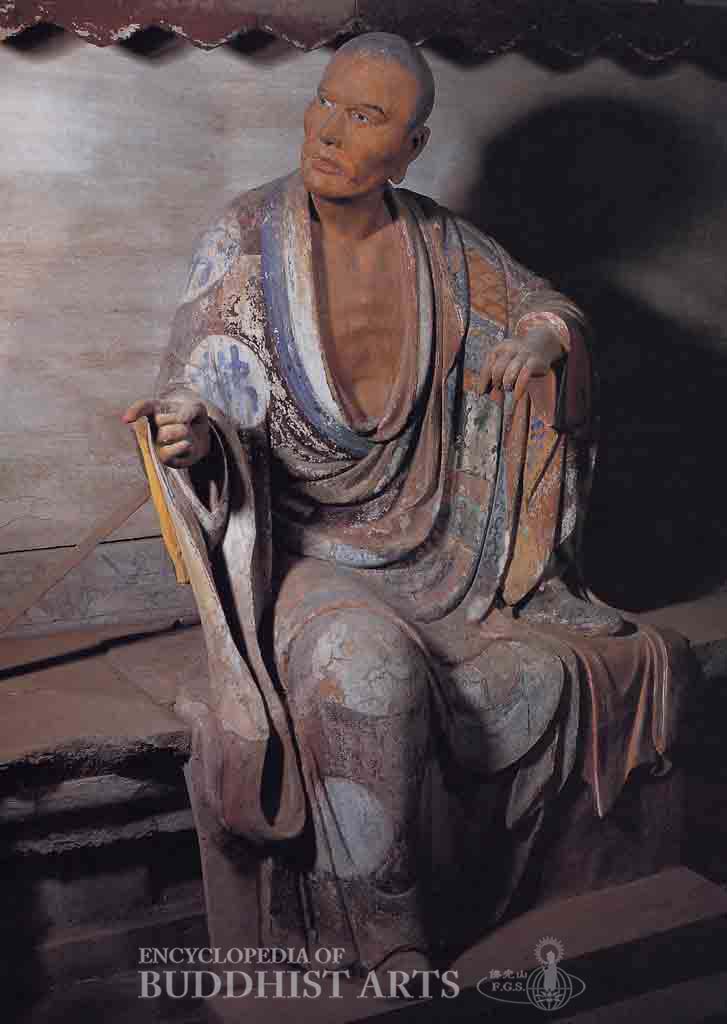
Lingyan Temple Thousand Buddha Hall: Arhat; Northern Song dynasty, dated 1066

Lingyan Temple Thousand Buddha Hall: Arhat (detail); Northern Song dynasty, dated 1066

Lingyan Temple Thousand Buddha Hall: Arhat (detail); Northern Song dynasty, dated 1066
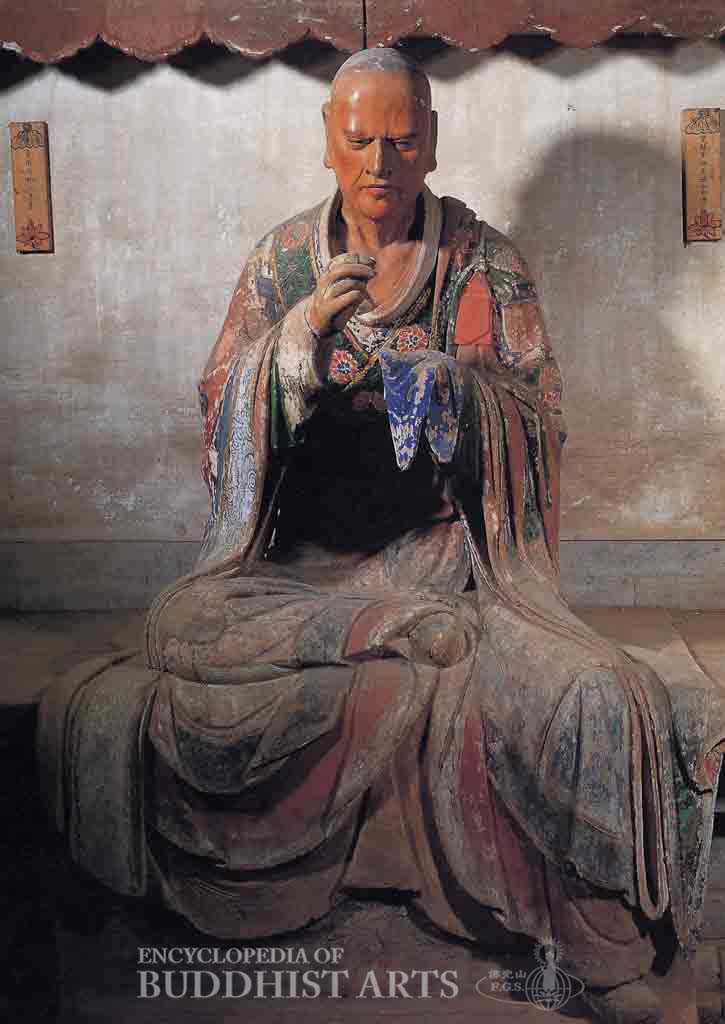
Lingyan Temple Thousand Buddha Hall: Arhat; Northern Song dynasty, dated 1066

Lingyan Temple Thousand Buddha Hall: Arhat; Northern Song dynasty, dated 1066; H: 155 cm

Lingyan Temple Thousand Buddha Hall: Arhat; Northern Song dynasty, dated 1066
Lingyan Temple Thousand Buddha Hall: Arhats
CHINA, Shandong, Jinan
Forty Arhat statues are located within the hall. They range from 145 cm to 165 cm in height. During refurbishment in 1982, workers found artifacts hidden inside the hollowed bodies, including bronze mirrors, coins, silk fabric sewed into the shape of body organs, and written documents. One of the statues had an inscription written on the inside surface. A cast iron statue was found inside one of the figures in the same posture as its host with an inscription dating it to 1070.
Further research indicated that 32 of the Arhats were probably made in 1066 during the Northern Song dynasty and enshrined in the Pratyutpanna Hall. They were repaired in 1328, but after the hall collapsed, only 27 remained. When the Thousand Buddha Hall was reconstructed in 1587 during the Ming dynasty, the remaining statues were moved to the new location and 13 more were newly created to increase the number to 40.
Twenty-nine of the statues are of Indian masters, while eleven are of Chinese masters. All figures sit on benches, wearing two layers of clothing under their brightly designed monastic robe. They are individualized by features, expressions, gestures or occupations, and are of a remarkable realism.
For more details, go to the Encyclopedia of Buddhist Arts: Sculpture G-M, page 606.
Cite this article:
author = Hsingyun and Youheng and Lovelock, Yann and Chou, Yuan and Huntington, Susan and Edson, Gary and Neather, Robert,
booktitle = {Encyclopedia of Buddhist Arts: Sculpture G-M},
pages = 606,
title = {{Lingyan Temple Thousand Buddha Hall: Arhats}},
volume = 11,
year = {2016}}