
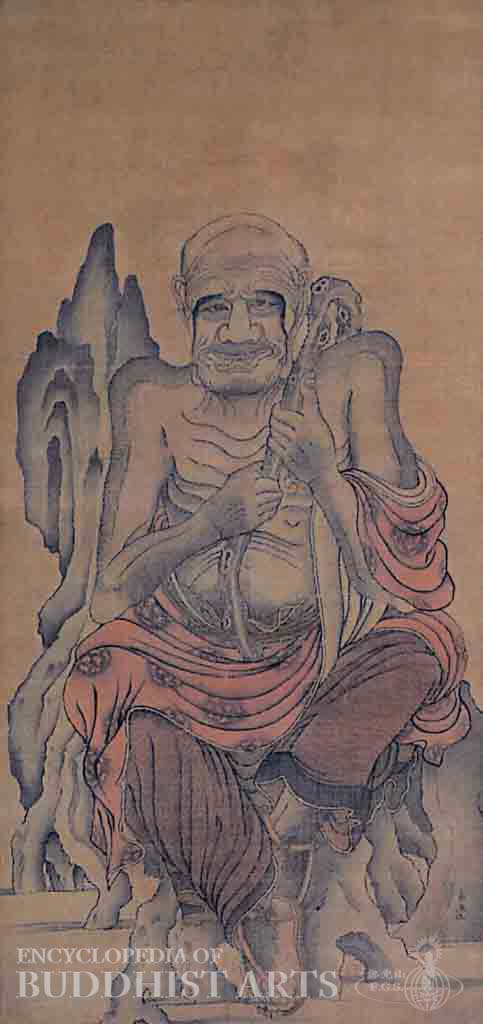
Sixteen Arhats: Nakula
Ink and color on silk
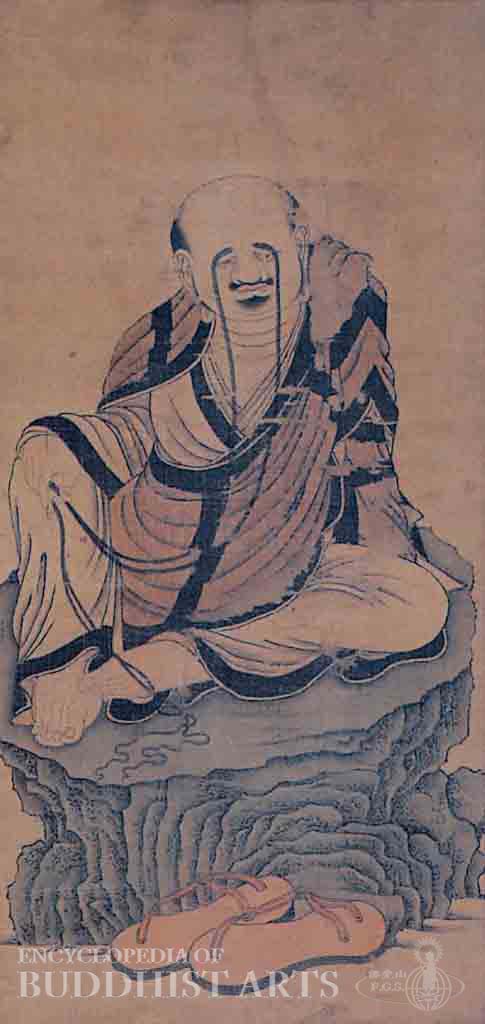
Sixteen Arhats: Kalika
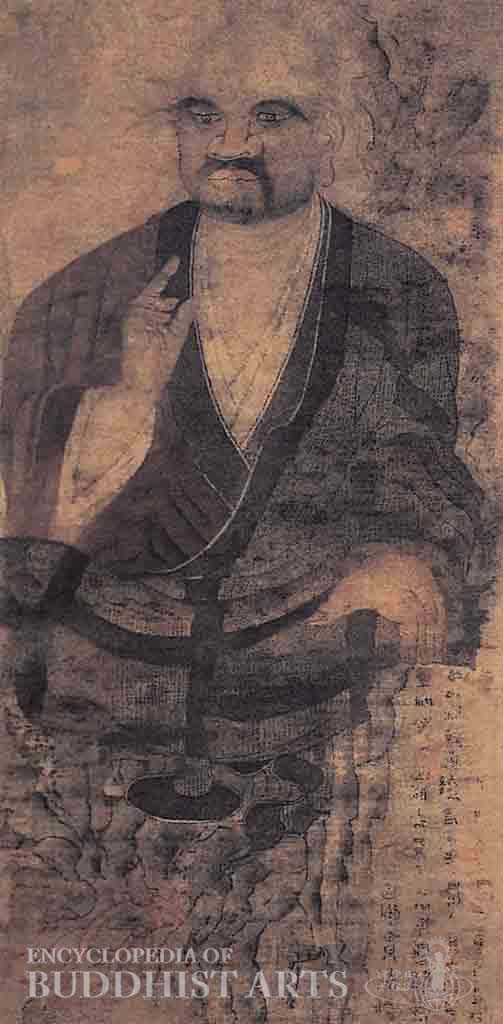
Sixteen Arhats: Rahula
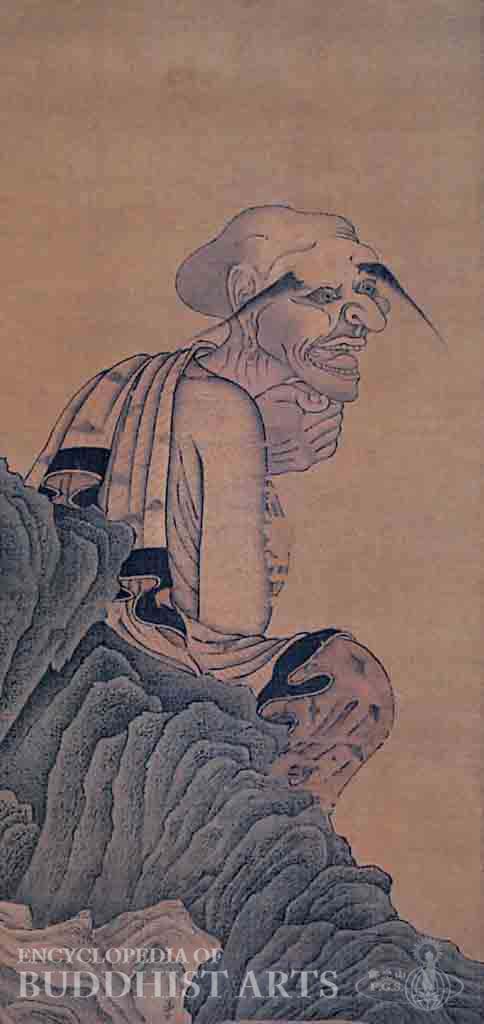
Sixteen Arhats: Nagasena
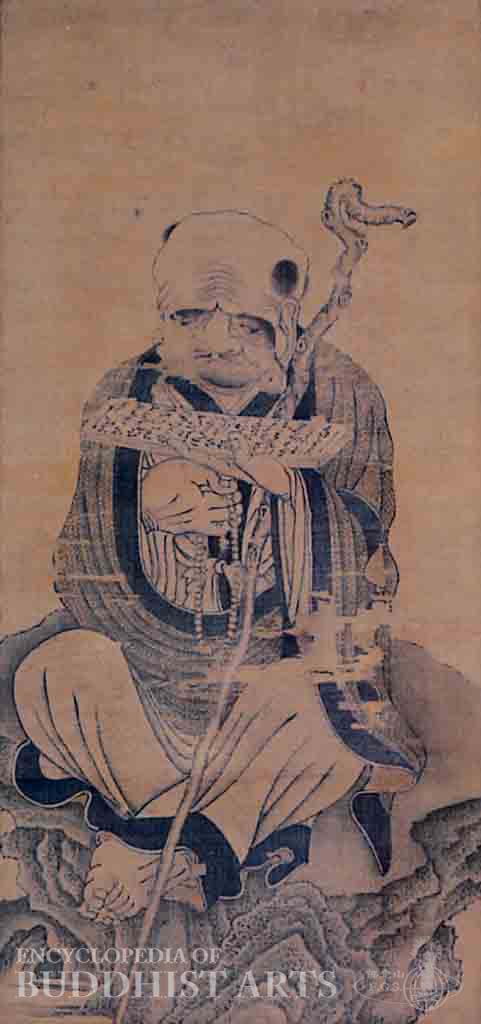
Sixteen Arhats: Angaja
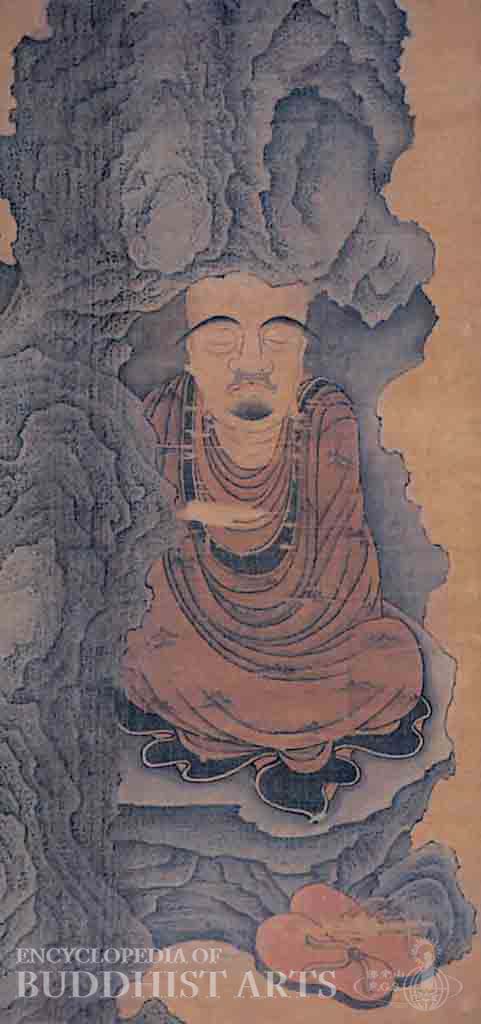
Sixteen Arhats: Vanavasin
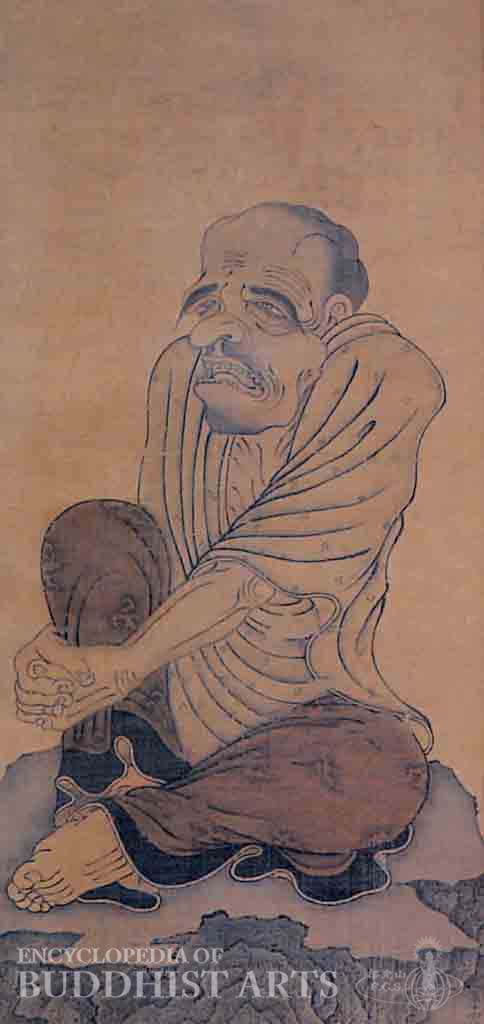
Sixteen Arhats: Ajita
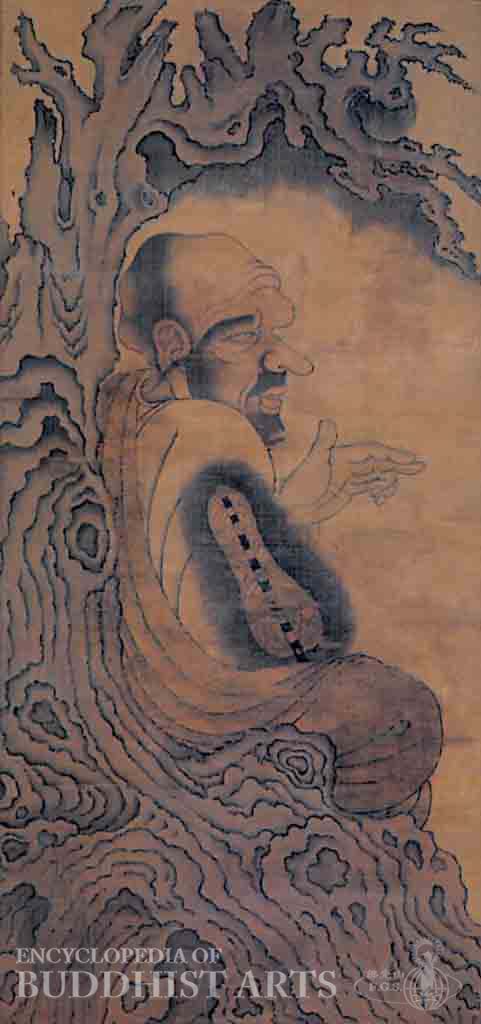
Sixteen Arhats: Cudapanthaka
Sixteen Arhats
CHINA; Northern Song dynasty
This set of 16 paintings is attributed to Guanxiu of the Five Dynasties (907–960) although they are more likely replicas from the Northern Song dynasty (960–1127). Details of Guanxiu’s life and painting achievements are chronicled in the Records of Famous Paintings in Yizhou, Xuanhe Catalog of Paintings, and the Song Biographies of Eminent Monks. According to Records of Famous Paintings in Yizhou, Guanxiu was born in Lanxi, Wuzhou (present day Jinhua, Zhejiang). He came to the Former Shu Kingdom (907–925), gained great renown as a poet and artist, and was granted the title “Master Chanyue” by Emperor Gaozu (reigned 907–918) of the Former Shu Kingdom.
Guanxiu’s portraits of the Arhats included color and ink paintings on silk and paper, as well as stone carvings. Highly valued since their creation, most of these artworks were later replicated. Among the replicas, these 16 pictures collected by the Imperial Household Agency of Japan are the closest to the originals. Some of them are identical to Guanxiu’s original stone carvings in Shengyin Temple in Xihu, and many of the features listed in Su Shi’s Eulogy of Eighteen Arhats by Changyue are evident. For instance, Vanavasa, the Fourteenth Arhat, is seated in full lotus position inside a cave, seemingly in meditation. His hands are tucked in his sleeves and his eyes are closed. Su Shi’s description is fitting: “All six senses have been cleansed, and all physical movements eliminated. The trees and rocks have been destroyed, and the grass has grown to block the roads. While chasing animals in the wilderness, one carries the arrows but forgets the bow. Trying to get some water from the stream, there is the sudden encounter.”
All the Arhats are portrayed with exaggerated facial features. As described in the second fascicle of Records of Famous Paintings in Yizhou, Guanxiu followed the style of Yan Liben and gave the Arhats an unusual appearance, with thick eyebrows, full cheeks, and large noses. They are shown leaning against trees or sitting on rocks. The Twelfth Arhat, Nagasena, has prominent eyebrows and a bulbous nose. His mouth is open as if he is engaged in a fierce debate, and his palms are joined under his chin. Cudapanthaka, the Sixteenth Arhat, leans against a gnarled tree. He points with his left hand and holds a fan in the right. His forehead, nose, and the back of his head are bulbous
The faces, skin, bone structures, and folds of the clothes are illustrated with smooth, delicate brushstrokes, contrasting with the more angular strokes used to depict the rocks and trees. Washes of pale color add depth to the pictures. Guanxiu was asked where he had received the idea for his depictions of the Arhats, and he answered, “I saw them in my dreams.” However, it appears that he used his portraits to demonstrate that the Dharma can be found anywhere, even among individuals who may at first appear strange or eccentric.
For more details, go to the Encyclopedia of Buddhist Arts: Painting P-Z, page 840.
Cite this article:
author = Hsingyun and Youheng and Youlu and Wilson, Graham and Manho and Mankuang and Huntington, Susan,
booktitle = {Encyclopedia of Buddhist Arts: Painting P-Z},
pages = 840,
title = {{Sixteen Arhats}},
volume = 16,
year = {2016}}