
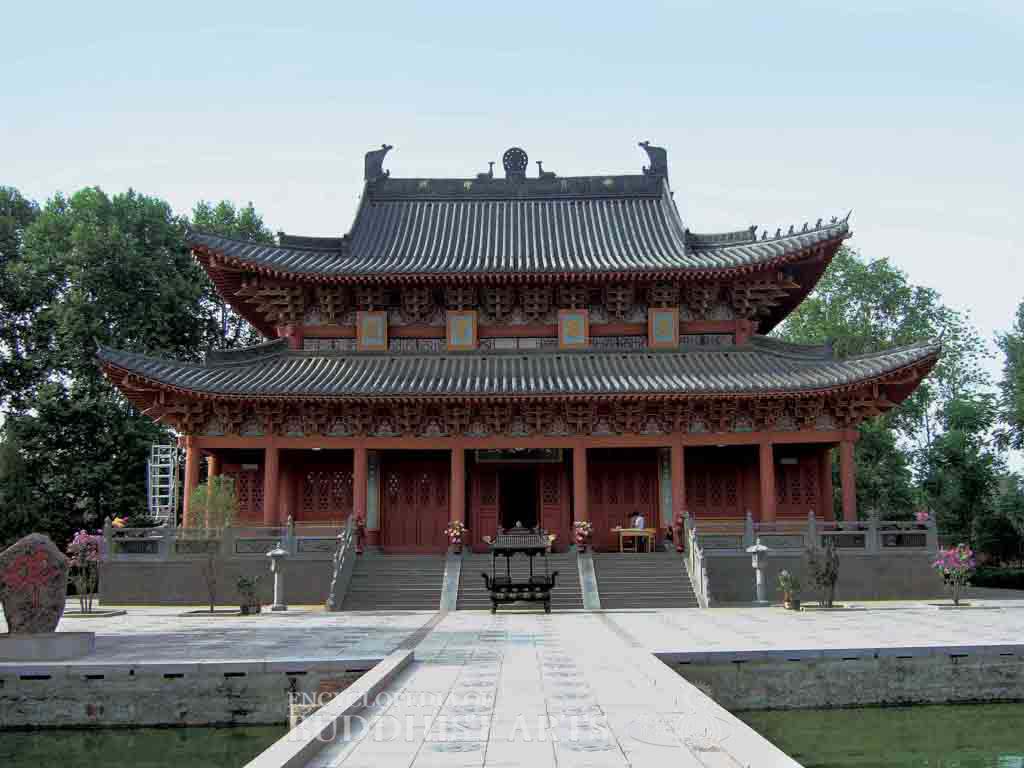
Baima Temple: Qiyun Pagoda Compound - Great Hero Hall
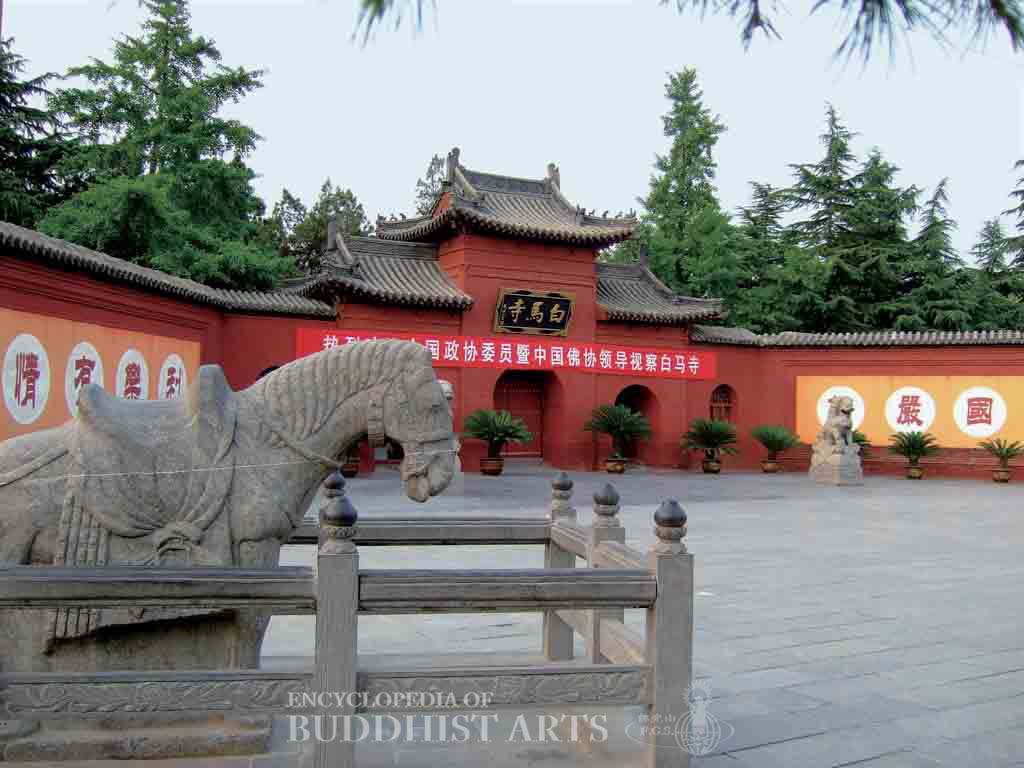
Baima Temple: Main Temple Gate
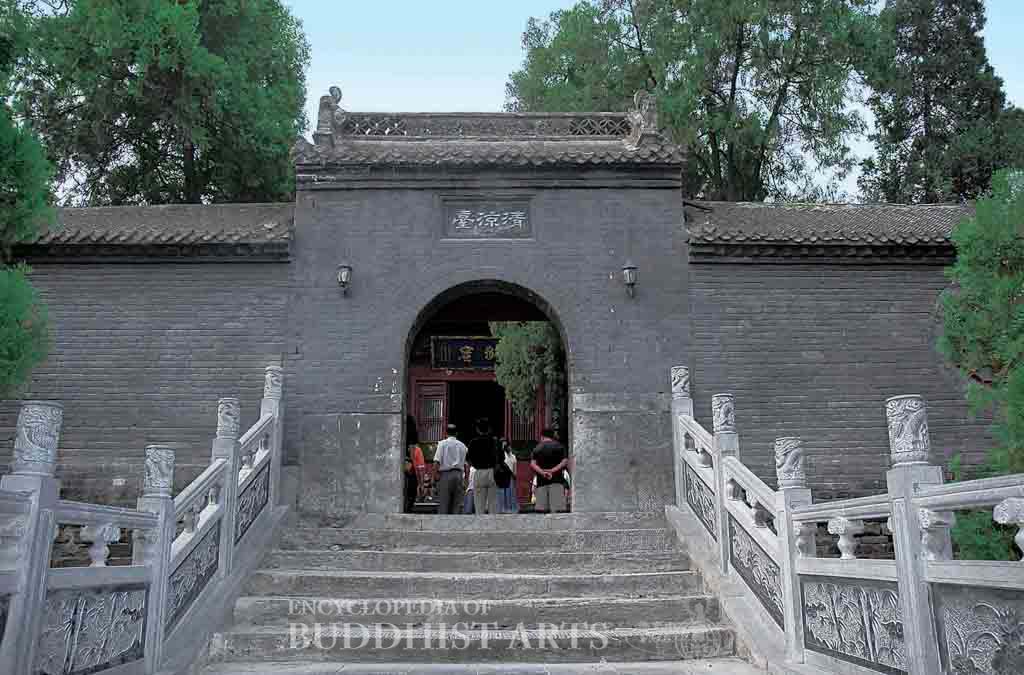
Baima Temple: Qingliang Terrace
Baima Temple
CHINA, Henan, Luoyang
Baima means White Horse. The temple was built in 68 CE during the Eastern Han dynasty and is regarded as the first Buddhist temple in China. Emperor Ming (reigned 57–75) of the Eastern Han dynasty is said to have dreamed of a golden image from the west. His ministers believed it was the Buddha from India, so the emperor ordered envoys to seek out the teachings of the Buddha. The envoys met two Indian monks, Kasyapa Matanga and Dharmaratna, and accompanied them to Luoyang, with sutra manuscripts being carried on white horses. It was decreed that a permanent residence should be built for the two monks. A residence and a pagoda to house a Buddha statue were built and these formed the first temple. It underwent significant expansion in 685 during the Tang dynasty and subsequently experienced periods of prosperity and decline. The temple buildings were repaired during the Ming (1368–1644) and Qing (1644–1911) dynasties, resulting in their current appearance. It was listed as a National Cultural Heritage Site in 1961.
The temple faces south, covers 3.4 ha, and is divided into three compounds: a temple compound, the west compound, and the Qiyun Pagoda Compound. The principal structures in the temple compound are situated along the central axis and include the main temple gate, Heavenly King Hall, Great Buddha Hall, Great Hero Hall, Welcoming Hall, and the Qingliang (Clear Cool) Terrace. Just inside the main temple gate there are the burial mounds of Kasyapa Matanga and Dharmaratna. The Qiyun Pagoda Compound is the first bhikkuni temple in Henan and consists of the Qiyun Pagoda and the Great Hero Hall, which was built in 2005. In the west compound there is a Thai-style hall and the Putong Pagoda, which were built after 1989. There are over 40 steles within the temple grounds containing important information regarding the history of the temple.
The main temple gate has a hip-and-gable roof covered with gray tiles. It is constructed in stone and has three archways. There are two horses carved during the Song dynasty (960–1279) on either side of the main temple gate. The largest building is the five-by-four bay Great Hero Hall, which has an overhanging gable roof. The Three Buddhas sculpted in the Yuan dynasty (1271–1368) are enshrined within the hall. On the left and right of the Buddhas stand Skanda and Vaisravana. The Eighteen Arhats along the east and west sides of the hall are the best preserved dry lacquer Arhat statues from the Yuan dynasty. They are the crown jewel of the temple.
The Qingliang Terrace is 6 m high, 42.8 m wide, and 32.4 m deep. On the terrace there is a small courtyard consisting of a gateway, Free Life Pond, Vairocana Pavilion, Kasyapa Matanga Hall, Dharmaratna Hall, and some chambers. The five-by-three bay Vairocana Pavilion has a double-eave hip-and-gable roof.
For more details, go to the Encyclopedia of Buddhist Arts: Architecture A-F, page 35.
Cite this article:
author = Hsingyun and Youheng and Johnson, Peter and Mankuang and Lancaster, Lewis,
booktitle = {Encyclopedia of Buddhist Arts: Architecture A-F},
pages = 35,
title = {{Baima Temple}},
volume = 1,
year = {2016}}