
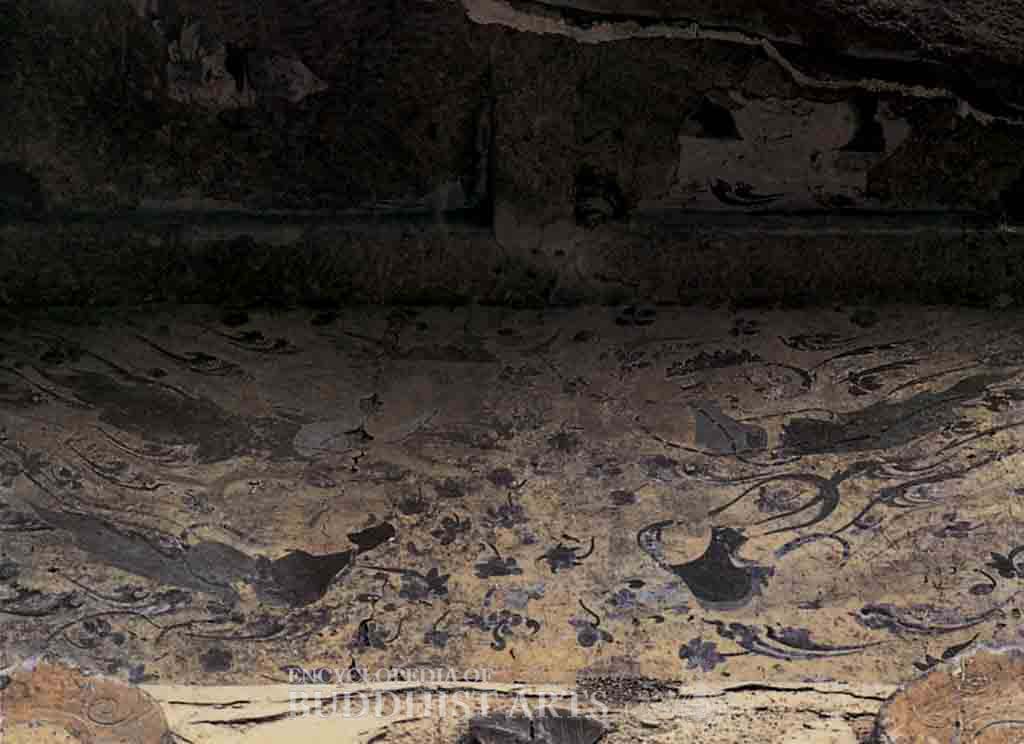
Maijishan Grotto 4: Apsara
Clay
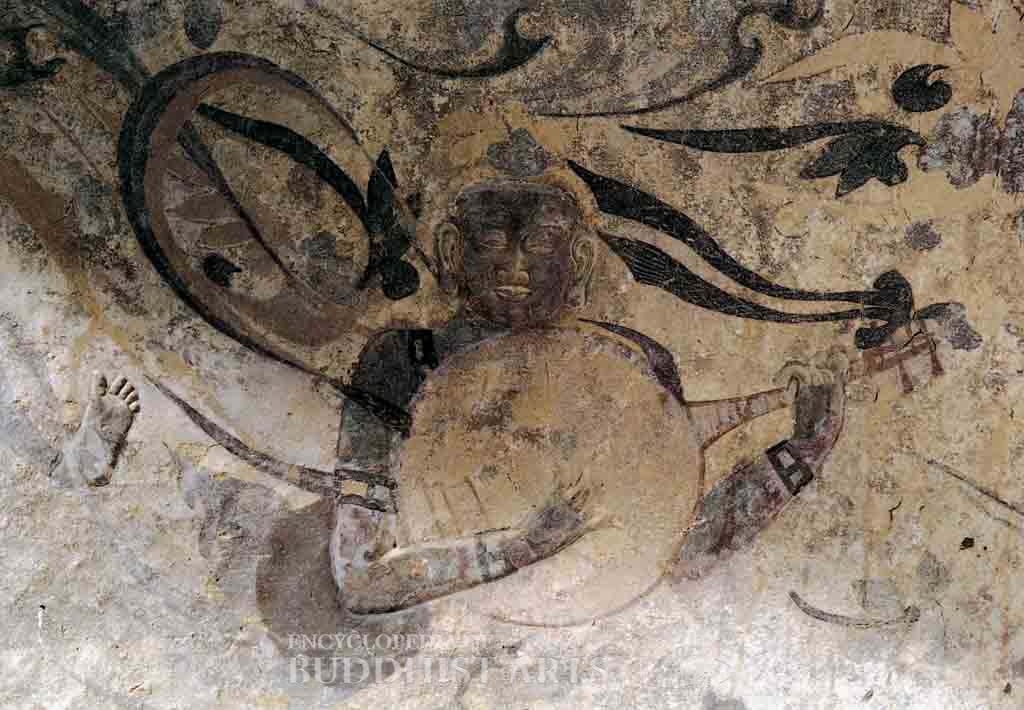
Maijishan Grotto 4: Apsara
Maijishan Grotto 4: Apsaras
CHINA, Gansu, Tianshui; Northern Zhou dynasty
In Grotto 4, which dates to the Northern Zhou dynasty (557–581), the delicate murals above the seven Buddha niches portray seven groups of apsaras, each carved in bas-relief and occupying an area of nearly 6 sq m. The groups above Niches 1, 3, 5, and 7 show apsaras playing various musical instruments. The remaining groups portray apsaras making offerings of flowers and incense. The bas-relief of the face, limbs, and other features of the apsaras were formed by the removal of one or more fine sedimentary layers. Paint was then applied to portray the dress, sash, headdress, floating clouds, and flowers. The round faces of the apsaras have small eyes, long eyebrows, and extended earlobes. The curved lips form a smile.
For more details, go to the Encyclopedia of Buddhist Arts: Caves M-Mo, page 734.
Cite this article:
author = Hsingyun and Youheng and Johnson, Peter and Mankuang and Huntington, Susan and Edson, Gary and Neather, Robert,
booktitle = {Encyclopedia of Buddhist Arts: Caves M-Mo},
pages = 734,
title = {{Maijishan Grotto 4: Apsaras}},
volume = 7,
year = {2016}}